
Unbiased headlines. Facts, not spin.
Every story is an unbiased news briefing written from 110+ sources across the spectrum — sources linked so you can verify it yourself.
 energy
Notable (6/10)
June 19, 2026 at 05:20 AM
energy
Notable (6/10)
June 19, 2026 at 05:20 AM
FERC Orders Grid Operators to Rewrite Large-Load Rules as Helion Clears Permits for First Fusion Plant
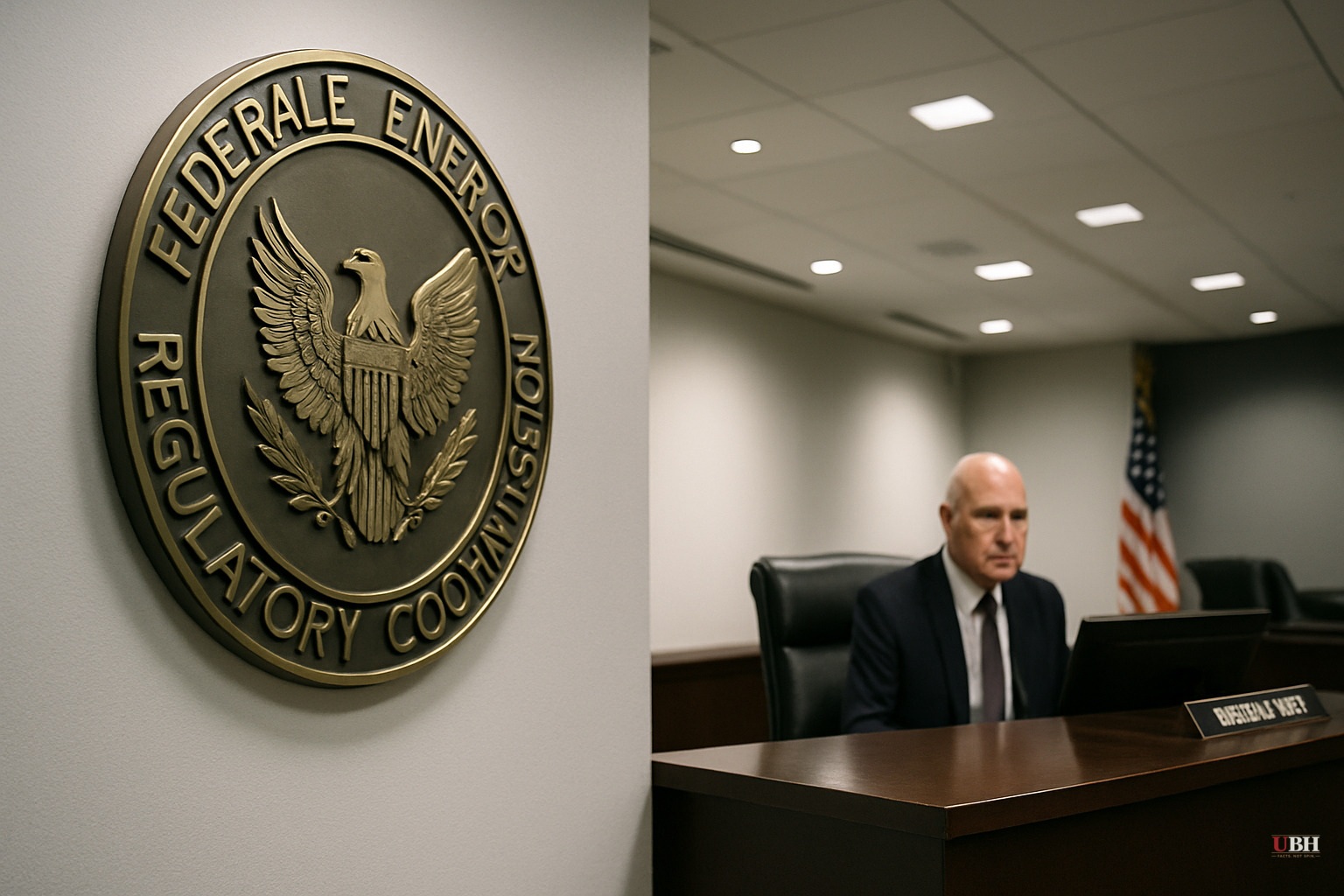
Two concrete regulatory and permitting developments this week illustrate the electricity supply squeeze that AI infrastructure demand is creating across the U.S.
FERC Puts Every Major Grid Operator on Notice
The Federal Energy Regulatory Commission issued tailored show-cause orders under Section 206 of the Federal Power Act to all six regional transmission organizations within its jurisdiction: PJM Interconnection, MISO, SPP, CAISO, ISO New England, and NYISO. According to Power Engineering, the orders filed under Docket RM26-4-000 require each operator to either defend its current interconnection tariffs as "just and reasonable" for large energy users, or file revisions, within 60 days.
FERC Chairman Laura V. Swett framed the action in economic terms: "We are setting the stage for a resilient, reliable, and forward-thinking grid that empowers communities and safeguards consumers by transforming the way large energy users access the grid. It is also critical that FERC provide certainty for investors by directing the markets to protect existing deals and unlock opportunities for technological advancement and economic expansion. We can facilitate both, which is exactly what we did today."
The five categories FERC identified for potential reform include developing faster transmission study processes, preventing cost-shifting onto existing ratepayers, addressing co-located generation (data centers that build their own on-site power), providing new transmission services for flexible large loads, and developing a process to study generating facilities that serve electrically proximate large loads. That last point matters for ordinary households and manufacturers: when a hyperscale data center jumps the interconnection queue, someone pays for the upgraded transmission, and under current tariff structures that "someone" can be the existing customer base.
Additionally, within 30 days, each grid operator must submit a detailed informational report describing how it intends to ensure adequate generation will be available to serve existing and new large loads.
Power Engineering described this as one of the most significant actions FERC has ever taken to modernize U.S. electric markets. Grid interconnection queues have ballooned to multi-year backlogs as AI infrastructure demand exploded faster than the regulatory apparatus designed for it.
The Skeptic's Case on Speed
The strongest concern from grid-reliability advocates is that streamlining large-load interconnection could backfire. Moving data centers onto the grid faster does nothing if the generation to serve them isn't there. Critics argue that FERC's 60-day reform window pressures operators to approve connections before full system-impact studies are complete, potentially creating reliability risks for the broader grid. That concern is structural, not partisan: every additional gigawatt of unplanned load is a stress test on transmission lines and generators that were sized for a different era.
FERC's orders acknowledge this tension. They specifically address how to handle "co-located" generation, the scenario where a data center builds its own power plant on site and connects to the grid primarily as a backup. The concern is that these arrangements let large users effectively bypass the queue while still drawing on grid stability as a free service. Advanced Energy United noted that "the orders require cost recovery agreements and leave states responsible for ensuring that transmission costs flow to large-load customers and are not shifted to other customers." How each RTO resolves that question in its 60-day filing will determine whether this reform protects or burdens existing ratepayers.
Helion Gets Its Permits in Washington State
Separately, Helion Energy received a Radioactive Materials License and a Radioactive Air Emissions License from the Washington Department of Health, according to reporting via ZeroHedge, which sourced the story from Interesting Engineering. The licenses cover Helion's Orion facility under construction in Malaga, Washington, and allow the company to begin constructing the reactor building itself. The assembly and office structures were already complete.
Helion has a contracted agreement to supply Microsoft with 50 MW of power from Orion by 2028. That agreement predates the licenses, meaning Microsoft committed to a fusion power purchase before anyone had regulatory clearance to build the reactor.
Helion has also secured a transmission interconnection agreement with Chelan County Public Utility District that will enable energy generated from its fusion power plant to be supplied to the grid — described as a global first.
Helion has NOT published peer-reviewed research demonstrating its reactor achieves net energy gain, the fundamental threshold that would validate fusion as a commercial power source. The Washington Department of Health licenses are for radioactive materials handling and emissions, not a federal endorsement that the physics works at commercial scale.
Why the NRC Isn't Running This
A reasonable question is why the Nuclear Regulatory Commission isn't overseeing a nuclear fusion facility. The answer is definitional: the NRC regulates nuclear fusion under the byproduct material framework, putting it in the same category for approvals as particle accelerators and hospitals, rather than nuclear reactors. This distinction was ratified by the U.S. Congress in the ADVANCE Act of 2024. That regulatory framework is why Washington state's Department of Health issued the materials and emissions licenses instead of the NRC.
Electricity Is the Real Constraint
OilPrice.com has been running consistent coverage arguing that electricity supply is a critical constraint for AI infrastructure buildout. The FERC action is evidence that federal regulators agree. Interconnection queue reform doesn't generate a single additional megawatt; it determines who gets access to the megawatts that exist.
The unresolved question after this week's developments: if all six RTOs file tariff revisions in 60 days that satisfy FERC's show-cause standard, the rules for connecting large loads will change. But FERC's orders do not compel new generation construction, and they don't resolve the co-location dispute. Utilities, data center developers, and grid operators will be negotiating the fine print of those tariff revisions in the weeks ahead, and the outcome will set the cost and speed of AI infrastructure buildout for the rest of the decade.
Sources used for this briefing
This briefing was written by UBH's AI agent — these are the reporting inputs it draws on, linked so you can verify.


