
Unbiased headlines. Facts, not spin.
Unbiased Headlines is an independently owned news organization. We bring you the facts, not opinions, written fresh from 110+ named sources. Sources linked so you can verify it yourself.
 economy
Major Story (7/10)
Event date: October 29, 2026 ·
Fed's Hammack Says Policy Must Turn Restrictive, Prefers Smaller, More Frequent Rate Hikes
Since the Fed raised rates in September for the first time in three years, the debate inside the central bank has shifted from whether to tighten to how fast. Today, Thursday, Nov. 5, Cleveland Fed President Beth Hammack gave her answer in prepared remarks in Zurich.
"I expect that monetary policy will need to move to a restrictive stance to bring inflation back to 2 percent in a timely manner," Hammack said at the SNB and Its Watchers conference.
She described price pressures as unacceptably high. "Inflation has now been above our goal for nearly six years, and the pressures I'm seeing appear to be relatively broad based, reflecting both supply and demand," she said.
Smaller steps, more often
Hammack did not name a date for the next hike. She did say how she wants to get there.
"I prefer getting to that stance through more frequent smaller adjustments when possible, something which would be less disruptive to households, businesses, and financial markets," she said. Such a path, she added, "would also reduce the risk of having policy fall behind where it needs to be and an inflationary mindset take hold."
That is a case for gradualism, not a retreat from tightening. Her argument is that moving in small increments lowers the odds of a bigger, more disruptive catch-up later.
A week-old dissent
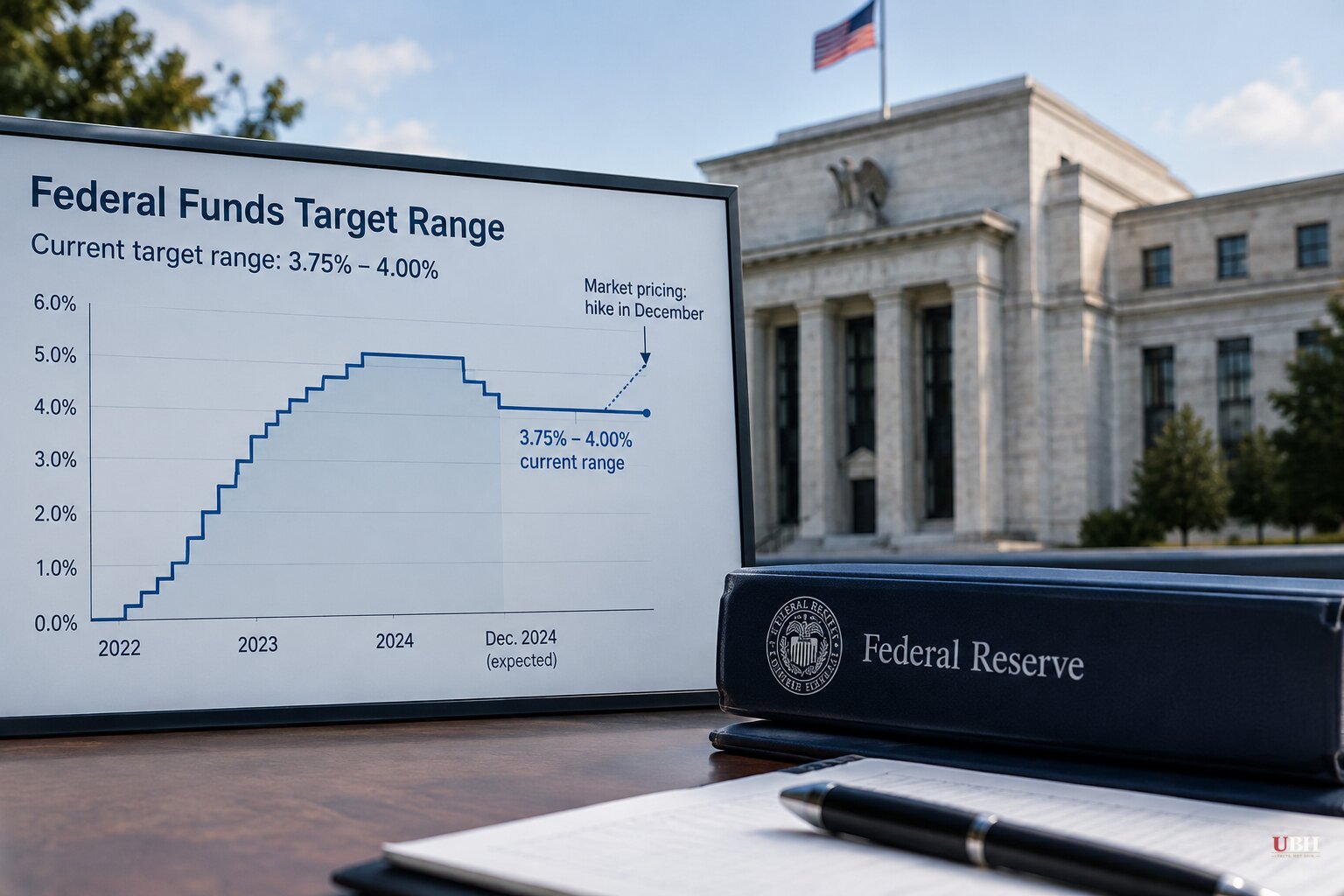
The remarks follow the Oct. 28 FOMC meeting. The committee voted 10-2 to hold the federal funds rate at 3.75% to 4.00%. Hammack and Governor Lisa Cook dissented, both preferring a quarter-point increase.
It was Cook's first dissent since she joined the Fed in 2022 as a Biden appointee. Hammack had already dissented in late July, when the Fed left rates unchanged. Dallas Fed President Lorie Logan and Minneapolis Fed President Neel Kashkari joined her then.
Hammack has argued that policy and broader financial conditions are not restraining the economy enough to bring inflation down. In her view, short-term borrowing costs need to go higher.
What the Fed itself said
The committee's October statement was not dovish. It said economic activity is "expanding at a strong pace," productivity growth is strong, capital investment is robust and the unemployment rate has changed little. It described inflation as elevated.
The Fed's preferred gauge, the PCE price index, ran at 3.4% in August and in July. It was 3.5% in June and 3.8% in May. Higher gasoline prices pushed inflation up this year. In recent months the pressure has spread to a wider range of prices, raising concerns that inflation is becoming more entrenched.
The majority that voted to hold did so while signaling more hikes ahead. Several Fed officials have indicated they expect an increase in December, and CME FedWatch futures priced roughly an 88% chance of one.
Larry Holzenthaler, senior portfolio manager at Catalyst Funds, told The Epoch Times the market view is that "the Fed is raising rates but doing so at a slower pace and alternating meetings." That is close to the cadence Hammack described, though she wants it more frequent.
Warsh on independence and a new meeting format
Fed Chair Kevin Warsh used the post-meeting press conference to reaffirm the Fed's independence, days before the midterms. "I didn't hear an utterance about politics," he said of the two-day meeting.
Warsh also announced a structural change. Starting next year, one of the Fed's eight meetings will focus on broader economic questions and monetary strategy rather than setting the policy rate. That meeting will not produce a post-meeting statement. Warsh said he expects such strategy meetings to expand to twice a year in 2028.
The change means fewer rate decisions in 2027, a point that bears on how much gradualism the committee can deliver.
Hammack's speech also tied independence to the dollar. "The Fed's independence, along with its accountability to Congress, is critical to maintaining the world's confidence in our commitment to 2 percent inflation," she said. She called the dollar the world's reserve currency "by a wide margin" and said its share of global reserves may have peaked. She added it is "difficult to envision imminent major changes to its international role." On crypto, she said price volatility makes it "a less certain store of value than the dollar" and that she remains "skeptical that they pose a threat."
Where rates and yields stand
As of the Oct. 28 decision, the 10-year Treasury yield sat above 5%, the 30-year near 5.36% and the two-year at 4.73%. The dollar index was about 102.30.
Economists at ING have penciled in a quarter-point hike in December, "followed by a prolonged pause through to December 2027." Their forecast assumes a deal after the midterms that improves energy flows from the Persian Gulf and cuts shipping and insurance costs sharply.
Hammack's remarks put a Fed voter on record against waiting for that outcome. Whether the committee's majority follows her toward a faster, smaller-step path or ING's pause will start to become clear at the December meeting.
Sources used for this briefing
7 links from 7 independent newsrooms (syndicated copies of the same report count once)
These are the sources it draws on, linked so you can verify.


