
Unbiased headlines. Facts, not spin.
Unbiased Headlines is an independently owned news organization. We bring you the facts, not opinions, written fresh from 110+ named sources. Sources linked so you can verify it yourself.
 economy
Major Story (7/10)
Event date: October 23, 2026 ·
China's EU Ambassador Threatens Countermeasures as Brussels Prepares Market-Access Tool for December
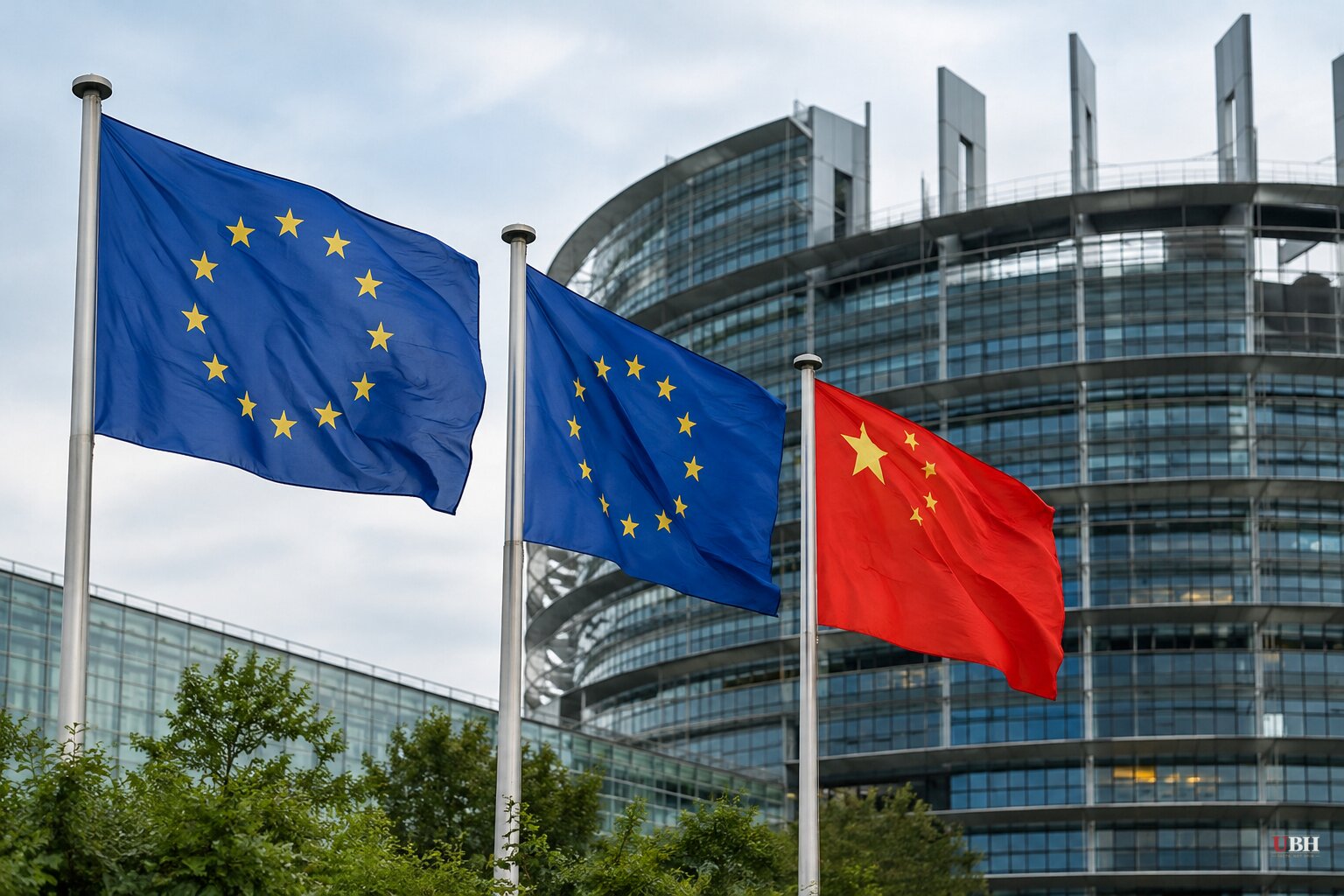
Since EU leaders backed a harder trade line against Beijing at their Oct. 15-16 summit in Brussels, the argument has moved from closed-door lunches to open threats. On Thursday, Nov. 5, China's ambassador to the EU, Cai Run, warned that Beijing will hit back if the bloc goes ahead.
"China opposes politicising economic and trade issues, overstretching the concept of security, and resorting to unilateral or maximum pressure," Cai said. "If the EU side insists on adopting restrictive and discriminatory measures against China, China will have to take countermeasures to firmly safeguard its interests."
What Brussels says it is building
EU Trade Commissioner Maroš Šefčovič told MEPs on Wednesday, Nov. 4, that the instrument should be presented by the end of the year. He said it would let the EU "react much faster, even by limiting the exports into the European Union."
Šefčovič said it would target "countries which are treating us [the EU] unfairly or which are harming European interests." The tool is being presented as country-agnostic. Its practical target is not hard to read: China is the bloc's largest source of trade imbalance.
The idea traces to a French-German joint paper in early October. At the Oct. 16 summit, Commission President Ursula von der Leyen said the Commission would "develop a new instrument for decisive action by limiting the access to the single market where this is in the Union's interests—fast, and immediately." People briefed on the leaders' lunch told the South China Morning Post that the 27 members broadly backed the approach, including a "kill switch" option that could quickly eject Chinese firms.
Von der Leyen has also described a separate diversification tool, called Diversify EU, meant to help European companies cut dependence on a single supplier. A "solidarity mechanism" for member states or industries hit by coercion from third countries is planned too.
The December package
People familiar with the effort told Briefs Finance that the Commission is bundling the measures for release by mid-December. The reported contents:
- A diversification instrument that maps where the EU is heavily reliant, assesses the risks, and proposes ways to reduce them.
- Faster-reacting trade defenses.
- A tool to limit market access more nimbly than current options.
- Revisions to motor vehicle type-approval rules, the foreign subsidies framework, forced labor provisions and the trade secrets directive.
A Commission spokesperson declined to comment on those details. The same people said additional safeguards could arrive as early as the first quarter of 2027.
Safeguards, meaning quotas and tariffs, are the nearer-term lever. Von der Leyen named chemicals and industrial machinery as top priorities at the summit, according to people familiar with the discussion, with France, Germany, Belgium and Denmark endorsing the push. Wind turbines also came up. French President Emmanuel Macron said after the summit that the bloc should act on chemicals, plastics and ferroalloys. The Commission is running the numbers on those sectors through its import-monitoring mechanism.
Beijing's position
China's objection is both procedural and political. Cai said Beijing rejects the use of security arguments in trade policy. After the summit, foreign ministry spokesperson Mao Ning said, "We hope the European side will abide by its commitments to openness and free trade, adhere to WTO rules, and avoid introducing protectionist and discriminatory policy measures."
China's Ministry of Commerce was blunter in mid-October: "The EU should not fantasise about gaining benefits through pressure, nor should it underestimate China's determination and ability to safeguard its own interests."
The EU's case rests on the numbers. Von der Leyen called the relationship "structural" and "unsustainable," with a deficit that reached €1 billion a day last year. Chinese customs data put the rise in Chinese imports over the past year at 25%. Every EU member state now runs a deficit with China, according to Euronews.
What was already agreed
The escalation comes after a negotiated deal, not instead of one. On Oct. 9 the Commission reached an understanding to cap Chinese hybrid car imports at 350,000 a year from 2027. Šefčovič also said China agreed to improve market access for several European products, from industrial goods to agri-food, and to ease export-licensing procedures for rare earths and permanent magnets.
Von der Leyen said progress on cars and hybrids "alone cannot address" the imbalance. Technical-level talks between EU and Chinese officials have resumed, and Brussels hopes to repeat the car deal in other sectors.
What the tool would actually be remains open. Reporting on the Oct. 16 lunch described a "kill switch," while von der Leyen's public remarks on the diversification piece stress de-risking. The Commission has not published legal text, trigger conditions or a list of sectors.
The next fixed dates are the Commission's December proposal and a meeting between Šefčovič and China's Commerce Minister Wang Wentao scheduled for March 2027. Whether Beijing's promised countermeasures follow the proposal or wait for it to be adopted has not been stated.
Sources used for this briefing
7 links from 5 independent newsrooms (syndicated copies of the same report count once)
These are the sources it draws on, linked so you can verify.


