
Unbiased headlines. Facts, not spin.
Unbiased Headlines is an independently owned news organization. We bring you the facts, not opinions, written fresh from 110+ named sources. Sources linked so you can verify it yourself.
 economy
Notable (6/10)
MPs Say Britain Is 'Dangerously' Dependent on China for Critical Minerals, Urge New Finance Facility
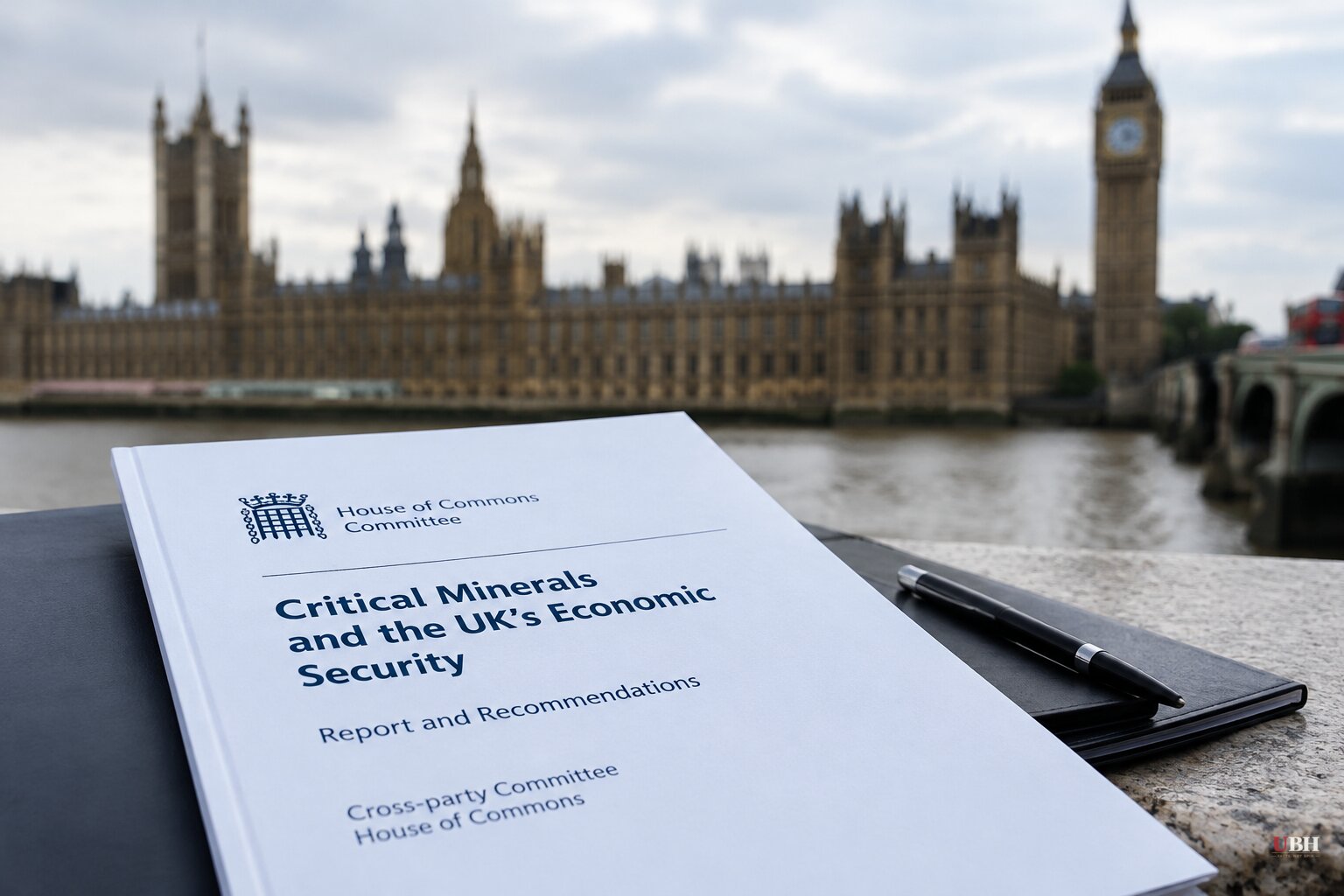
Britain depends on China for minerals it needs to arm itself, power its grid and build AI, and the government cannot show it is fixing that. That is the finding of a parliamentary inquiry published today, Nov. 5, by the Commons business select committee.
"Critical minerals are the alpha of the new economy," said committee chair Liam Byrne. "We cannot rearm Britain, build AI or deliver net zero unless we secure the minerals these technologies depend on. Yet 16 years after China first weaponised its chokehold over rare earths, Britain remains dangerously exposed."
Where the chokehold sits
The problem is not mainly digging the stuff out of the ground. It is processing.
The committee heard that China dominates refining in seven categories of minerals. They include refined lithium for electric vehicles and the rare earths used in military aircraft, where they help fuselages and wings withstand extreme temperatures.
China has already shown it will use that leverage. The committee points to Beijing cutting off rare-earth supplies in 2025. It also cites restrictions on legacy chips after a row over the Dutch intervention in the China-owned Nexperia, which left Europe's car industry "days away" from stoppages last October.
The pattern goes back further. China unofficially blocked rare-earth exports to Japan in 2010 after Japan detained a Chinese trawler captain, a move reported to have driven a 26-fold jump in commodity prices.
Demand is about to climb
Witnesses told MPs that UK lithium demand will rise 45-fold between now and 2030. Rare earths used in permanent magnets, which go into military jets and other equipment, are projected to rise 16-fold over the same period. Those are projections given to the inquiry, not measured increases.
The timing matters because Britain is trying to rebuild its military capability. The committee's argument is that a bigger arsenal built on Chinese-refined inputs hands Beijing a veto.
Rare-earth truce is temporary
The committee notes that Donald Trump secured a one-year reprieve from Xi Jinping on global rare-earth export restrictions in October 2025. It was extended to January 2027 after Xi's recent visit to Washington.
That leaves Britain at the mercy of US-China relations, the report says. The same exposure applies to the EU, the US and other countries, but the committee says the UK is not putting enough effort into finding alternative supplies.
What the MPs want
The headline recommendation is a "critical minerals finance facility" to fund rare-earth and other mines using grants, equity and debt. The committee also wants an urgent, centralised policy rather than leaving access to minerals as a purchasing decision for individual firms.
Its plan includes:
- Prioritising sovereign capability where reliance on China poses unacceptable risks.
- Pooling government and industry intelligence on minerals hidden inside trade statistics, to forecast demand.
- Maximising domestic mining, processing and recycling.
- Creating allied "buyers' clubs" to share the costs of new mines and smelters.
- Freeing British International Investment, the government's development finance institution, to take equity stakes in overseas mining ventures.
The committee calls working with G7 partners, the rest of Europe and Indo-Pacific countries to "aggregate demand" and bring in new suppliers the most realistic path.
Domestic obstacles
The report lists self-inflicted problems. Britain lacks current geological surveys. High energy costs make domestic processing uneconomical. Around 80% of UK metal waste is shipped abroad instead of being recycled at home. Outdated restrictions on public finance institutions are choking off investment in alternative supplies.
The committee also said its inquiry was frustrated by a lack of government transparency. It said it could not be confident ministers are meeting any of the 10 tests set to "precision de-risk" UK supply chains. This is the second time in a week Byrne's committee has criticised the government's China policy.
The government's answer
A government spokesperson rejected the claim that it lacks a critical-minerals strategy. The spokesperson said it is delivering £400 million to increase domestic production and recycling and to establish international partnerships.
The strategy's 2035 goals are to meet 10% of demand through domestic production and 20% through recycling, while sourcing no more than 60% of any critical mineral from a single country. Those are targets, not results.
The £400 million is the government's defence of its record. It is not an acceptance of the committee's proposed finance facility, and ministers have not said they will adopt it.
The open question
The two sides are not far apart on the goal. The gap is over pace, money and proof. The committee wants a central policy and a new funding vehicle now. The government says its strategy is already funded and running, with its benchmarks set a decade out in 2035.
What comes next is a government response to the report, and the deadline that matters is set in Beijing. The rare-earth reprieve Trump secured runs to January 2027, and the UK has not shown it can supply itself before then.
Sources used for this briefing
7 links from 5 independent newsrooms (syndicated copies of the same report count once)
These are the sources it draws on, linked so you can verify.


