
Unbiased headlines. Facts, not spin.
Unbiased Headlines is an independently owned news organization. We bring you the facts, not opinions, written fresh from 110+ named sources. Sources linked so you can verify it yourself.
 economy
Major Story (7/10)
Stopgap Funding Expires Dec. 11 as Democrats Prepare to Take Congress, With Debt Limit Due by Fall 2027
The first fight of the new political order is not about Iran or tariffs. It is about whether the government stays open.
President Trump will spend the next two years working with a Congress controlled by Democrats after Tuesday's midterms. The first deadline arrives soon: Dec. 11, when the temporary funding bill he signed in September expires.
The December deadline
Goldman Sachs analysts Alec Phillips and Abhay Duggirala have flagged the risk of a December shutdown. They describe a familiar lame-duck standoff, in which "the outgoing party sees one last chance to exert greater influence while the incoming party sees an opportunity to clear items from the agenda before taking power."
The same analysts see reasons it may not happen. Both parties have spending priorities they want to advance. Republicans want to sign off on defense funding, and Democrats are likely to focus on healthcare.
That overlap lowers the odds of a shutdown, in Goldman's view. It is an estimate, not a deal.
The debt ceiling
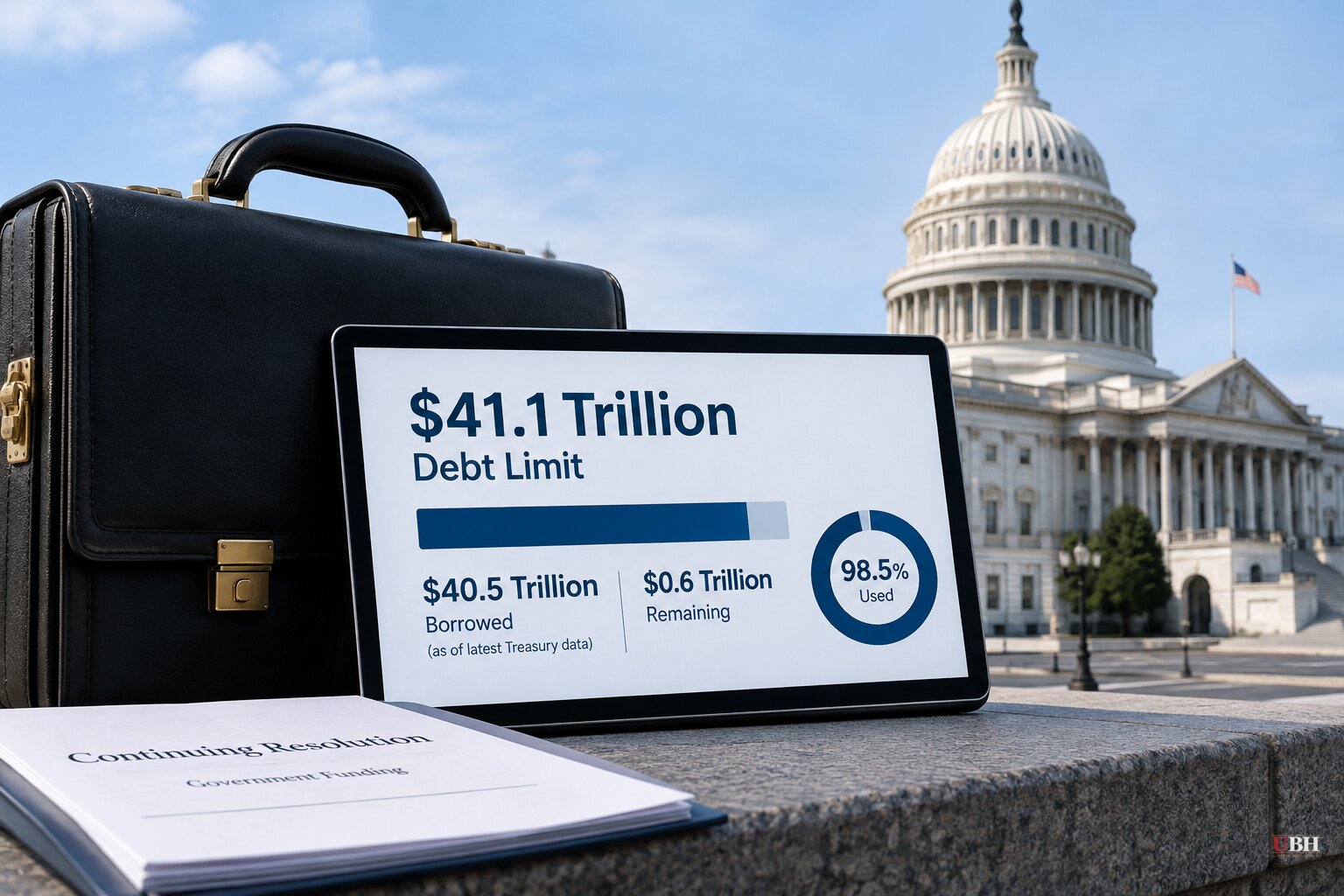
The borrowing cap stands at $41.1 trillion, according to Treasury data. Of that, $40.5 trillion has been borrowed.
Analysts expect the limit to be reached approximately a year from now. Goldman estimates the ceiling must be raised no later than October 2027.
The Goldman duo also expects Republicans to try to raise the limit before the year ends. They add that "thin margins in the House and pushback from fiscal conservatives make this unlikely to succeed."
Libby Cantrill, PIMCO's head of public policy, says increased spending may provide common ground for raising the debt ceiling next year. She also warns that either party may overplay its hand and push the economy closer to the "X date," the day the debt limit is reached and no further borrowing is signed off.
The numbers underneath
The federal government recorded a $1.99 trillion deficit for the fiscal year that ended Sept. 30, 2026. That is up 12% from $1.78 trillion the year before and the highest level in absolute terms since 2021. The government spent $7.4 trillion and collected $5.4 trillion in revenue through taxes, tariffs and other means.
Based on current GDP figures, the deficit is likely to be around 6% of GDP, similar to the ratio in 2025. Fortune puts the Treasury's deficit at approximately 6% to 7% of GDP, a figure debt watchdogs would like to see halved to 3%.
The national debt passed $40 trillion for the first time in August. According to Congress's Joint Economic Committee, that is around $117,707 per American and $298,606 per household.
The budget deficit has averaged 4% of GDP for nearly a century, and wider gaps have followed periods of financial and global disruption, such as World War II and the 2008 global financial crisis. The last time the budget was balanced was during the Clinton administration.
What Democrats want
The incoming majority's immediate demands appear clear: de-escalation of the conflict in Iran and a rollback of some tariffs. Tariffs are part of the revenue the government collects, so the demand touches the budget directly.
Republicans, for their part, want to sign off on defense funding. The outcome of numerous budget battles is yet to be determined.
Budget watchdogs are pushing a separate conversation about the deficit itself. Maya MacGuineas, president of the Committee for a Responsible Federal Budget, said the best thing a new Congress and the White House can do to improve affordability is to enact meaningful deficit reduction. She warned that if past is prologue, "our dangerously polarized and hyperpartisan politics in Washington will only serve to punt these decisions to future generations or until bond markets force it upon us."
Rising interest costs and entitlement spending, built up over decades, mean the gap is likely to persist regardless of which party controls Congress, according to investment-firm analysis of the fiscal-year data.
The market risk
The Bipartisan Policy Center's Caleb Quakenbush warns that failing to address the debt limit in a timely manner can undermine investor confidence that the federal government will make good on all its obligations, and lenders may demand higher interest rates, raising costs for households and businesses alike. He adds that a government operating near its borrowing limit would have limited capacity to respond expeditiously to an escalation of the Iran conflict, a sudden economic downturn, or another black swan event.
The increased bond yields seen this summer are signs that lenders could begin to demand higher rates of return to buy Treasury debt.
The near-term test comes first. Congress faces the Dec. 11 expiration of the stopgap bill. The debt limit then follows, with Goldman's October 2027 deadline as the outer boundary.
Sources used for this briefing
7 links from 5 independent newsrooms (syndicated copies of the same report count once)
These are the sources it draws on, linked so you can verify.


