
Unbiased headlines. Facts, not spin.
Unbiased Headlines is an independently owned news organization. We bring you the facts, not opinions, written fresh from 110+ named sources. Sources linked so you can verify it yourself.
 economy
Major Story (7/10)
Developing Countries' External Debt Hits Record $9.4 Trillion, Poorest Pay Highest Rates Since 1989
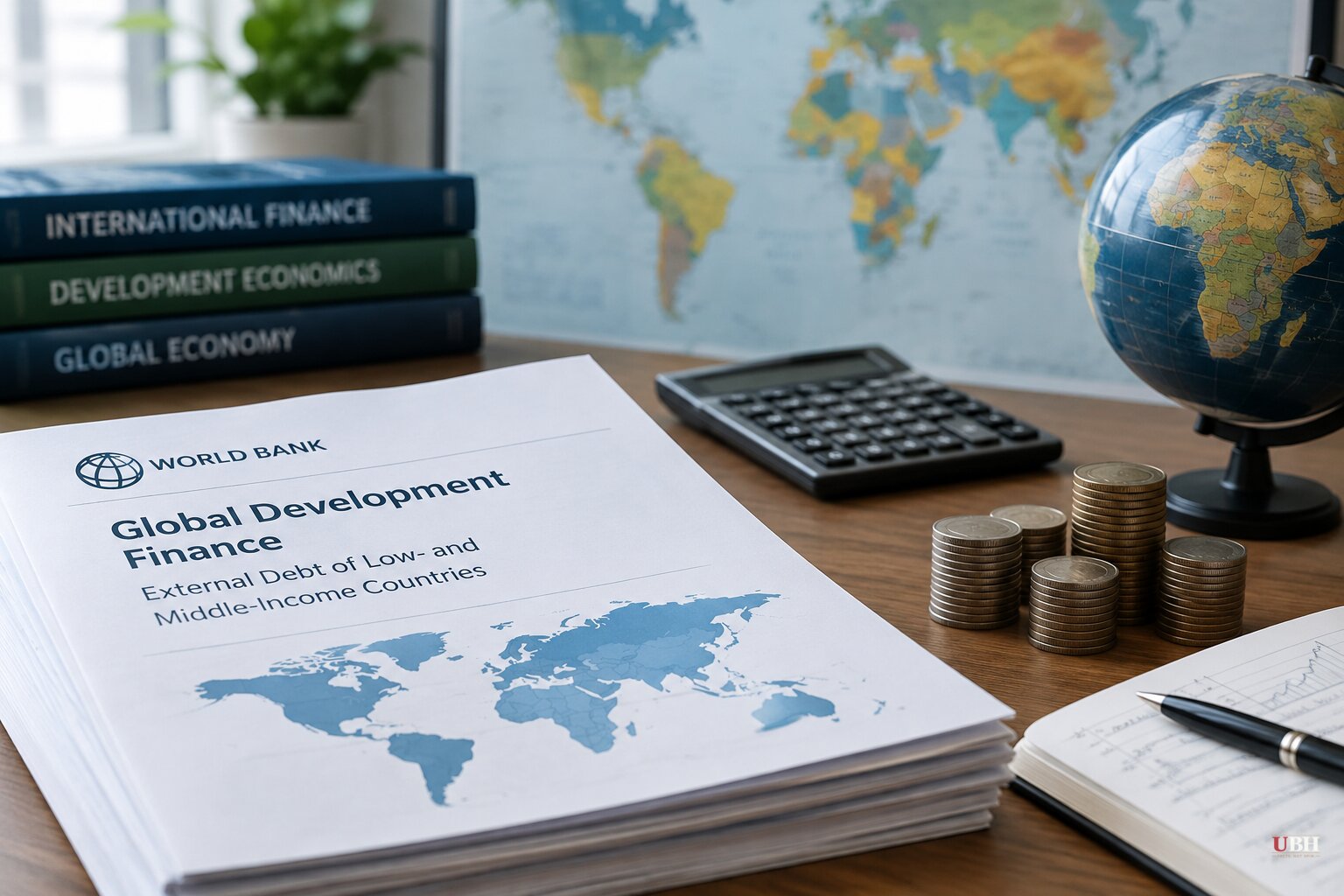
External debt owed by developing countries jumped 5.5% to a record $9.4 trillion in 2025, according to the World Bank Group's International Debt Report 2026, released today, Nov. 5. It was the fastest annual increase since 2021 and about four times the 2022-24 average.
Private money drove it. Borrowing from private creditors and bond issuance by public entities rose nearly 35% to $251 billion, the highest level in five years, as markets reopened to many developing countries.
The poorest pay the most
Countries eligible for the World Bank's concessional International Development Association (IDA) loans saw external debt grow 8.1% to $1.3 trillion. They paid an average of 8.2% on new private-creditor commitments in 2025, the highest rate since 1989. On new bonds they paid 9.4%.
Middle-income countries that don't qualify for IDA paid an average of 5.5% on new bonds, down from 5.8% in 2024.
The gap between what IDA-eligible countries pay private creditors and what they pay official creditors widened from 3.4 percentage points in 2016 to 5.5 points in 2025.
The Bank singled out recent deals by Laos at 11.5%, the Republic of Congo at 13.88% and Kenya at 9.2%.
Borrowing to pay old debt
Many governments issued new bonds to pay off maturing debt. That stretched out repayment schedules, but the report says it often came at higher interest rates and without significantly reducing the total owed.
Demand has not cooled. By mid-August this year, more than 10 countries had already exceeded their full-year 2025 issuance, and several others returned to international markets. The Bank said borrowing through bond markets continued in 2026 and raised questions about "whether the terms are sustainable and whether the capital raised is reaching the people and places that need it most."
Low- and middle-income countries paid $1.4 trillion in principal and interest in 2025, up 1.9% and the fifth straight annual increase. Payments to private creditors rose 13.7% to $363 billion.
From 2022 to 2025, these countries paid $436 billion more in debt service than they received in new financing. The picture shifted in 2025. Long-term debt flows turned to a net inflow of $45 billion, compared with a net outflow of $118 billion in 2024.
What the Bank says it means
The Bank does not frame the return of private capital as bad. "The return of private lending to low- and middle-income countries is welcome, but these countries are borrowing more, paying more, and in many cases leaving less for long-term development," said Haishan Fu, the Bank's chief statistician and director of development data.
The report says the debt burden threatens to crowd out spending on education, infrastructure, health and jobs. It also links heavy debt to food security. In heavily indebted countries, global shocks had a larger effect on food availability, and the report says debt burdens "may be closely associated with a decline in the affordability of a healthy diet during periods of global stress."
Nigeria's numbers
Nigeria is an IDA borrower. The country's Debt Management Office put its IDA debt at about $19.12 billion as of June 30, 2026. Nairametrics reported that Nigeria's external debt service reached $5.15 billion in 2025, up 10.6% from the previous year, including about $2.49 billion in Eurobond repayments.
The UK's G20 plan
The UK takes the G20 presidency next year, and Prime Minister Andy Burnham's government is preparing a "new drive on debt," The Guardian reported. Burnham has appointed former prime minister Gordon Brown to examine changes to the global debt regime. According to The Guardian, Burnham has linked the effort to confronting the legacy of slavery.
Foreign Secretary Ed Miliband laid out plans last month at the IMF annual meetings in Bangkok for a "new deal" for heavily indebted countries. The Guardian reported it is likely to include using the balance sheets of the World Bank and other multilateral development banks to buy back outstanding debt, extending repayment periods and lowering rates. No formal proposal has been published.
The politics are harder than in 2005, when G8 governments agreed at Gleneagles to write off billions in debt. Today's creditors are largely private bondholders, not governments, so there is no simple pen-stroke write-off available. African Union heads of state are among those who have pushed for changes to the international debt framework.
The Bank's own data shows the squeeze is concentrated in the poorest countries, where a few percentage points of interest decide how much is left for clinics and schools. Whether the UK can turn a G20 presidency into a workable buyback mechanism, and who bears the risk on multilateral balance sheets, is the open question. Brown's review is the first concrete step.
Sources used for this briefing
6 links from 6 independent newsrooms (syndicated copies of the same report count once)
These are the sources it draws on, linked so you can verify.


