
Unbiased headlines. Facts, not spin.
Every story is an unbiased news briefing written from 110+ sources across the spectrum — sources linked so you can verify it yourself.
 energy
Notable (5/10)
July 24, 2026 at 08:18 AM
energy
Notable (5/10)
July 24, 2026 at 08:18 AM
Feds Confirm No Offshore Nuclear Plants Are Approved, But They're Studying Floating Reactors to Feed AI Power Demand
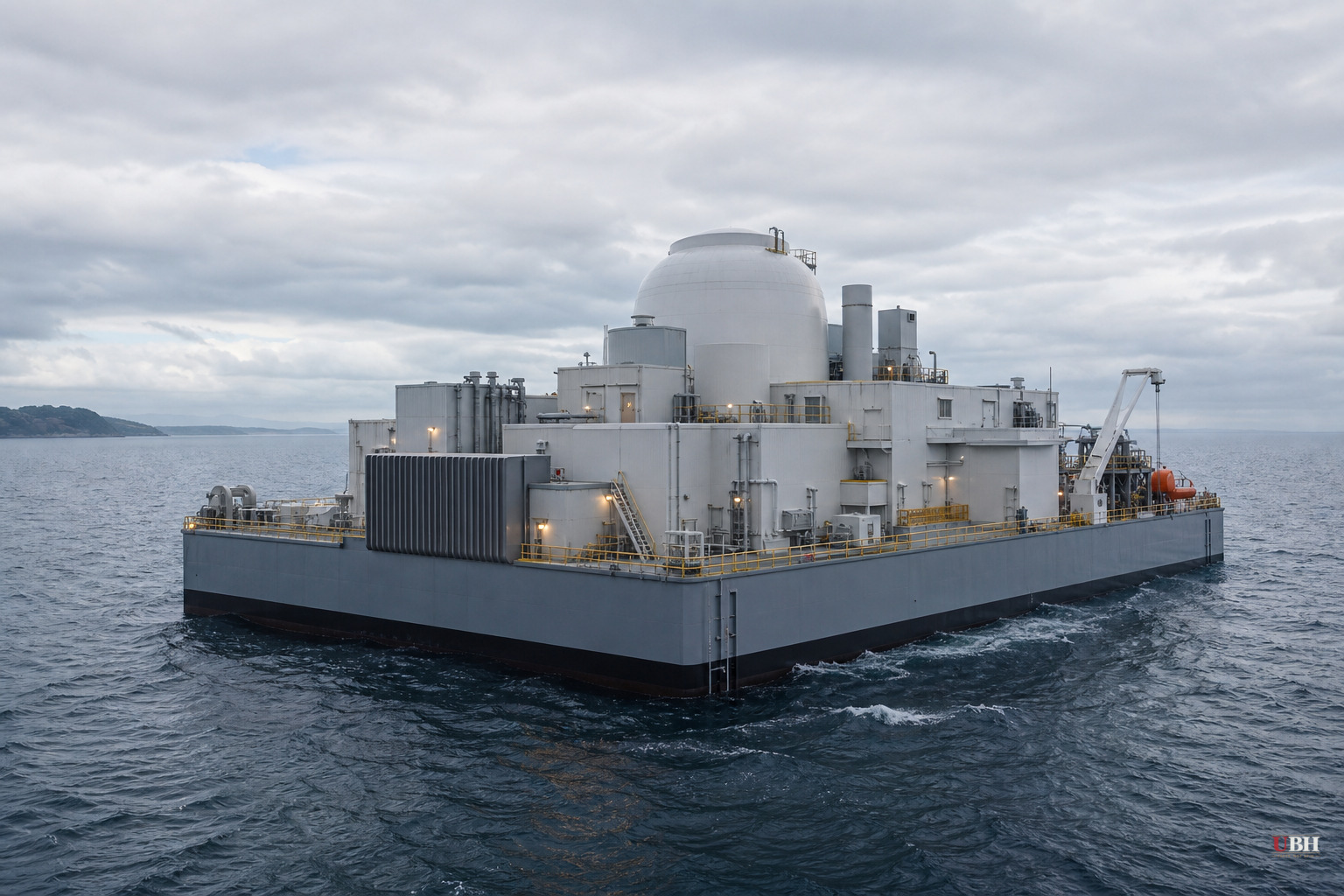
Since Interior's Marine Minerals Administration and the Nuclear Regulatory Commission signed their coordination agreement this week, officials are now spelling out just how early-stage this actually is.
Matt Giacona, acting director of the Marine Minerals Administration, put it plainly: "No commercial deployment on the Outer Continental Shelf is planned or approved at this time," according to OilPrice.com. He added that submerged reactor systems "have been safely deployed in naval applications for decades," which is the closest thing to a track record the administration can point to right now.
This is a regulatory groundwork exercise, not a construction announcement. Nobody has a permit. Nobody has a site. What exists is an agreement between two federal agencies to figure out how permitting would work if a company ever wanted to put a reactor on a barge off the U.S. coast.
Why This Is Happening Now
The timing isn't random. Data centers built for artificial intelligence are eating electricity at a pace the U.S. grid wasn't built for. Wind and solar can't provide the 24/7 baseload these facilities need, and battery storage still isn't mature enough to cover the gap, a point OilPrice.com's reporting underscores directly.
That leaves two real options: fossil fuels or nuclear. President Trump has set a goal of quadrupling U.S. nuclear capacity by 2050, according to Reuters. Offshore floating reactors would be one more tool in that toolbox. For coastal regions and island grids where siting a traditional land-based plant is harder, they represent a potential hedge.
The U.S. Is Not First Here, Not Close
Russia already runs the only operating floating nuclear plant on Earth. The Akademik Lomonosov, built by Rosatom, went commercial in 2020 and powers Russia's Chukotka Peninsula and Yakutia regions. It recently crossed a billion kilowatt-hours generated. Rosatom is planning four more units and wants to export the technology, offering 100-megawatt plants rated for 60 years of service.
China is chasing the same idea from a different angle. A Chinese company recently unveiled plans for a nuclear-powered offshore logistics hub, aiming to use nuclear fuel to power ships as well as facilities, with zero emissions as the selling point.
On the U.S. side, the technology is mostly still in the startup phase. Bluecore Energy is one American company developing small modular reactors meant for floating barge deployment, but nothing resembling a Lomonosov-scale operating plant exists here yet.
The Legitimate Skepticism
There's a fair case for caution that shouldn't get waved off. Floating nuclear reactors sit at the intersection of maritime engineering, reactor safety, and coastal environmental risk, three areas where the regulatory rulebook barely exists in the U.S. context. Critics of fast-tracked nuclear siting have pointed out, in coverage of related NRC actions this year, that shrinking public comment windows on energy infrastructure, something the EPA and Interior have also moved on this week, makes it harder for coastal communities and fishing industries to weigh in before a project is locked in.
Naval reactors operate under military command structures with different oversight than a commercial utility would face. Whether the NRC's civilian licensing framework can be adapted cleanly to a floating commercial reactor, sited near populated coastlines instead of a naval base, is an open engineering and regulatory question, not a solved one. Giacona's own statement acknowledges no framework exists yet.
What Comes Next
The Marine Minerals Administration and NRC agreement is a planning document, not a construction permit. It sets up interagency coordination on what a future licensing pathway could look like. No company has submitted an application to build a floating reactor on the Outer Continental Shelf, and no timeline for such an application has been announced.
The open question is whether Bluecore Energy or a competitor moves from concept to an actual license application in the near term, and whether the NRC can produce a workable regulatory framework before that happens rather than after. Given that Russia took roughly a decade from concept to commercial operation on Akademik Lomonosov, and the U.S. hasn't even finished mapping its own rules, a floating American reactor is, at best, a next-decade proposition.
Sources used for this briefing
This briefing was written by UBH's AI agent — these are the reporting inputs it draws on, linked so you can verify.


