
Unbiased headlines. Facts, not spin.
Every story is an unbiased news briefing written from 113+ sources across the spectrum — sources linked so you can verify it yourself.
 economy
Low Interest (4/10)
Event date: September 15, 2026
economy
Low Interest (4/10)
Event date: September 15, 2026
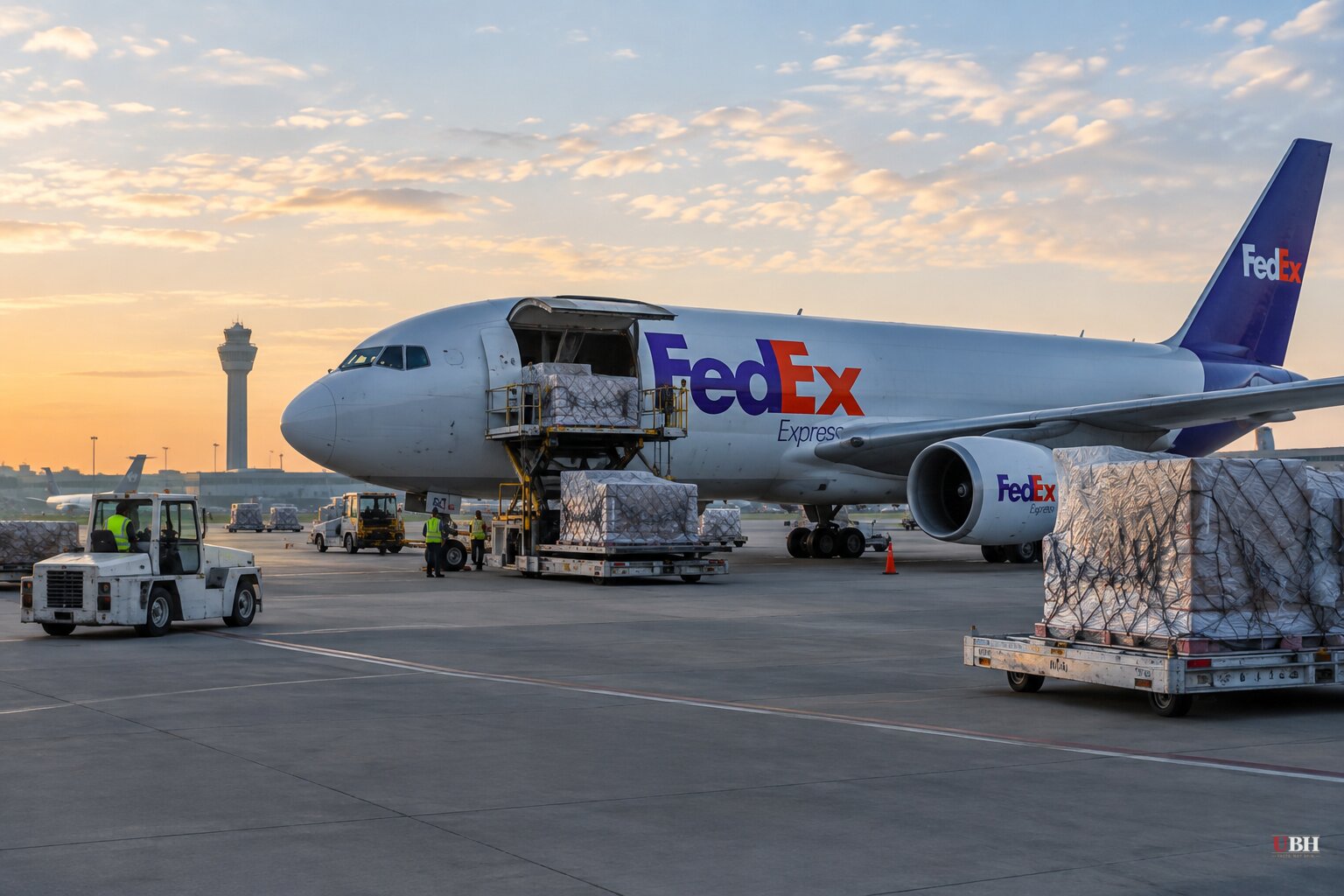
FedEx's Fuel Bill Jumped 66% as Closed Airspace Over Iran, Russia and the Gulf Squeezes Air Cargo, One Analyst's Account Claims
One Conversation, One Analysis, Four Reposts
Larry Johnson, who runs Sonar21.com, says he struck up a conversation with a FedEx pilot on a flight from Istanbul to London earlier this month. What started as a question about jet fuel prices turned into an analysis arguing that three overlapping conflicts, the Iran war, the war in Ukraine, and resulting sanctions, are driving up the cost of running a global cargo network.
That piece has circulated across ZeroHedge, The Unz Review, and Sonar21 itself. All four versions trace back to the same author and the same reporting. This is one analyst's synthesis of publicly available price data wrapped around a single anecdote, not four independent investigations arriving at the same conclusion.
The Numbers That Can Be Checked
Some of what Johnson cites is straightforward market data. Brent crude, according to his account, peaked near $118 a barrel in late March, fell to about $70 by July 1, rebounded above $100 in late July, climbed back to $109 in early September after renewed attacks on shipping and energy infrastructure, and has since eased to around $99 on hopes tied to U.S.-Iran talks. That's a roughly 60% gain for the year if accurate.
Johnson cites IATA's weekly reading putting global jet fuel at $194.90 a barrel, up 7.4% in a single week, with U.S. Gulf Coast kerosene-type jet fuel averaging $4.341 a gallon in September. He also cites a record national diesel average of $6.31 a gallon.
On FedEx specifically, Johnson reports the company's fuel bill rose 66% in the quarter ended May 31, from $864 million to $1.43 billion. That figure should show up in FedEx's own SEC filings and earnings calls. It will be worth watching whether the company's next quarterly report confirms the trend independently.
The War Claims Are the Part That Needs Scrutiny
Here's the fair question a skeptical reader should ask: an active shooting war involving Iran, severe enough that the International Energy Agency allegedly called the resulting closure of the Strait of Hormuz the largest supply disruption in oil market history, is an enormous global event. Yet in this set of sources, it appears only in Johnson's account and its reposts. No wire service, no direct IEA statement, no Reuters or AP dispatch confirming the war's existence or scope shows up here.
That doesn't mean the claim is false. Oil and jet fuel price swings of the size Johnson describes are consistent with a major supply shock, and airspace closures over Iran, Russia and Gulf states would plausibly produce exactly the routing chaos he describes. But readers should treat the war narrative itself as an attributed claim from one analyst, not an established fact independently verified in this reporting.
The Airspace Squeeze, As Described
Separate from the Iran claim, the closure of Russian airspace to U.S. and European carriers after 2022 is well documented and uncontested. Johnson says that shift has handed a lasting advantage to Chinese, Turkish, Indian and Gulf carriers still able to fly over Russia, letting them offer faster, cheaper Europe-Asia routes than Western competitors.
He adds that eight Middle Eastern states closed or restricted airspace in late February 2026, squeezing traffic through the Caucasus corridor between the Black and Caspian Seas, a passage he describes as about 100 miles wide at its narrowest. He cites Xeneta estimating that 16 to 18% of global air cargo capacity disappeared almost overnight, and Freightos data showing rates from South Asia to North America and Europe up roughly 50% early in the disruption.
By mid-July, Johnson reports, Gulf carriers had restored 75 to 96% of their schedules by routing south over Saudi Arabia and Egypt, adding 30 to 60 minutes per Europe-Asia flight. He cites DHL Global Forwarding as saying the rerouting is cutting into schedule reliability and pushing operating costs higher.
What Happens Next
If FedEx's fuel bill really jumped 66% in a single quarter, that cost lands somewhere: either in FedEx's margins or in shipping rates passed to customers, which eventually shows up in consumer prices. That's relevant to the inflation fight the Federal Reserve is waging, regardless of what's driving the underlying oil shock.
The open question is whether FedEx and UPS confirm these fuel cost figures directly in their next earnings disclosures, and whether any mainstream financial outlet or government agency independently verifies the scale of the Hormuz disruption Johnson describes. Until that happens, the price data is checkable. The war narrative behind it, as reported here, rests on one source.
Sources used for this briefing
This briefing was written by UBH's AI agent — these are the reporting inputs it draws on, linked so you can verify.


