
Unbiased headlines. Facts, not spin.
Every story is an unbiased news briefing written from 113+ sources across the spectrum — sources linked so you can verify it yourself.
 economy
Major Story (8/10)
Event date: September 21, 2026
economy
Major Story (8/10)
Event date: September 21, 2026
Private Equity Owns 447 U.S. Hospitals, Staffs a Quarter of ERs, and Is Eyeing School Vouchers Next
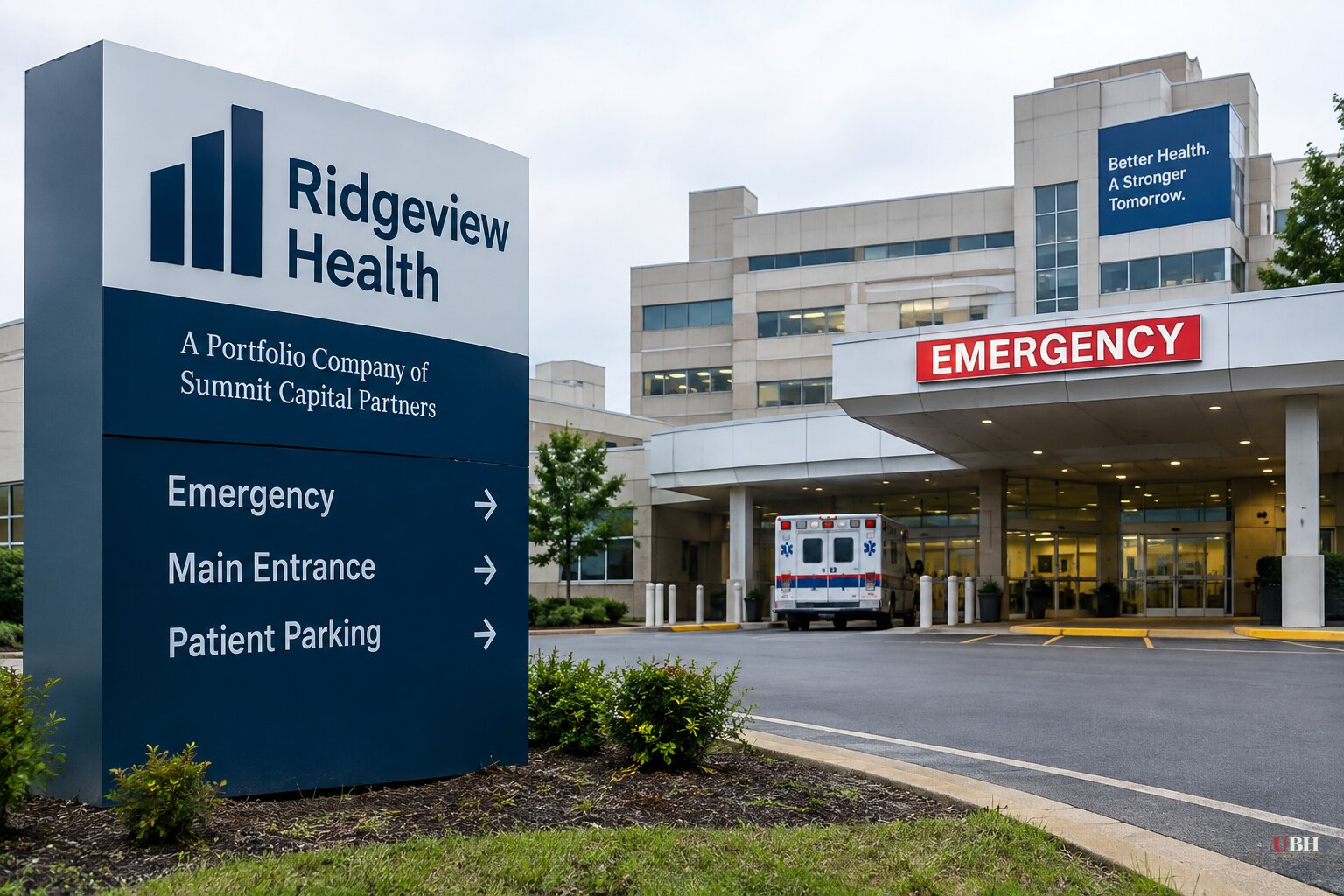
West Suburban Medical Center in Oak Park, Illinois shut its doors in March 2026. It was the third hospital in Chicago's safety net to close abruptly, following Weiss Memorial Hospital in 2025 and Westlake Hospital in Melrose Park in 2019, according to an op-ed in The Hill written by a Chicago emergency physician. All three had been owned at some point by Pipeline Health, a private-equity-backed hospital chain that acquired them in 2019.
The Hill's reporting puts a number on the national scale: roughly 447 U.S. hospitals are now under private-equity ownership, about a quarter of them serving rural populations. Private-equity-backed companies generate around 7% of U.S. GDP but accounted for 21% of all health care bankruptcies in 2024, including seven of the eight largest, per the same reporting.
Steward Health Care is the largest example. A private-equity firm bought the chain in 2010 and sold it in 2020. Four years later, Steward closed its remaining safety-net hospitals and filed for bankruptcy, cutting off vulnerable patients from nearby emergency care, according to The Hill.
The Chicken-and-Egg Problem
Safety-net hospitals run on thin margins because 75% of their patients are uninsured or covered by Medicaid or Medicare, according to America's Essential Hospitals. That fragile financial structure is exactly what makes these hospitals attractive targets for leveraged buyouts in the first place.
That leaves a genuine open question: are these hospitals closing because private equity extracted value out of them, or because they were already so financially strained that private equity was the only buyer willing to take them on? The bankruptcy and closure numbers show a strong correlation. They don't, by themselves, prove which came first.
Private Equity and Emergency Care
Private-equity-backed companies staff at least 27% of U.S. emergency departments, according to an analysis by Pest Stakeholder that examined the largest ER staffing firms against the Private Equity Stakeholder Project's hospital tracker of 4,416 emergency departments. TeamHealth, owned by Blackstone, staffs 552 EDs. US Acute Care Solutions, backed by TowerBrook Capital, Ascension Health and Apollo Global Management, staffs 294. SCP Health, owned by Onex, staffs 278.
A 2021 MedPage Today account cited in that analysis described what changed at one Michigan hospital after Blackstone bought TeamHealth in 2016: fewer physicians on staff, pay cuts, and a shift toward metrics like patient satisfaction scores and how many patients left without being seen, with physician assistants doing screenings to keep those numbers up.
Connecticut's Specific Casualties
Connecticut has its own documented cases. Prospect Medical, owned by Leonard Green & Partners, ran Waterbury, Manchester Memorial and Rockville hospitals. Kate Dias, president of the Connecticut Education Association, wrote in a Hearst Connecticut Newspapers op-ed published September 25, 2026, that a Waterbury Hospital patient was left open on an operating table for 45 minutes due to a supply shortage, Manchester Memorial had broken elevators and unstaffed overnight doctor shifts, and Rockville Hospital in Vernon terminated its ICU and surgical units.
Prospect took out a $1.12 billion loan, using part of it to pay $457 million to investors, then sold off real estate across nearly all its hospitals for $1.55 billion, adding new rent obligations the facilities hadn't carried before, Dias wrote. Leonard Green later sold Prospect, which went bankrupt within a few years amid wrongful-death and malpractice lawsuits. Sen. Chris Murphy (D-Conn.), who has introduced legislation targeting private-equity health care takeovers, described the pattern this way: "Private equity's general business model is pretty simple: find hospitals that are in dire financial straits, make promises to fix things, and then squeeze every cent they can out of patients before leaving communities to deal with the wreckage."
Next Stop: Public Schools
Dias's op-ed warns that a federal school voucher program set to take effect January 1, 2027 will open the door for private equity to move into public education the way it moved into health care, nursing homes, Connecticut apartment buildings and grocery stores. That's a prediction from an advocacy voice with an obvious stake in the outcome, not an established fact. Whether it plays out that way is something that won't be known until the program is actually running.
The Cost Nobody Sees Coming
A Daily Wire opinion piece points to why none of this generates the same public outrage as gas or grocery prices: a typical family of four now spends roughly 40% of its income on health care, and the average American works four months a year to cover it, up from two months in 2000. The piece argues the reason is structural. Patients never see a real price because hospital charges, doctor fees from separately contracted staffing companies, and insurer-negotiated rates for the same bag of saline can vary by 10x depending on who's paying.
Two Different Systems, Same Access Problem
California voters will decide this November whether to pass Proposition 40, a one-time 5% wealth tax on billionaires meant to fund the state's health care system. A Daily Signal op-ed by EJ Antoni and Annie Heim argues the measure has already backfired before passing, claiming billionaires including Larry Page, Sergey Brin and Peter Thiel relocated preemptively and that departures have cut the measure's projected $100 billion haul by roughly a quarter. Those are contested projections from a conservative-leaning outlet's opinion writers, not verified state revenue figures, and the numbers should be read as such.
Meanwhile, Canada offers a counterpoint suggesting the access problem isn't unique to private-equity-driven systems. Nearly six million Canadian adults lack reliable access to a family doctor or primary-care team, and the Canadian Institute for Health Information has reported emergency department wait times rising substantially since before the pandemic, with roughly one in five ED visits coming from patients who couldn't get primary care elsewhere, according to an Epoch Times op-ed by Bryan Brulotte. Canada spends more than $350 billion a year, over $9,000 per person, entirely outside the private-equity ownership model that dominates the U.S. debate. The money isn't the bottleneck there. Capacity and structure are.
The common thread across both countries isn't ownership structure. It's that health systems built decades ago for episodic illness haven't adapted to aging populations and chronic disease, whether the hospitals are owned by Wall Street or run by the government. What remains unresolved in the U.S. is whether Congress, which has seen Murphy's bills stall, or state legislatures like Connecticut's will act on private-equity ownership before the same investment model gets a foothold in public schools starting January 2027.
Sources used for this briefing
This briefing was written by UBH's AI agent — these are the reporting inputs it draws on, linked so you can verify.


