
Unbiased headlines. Facts, not spin.
Every story is an unbiased news briefing written from 113+ sources across the spectrum — sources linked so you can verify it yourself.
 economy
Major Story (7/10)
Event date: September 24, 2026
economy
Major Story (7/10)
Event date: September 24, 2026
Farmers Face Fourth Straight Year of Losses as Diesel, Fertilizer and Tariffs Squeeze Margins
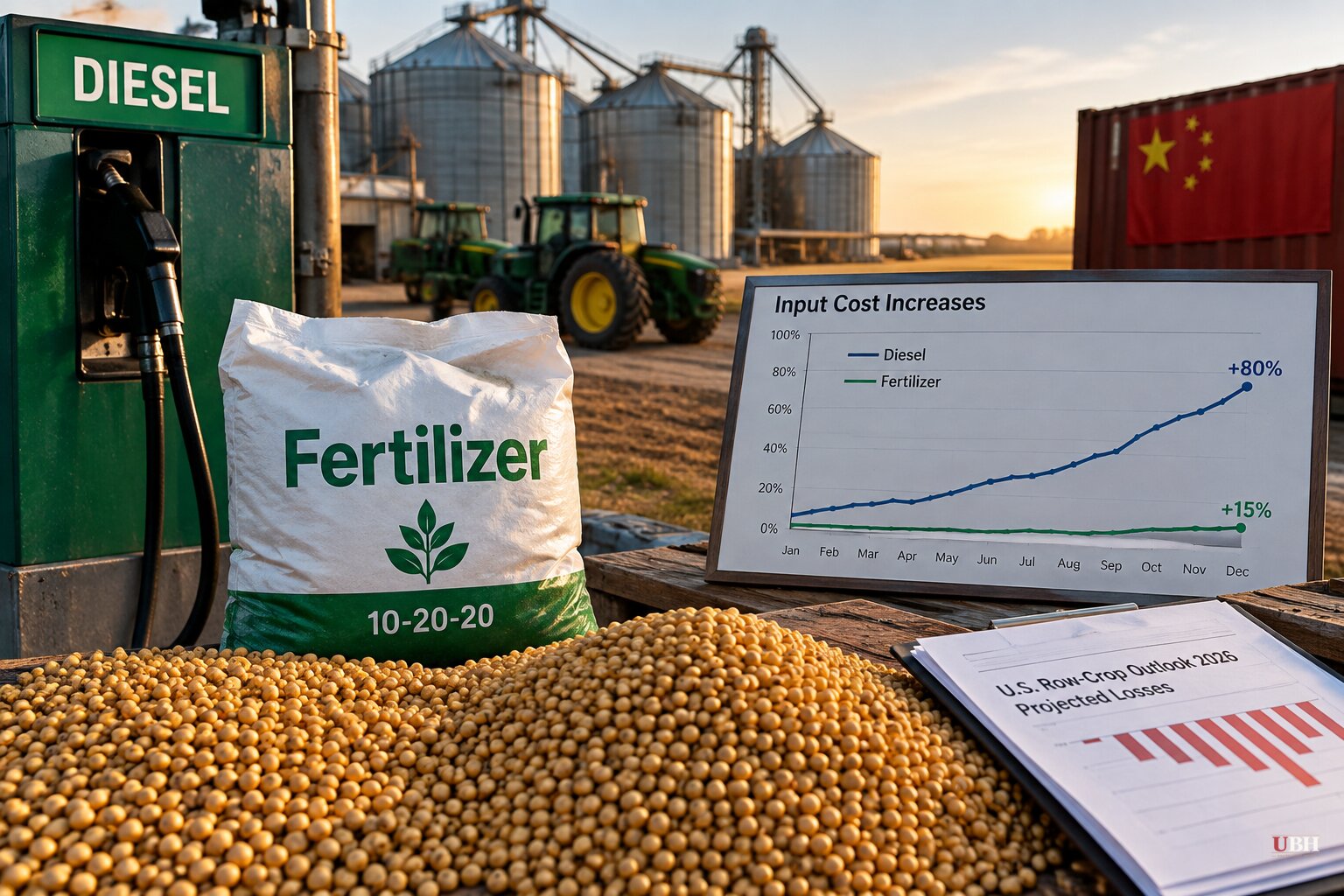
Rick Telesz farms about 700 acres of soybeans, corn and dairy cattle in western Pennsylvania. He expects a decent soybean crop this fall. He'll still be lucky to break even.
"Am I going to make money this year?" Telesz asked NPR. "I hope the harvest is good enough that I can pay for all those inputs I had this spring and summer."
Those inputs are the problem. Fertilizer costs are up 15% compared to last year, and diesel has jumped 80%, according to NPR's reporting. Telesz is paying about $6 a gallon, and his combine alone burns 150 gallons a day. AAA puts the national average retail diesel price even higher, around $6.50 a gallon, though off-road farm diesel is exempt from the 24.4-cent federal fuel tax and some state taxes.
"It's a cost that a farmer can't pass on," Telesz said. "A farmer, it's just an added cost he just has to absorb. It's real. It's painful."
Iran, tariffs, and a war that hits the farm bill twice
Much of the fuel and fertilizer squeeze traces back to the U.S. war with Iran, which disrupted Middle East energy and chemical supplies feeding American agriculture, NPR reported. That's on top of an unrelated headache: President Trump's trade war with China.
China has historically been the third-largest buyer of U.S. farm exports. It slashed those purchases last year in retaliation for Trump's tariffs, and the recovery has been partial at best.
"Soybeans are coming back a little bit, but currently they're at much, much lower levels than they were pre-Trump 2.0," economist Chad Bown told an audience this week at the Peterson Institute for International Economics. "For all of the other products, cotton, wheat, pork, beef, the exports were devastated in 2025, and there's no evidence of them coming back."
The strongest defense of the tariff strategy, made by administration allies, is that short-term pain on China purchases is the price of forcing Beijing into a fairer long-term trade posture, and that a Trump-Xi meeting is aimed at securing exactly that kind of commitment on farm purchases. China has a track record of not fully delivering on past purchase pledges, and Bown's data show that, for now, most categories other than soybeans show no recovery at all. Whether the strategy pays off is unresolved and depends on commitments that haven't yet materialized in the trade numbers.
USDA sees more revenue, but more red ink too
USDA projects farm revenue will actually rise this year as crop prices recover and farmers sell more bushels and bales. But economist Faith Parum of the American Farm Bureau Federation says rising expenses will eat most of that gain. Producers of all major row crops are projected to lose money in 2026, the fourth consecutive year of losses.
"They're paying way more to grow a crop and they're not making near enough for it," Parum said. "We've had a tough time in the farm economy."
About 200,000 farms have shut down since 2020, according to Parum. Bankruptcy attorney Joe Peiffer, who represents farmers in Iowa, Missouri and Illinois, says clients are done fighting.
"Farmers are saying, 'we're ready to throw in the towel,'" Peiffer said. "We're sick of working our back ends off and losing money." Farm bankruptcies have climbed over the past year, according to industry tracking cited by NPR affiliates covering the story.
Wheat is a separate mess entirely
Kansas wheat farmer Merrill Nielsen, who works 2,500 acres, is watching bread-wheat futures up 39% this year, according to the Guardian. Instead, he lost his entire spring wheat crop to erratic weather, and drought has settled over the southern Great Plains.
"We're not looking to plant any more wheat than we probably normally would," Nielsen said. "Really, we'll have to see what the weather does for us."
Market strategist Joao Lampreia of Freedom24 told the Guardian that forecasts for a strong El Niño pattern carry "some alarming signals" for wheat, a weather cycle the Guardian's reporting describes as intensified by climate change, a characterization drawn from the outlet's cited experts rather than settled consensus in these sources. Global wheat stocks in major exporting countries sit near their second-lowest levels on record, and Australia's plantings are down 12% on drought fears and fertilizer costs.
Russian strikes on Black Sea port facilities have also choked off grain shipments through a corridor that carries roughly one-third of global wheat trade, Texas A&M economist Mark Welch told the Guardian. Only 35% to 50% of that Black Sea wheat may find alternate export routes, Lampreia estimated, meaning higher prices could stick even if the war doesn't escalate further.
Congress is closer to acting, but nothing's signed yet
After three years of deadlock, Congress has inched toward its first new farm bill in nearly eight years. The House passed its version in April, and the Senate Agriculture Committee voted this week to advance its own bill to the full Senate, according to the Washington Post. Both chambers still have to reconcile their bills and get something to the president's desk. For farmers like Telesz and Nielsen watching diesel prices and drought forecasts in real time, that legislative timeline remains the biggest open question hanging over next year's planting decisions.
Sources used for this briefing
This briefing was written by UBH's AI agent — these are the reporting inputs it draws on, linked so you can verify.


