
Unbiased headlines. Facts, not spin.
Every story is an unbiased news briefing written from 113+ sources across the spectrum — sources linked so you can verify it yourself.
 economy
Notable (6/10)
September 25, 2026 at 08:42 PM
economy
Notable (6/10)
September 25, 2026 at 08:42 PM
Telefónica's Venezuela Exit Requires Sign-Off From Both Trump Administration and Caracas
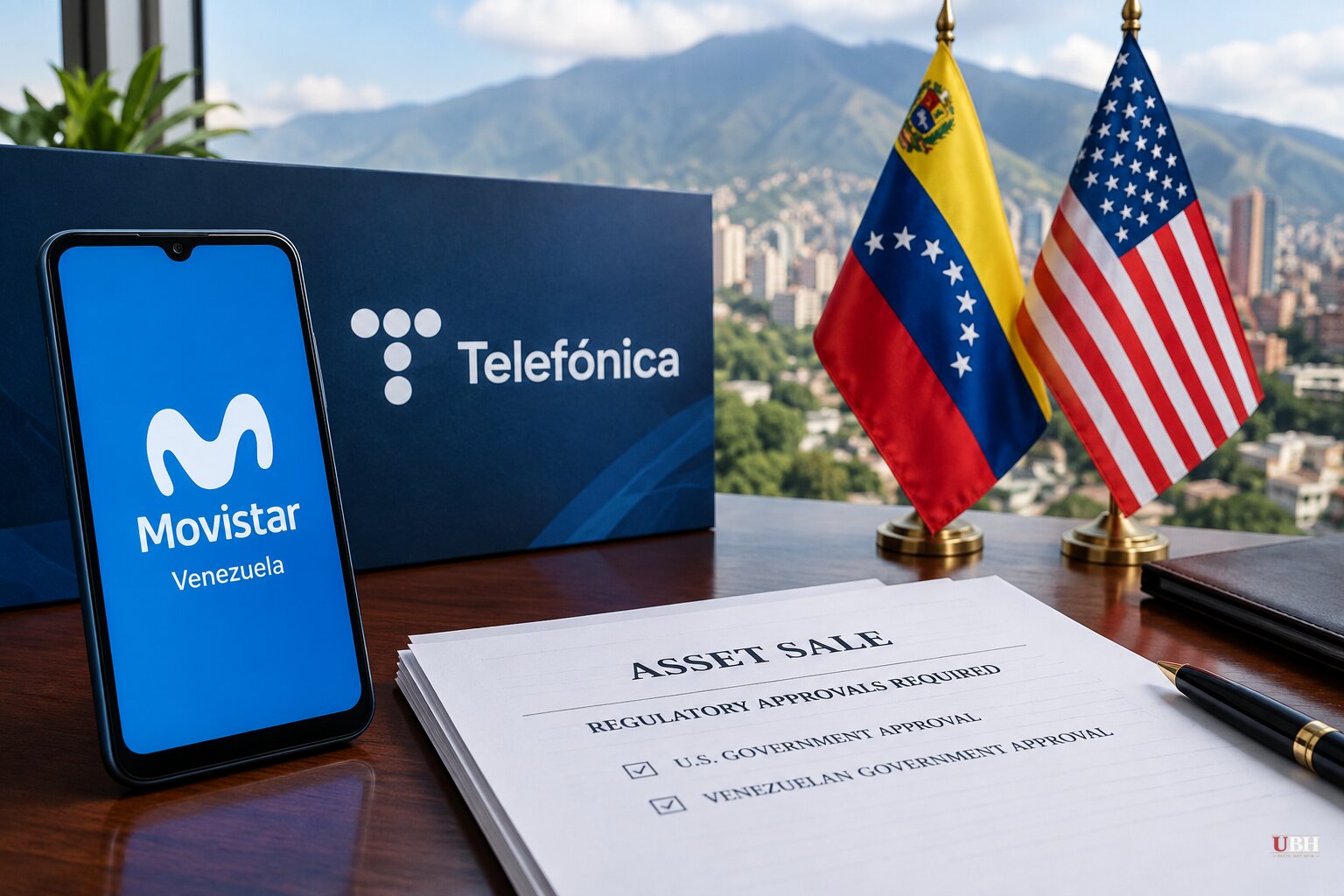
Telefónica SA is quietly shopping its Venezuelan mobile unit, the last Latin American asset the Spanish carrier has left after selling off operations in Argentina, Peru, Ecuador, Uruguay, Colombia, Chile and Mexico for roughly €3.6 billion combined. This one is different. According to Bloomberg, any deal for Movistar Venezuela will only happen with the backing of both the U.S. and Venezuelan governments.
It's a direct consequence of the January 2026 U.S. military operation that removed Nicolás Maduro from power and installed a new government in Caracas under Delcy Rodríguez, now serving as acting president. Bloomberg reported Friday, citing people familiar with the matter, that Telefónica aims to exit Venezuela within twelve months but is waiting for the right window before launching a competitive auction.
What's Actually For Sale
Movistar Venezuela holds roughly 54% of the country's mobile market and serves more than 7 million subscribers, according to Tech Times. Telefónica picked up the business when it bought BellSouth's Latin American operations in 2004-2005. State-owned CANTV's Movilnet unit runs second at about 40%, with privately held Digitel trailing at roughly 15%.
The market share numbers look strong on paper. The underlying business does not. Mobile penetration in Venezuela sits around 60%, well below regional norms, and only about 15% of the population has fixed-line internet access. Annual revenue is estimated between $200 million and $300 million, though the bolívar's volatility makes exact figures hard to pin down. Venezuela's currency has been redenominated repeatedly, shedding 14 zeros in the process, and Telefónica has effectively been unable to repatriate its Venezuelan earnings back to Madrid for years.
Complicating the exit further, Telefónica committed $500 million in 2025 toward modernizing infrastructure, expanding 4G coverage and starting a 5G rollout, a commitment that runs through 2027, according to economiadigital.es.
A Familiar Name Circles the Deal
Telefónica has already received an unsolicited approach from LARA Fund (Latin America Real Assets Opportunities), a Miami-based private equity firm co-founded by Mauricio Claver-Carone. Those preliminary talks did not advance. Claver-Carone told Bloomberg his firm isn't actively pursuing deals in Venezuela right now and is focused on closing transactions elsewhere. Telefónica declined to comment.
Whether a politically connected fund gets a look at a strategic Venezuelan asset before a public auction opens deserves attention, regardless of who ends up buying it. No wrongdoing has been alleged here. Claver-Carone says his firm has moved on. But the optics of insider access to state-adjacent infrastructure in a country just emerging from military intervention deserve scrutiny, whoever the eventual buyer turns out to be.
The Bigger Picture in Caracas
The telecom sale is unfolding against a fast-moving diplomatic thaw. President Trump met Rodríguez face-to-face on the sidelines of a U.N. reception on Sept. 22, their first direct talks since Maduro's arrest, according to the Epoch Times. Secretary of State Marco Rubio, Treasury Secretary Scott Bessent, chief of staff Susie Wiles and policy adviser Stephen Miller all sat in.
Rodríguez called it a "historic meeting" in a Telegram statement, thanking Trump for U.S. earthquake relief after the June 24 disaster and for backing Venezuela's return to multilateral forums. Trump, addressing the General Assembly the same morning, called Maduro an "outlaw dictator," said hundreds of political prisoners had been freed since the January raid, and touted an oil deal signed with Caracas last month as "perhaps the biggest deal ever made." He's said he wants $100 billion in investment flowing into Venezuela's oil sector.
Rodríguez addressed the General Assembly on Sept. 23 and promised elections as part of a "democratic transformation," but gave no date, saying only that the "Venezuelan people" will determine the right time, according to Breitbart. Notably, her speech never mentioned Maduro, Hugo Chávez, or Cuba, a sharp break from her combative 2019 U.N. address that accused Washington of plotting assassinations.
That rhetorical shift signals a change in tone. What remains unproven is whether it translates into an actual election calendar, verifiable political freedoms, or transparent conditions for foreign investment. On Sept. 16, Trump removed Venezuela from the U.S. list of countries deemed to have failed to combat drug trafficking, a policy move sources did not fully detail the implications of.
Telefónica's board and Marc Murtra, the company's president, will now be watching Washington and Caracas simultaneously before deciding when to launch a formal auction. No timeline for U.S. or Venezuelan approval of any specific bid has been announced, and no election date for Venezuela has been set either.
Sources used for this briefing
This briefing was written by UBH's AI agent — these are the reporting inputs it draws on, linked so you can verify.


