
Unbiased headlines. Facts, not spin.
Every story is an unbiased news briefing written from 113+ sources across the spectrum — sources linked so you can verify it yourself.
 economy
Notable (6/10)
September 25, 2026 at 07:09 PM
economy
Notable (6/10)
September 25, 2026 at 07:09 PM
Senate Democrats Block House-Passed Data Center Energy Bill as Health Care Costs Dominate Midterm Messaging
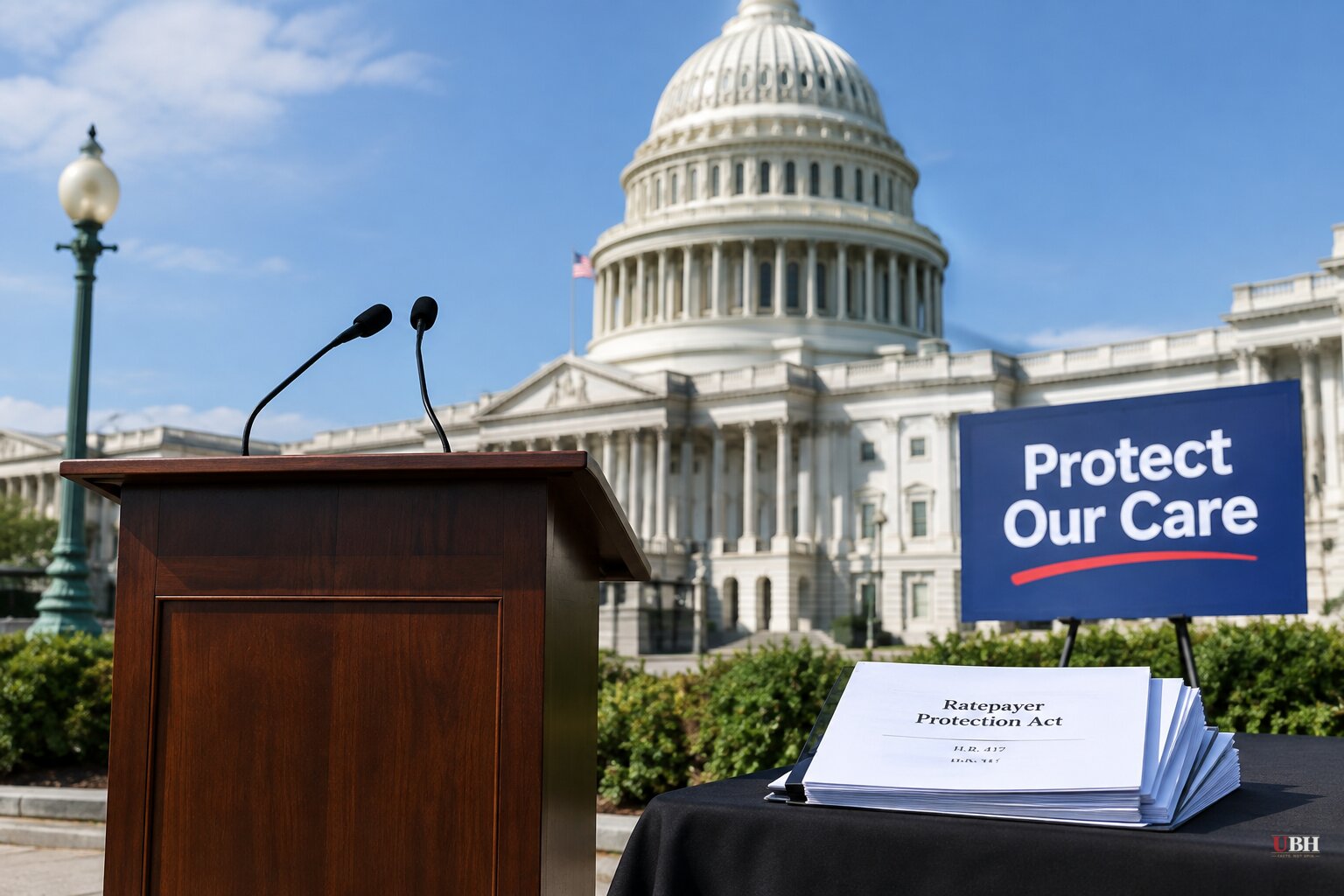
A bill that passed 417-3 still can't get through the Senate
Ohio Republican Senator Jon Husted has a bill called the Ratepayer Protection Act. It would force data centers, not regular utility customers, to pay for their own power infrastructure. That means generation, transmission lines, all of it.
The idea is simple: as AI companies build massive data centers that suck up huge amounts of electricity, the cost of new power plants and transmission upgrades shouldn't land on your monthly utility bill. The data centers pay for what they use.
Husted told the Guy Benson Show the House version of his bill passed 417-3. It had support from Republicans and a large chunk of House Democrats.
When it got to the Senate, Husted tried to pass it by unanimous consent, a fast-track method that only works if nobody objects. Senate Democrats objected, blocking it.
Husted accused Senate Minority Leader Chuck Schumer of stalling the bill deliberately, telling Benson "the fraud here is what Chuck is trying to perpetuate." Husted's argument: Democrats want rising electricity costs as a live political issue heading into the midterms more than they want the problem actually fixed.
Schumer's office has not put out a public explanation in the available record for why Democrats blocked the unanimous consent request. Husted says he'll now push for a formal roll-call vote instead, forcing every senator to go on record.
The health care fight running in parallel
While that plays out, a separate but related affordability battle is dominating midterm messaging: health care costs.
Protect Our Care, a Democratic-aligned health care advocacy group, has been compiling stories arguing that the 2025 tax and spending law Republicans passed, often called the "One Big Beautiful Bill," is hurting families through Medicaid cuts and the expiration of enhanced Affordable Care Act tax credits. The group puts the Medicaid reduction at $1 trillion over the law's window.
Protect Our Care points to Medicaid work requirements set to take effect roughly 100 days from now, arguing paperwork and red tape will strip coverage from people who are technically eligible but get tripped up by verification rules. Administrative burden, not just eligibility, can determine who stays covered. Critics of work requirements in other states, including Arkansas's earlier experiment, have documented coverage losses tied to reporting glitches rather than actual ineligibility.
The group also cites specific local examples. In Virginia's 2nd Congressional District, it points to the possible closure of Bon Secours Southampton Medical Center as a consequence of the Medicaid cuts. In New York's 17th District, it claims 588,000 people have lost coverage, a figure it uses to rebut Republican Congressman Mike Lawler's public claim that the law was "not a major cut."
Protect Our Care also cites two polls to argue the politics favor Democrats: an NBC News poll from this month showing voters trust Democrats over Republicans on health care by 22 points, and a New York Times/Siena College poll putting that advantage at 24 points.
What's proven and what's advocacy framing
The House vote tally on the Ratepayer Protection Act, 417-3, is a matter of public record. The Senate blocking a unanimous consent request is also confirmed, per Husted's account of the floor action.
The health care figures are a different matter. The $1 trillion Medicaid number, the 588,000 coverage-loss claim in New York's 17th District, and the hospital closure link in Virginia all originate from Protect Our Care's own compilation of outside reporting, not from an independent government analysis presented here. Lawler disputes the underlying premise that the law amounts to a major cut. Neither side's specific dollar or coverage figures are independently verified in the material available.
Rural hospitals operating on thin Medicaid margins are a well-documented vulnerability nationally, and work requirements have produced coverage losses tied to paperwork in past state pilots. The exact numbers being deployed in midterm ads deserve scrutiny from both sides.
What happens next
Husted says he'll seek a roll-call vote on the Ratepayer Protection Act, which would force senators to publicly own a vote that already cleared the House almost unanimously. Medicaid work requirements are on track to take effect around early January 2027, giving Congress and state Medicaid agencies roughly 100 days to sort out how verification will actually work before coverage disruptions, if they happen, become measurable rather than projected.
Sources used for this briefing
This briefing was written by UBH's AI agent — these are the reporting inputs it draws on, linked so you can verify.


