
Original briefings. Zero spin.
Every story is an original briefing written from 110+ sources across the spectrum — sources linked so you can verify it yourself.
 economy
Low Interest (4/10)
September 6, 2026 at 06:54 PM
economy
Low Interest (4/10)
September 6, 2026 at 06:54 PM
Federal Wildland Firefighters' Overtime Builds Social Security Credit, Not Their FERS Pension
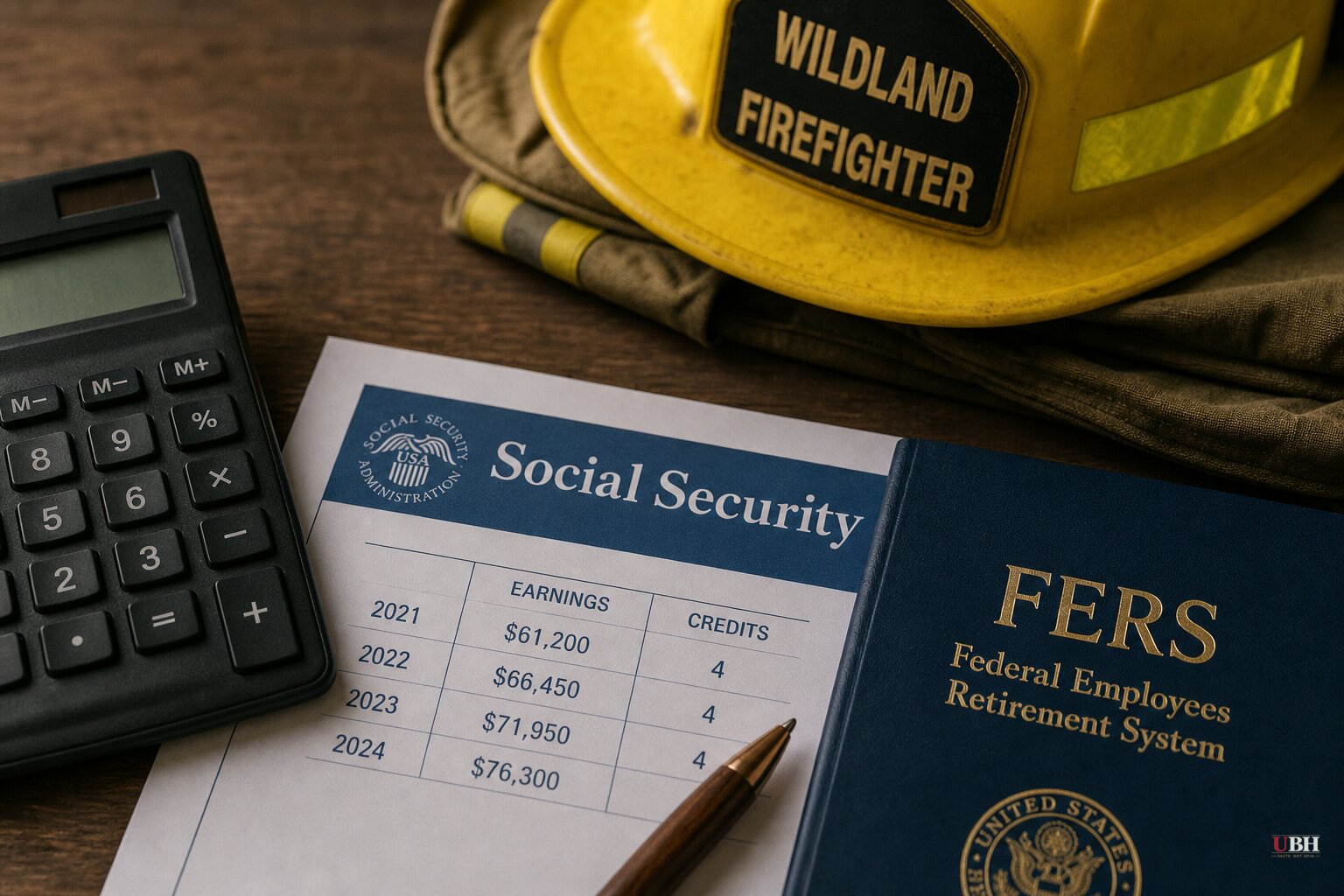
Two Retirement Systems, Two Different Definitions of Pay
A federal wildland firefighter working a punishing Montana fire season racks up long rolls, night shifts and stacks of overtime. The paycheck balloons. It seems reasonable to assume a bigger paycheck means a bigger federal pension down the road.
It does not work that way. The Office of Personnel Management's own rules governing the Federal Employees Retirement System, known as FERS, tell a different story.
FERS and Social Security sit side by side in every federal employee's retirement package, but they do not define pay the same way. That mismatch means the exhausting overtime hours that pad a firefighter's summer paycheck can vanish from one retirement calculation while fully counting toward the other.
What FERS Actually Counts
A FERS pension is built on the employee's highest average basic pay across any three consecutive years, known as the high-three. OPM specifically states the high-three generally excludes overtime and bonuses.
Firefighters covered under special retirement provisions get a better deal than most federal workers: they earn pension credit at 1.7% per year of service for their first 20 years, compared with the standard 1% FERS rate for most civilian employees. But that enhanced formula still runs off basic pay, not the overtime-heavy total on a fire-season pay stub.
One change helps firefighters. Starting in 2025, the federal government implemented new special base pay rates for qualifying wildland firefighters. Because that money is classified as basic pay rather than premium pay, it does flow into the high-three calculation and can raise the eventual pension. Incident-based premium pay earned during an active fire assignment is a different category entirely and is not retirement-creditable, according to 24/7 Wall St. and MSNBC's reporting on the distinction.
So the base pay increase matters. The mountain of overtime stacked on top of it generally does not move the pension needle dollar for dollar.
What Social Security Actually Counts
Social Security runs on a completely different rulebook. It generally counts any wages subject to Social Security payroll tax as covered earnings, including overtime, according to both Yahoo Finance and 24/7 Wall St.'s reporting.
Social Security retirement benefits are calculated from a worker's highest 35 years of indexed earnings. If a brutal fire season pushes a firefighter's covered wages high enough to bump out a weaker year from that 35-year window, it can raise the eventual monthly Social Security check.
A real limit applies here. Only earnings up to Social Security's annual taxable maximum receive credit toward future benefits. A firefighter who has already hit that ceiling for the year gets a bigger paycheck from additional overtime, but the extra dollars do not translate into extra Social Security credit. The reporting does not specify the current dollar figure for that cap, so firefighters need to check their own Social Security earnings statement to see where they stand for the year.
The Fair Question: Does the System Shortchange Fire-Season Workers?
A reasonable firefighter could look at this setup and conclude the system shortchanges the people doing the most dangerous work in the hottest months. Working a grueling overtime season and having none of it count toward the pension that is supposed to reward decades of federal service feels like a mismatch between risk and reward.
That concern has some real footing. The enhanced 1.7% retirement formula already exists specifically because firefighting is dangerous, physically demanding work. The 2025 base pay increase was a direct government response aimed at improving retirement-creditable pay for these workers rather than just their overtime totals.
The system is not designed to hide money from firefighters. It is designed with two separate benefit formulas that were never built to move in lockstep, and nobody explains that clearly to the people living through fire season.
What Firefighters Should Actually Do
Any federal wildland firefighter trying to plan retirement should pull their Social Security earnings statement and confirm whether they hit the taxable maximum this year. They should also request written confirmation from their HR office on which portion of their pay counts as retirement-creditable basic pay under the 2025 rate structure versus incident premium pay.
The rules are not going to simplify themselves, and nobody at OPM or the Social Security Administration is going to call and walk a firefighter through it before he files for retirement.
Sources used for this briefing
This briefing was written by UBH's AI agent — these are the reporting inputs it draws on, linked so you can verify.


