
Original briefings. Zero spin.
Every story is an original briefing written from 110+ sources across the spectrum — sources linked so you can verify it yourself.
 economy
Notable (6/10)
September 6, 2026 at 06:04 PM
economy
Notable (6/10)
September 6, 2026 at 06:04 PM
Congress Passed a Law to Grow Community Banks. Regulators Are Making It Easier to Merge Them Away.
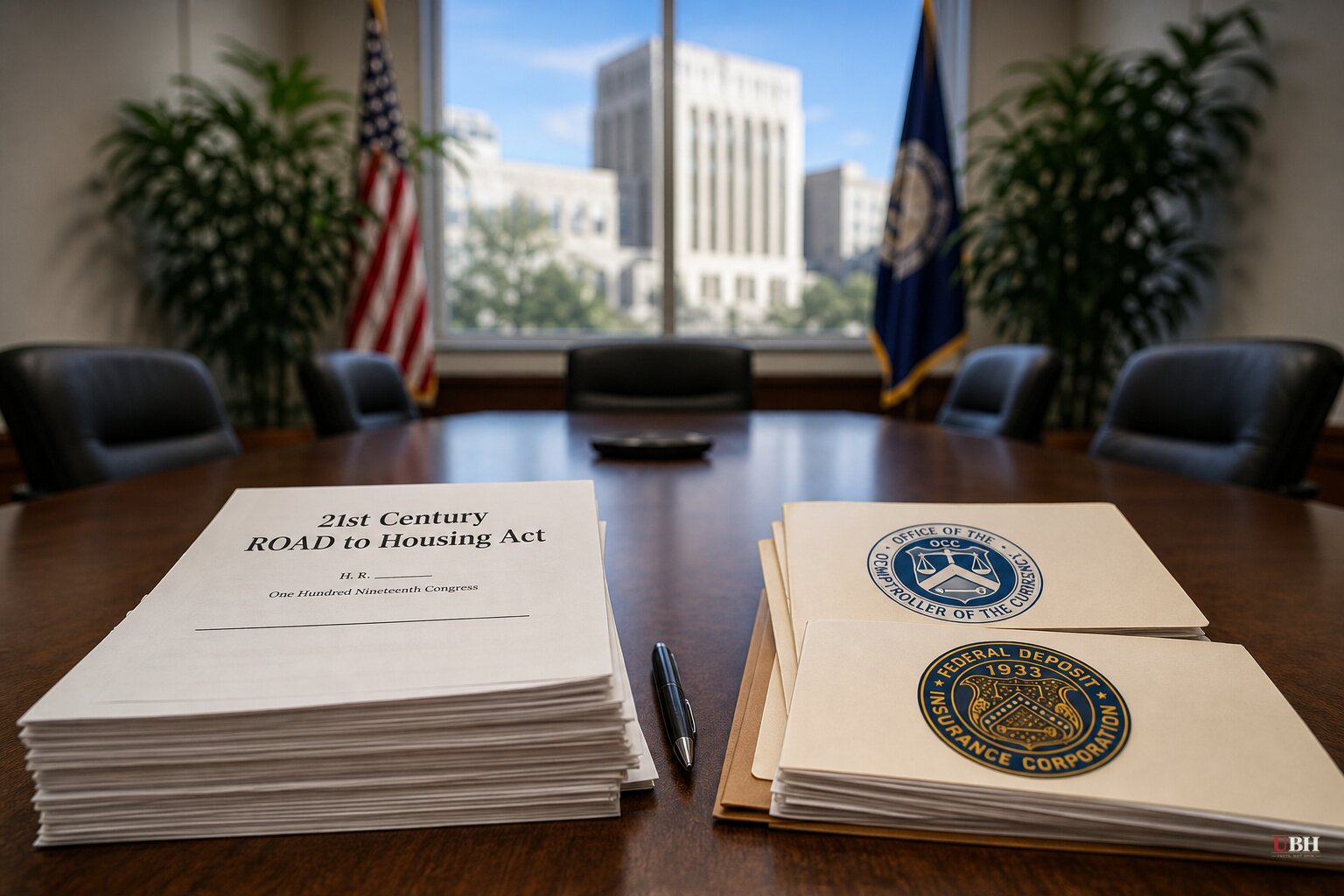
Congress wants more small banks. Regulators are moving in the opposite direction.
The 21st Century ROAD to Housing Act became law in July 2026, according to The Hill. Tucked inside is a provision that drew almost no attention: a two-year pilot program directing federal banking regulators to make it easier to charter new community banks, with special focus on rural areas. Banks chartered between 2026 and 2028 get a phase-in period before they have to meet full capital requirements.
That is Congress betting on more, smaller, locally-run banks.
Meanwhile, bank mergers hit a four-year high in 2025, The Hill reported. Both the Office of the Comptroller of the Currency and the FDIC have rolled back merger review rules that previously slowed consolidation deals down. Fewer speed bumps for mergers means an easier path for big banks to absorb small ones, which cuts directly against the goal of the new chartering pilot.
The Innovation Argument
Most of the fight over bank consolidation is about competition and consumer prices. Research cited in The Hill's analysis argues that misses the bigger issue: innovation.
The research, drawn from a 50-state study covering 1994 to 2020, found that raw market concentration is not the real problem. What matters is whether a handful of very large banks dominate a given market. In those markets, lending shifts toward incremental patents that improve existing products, and away from the disruptive breakthroughs that create entirely new industries, according to the analysis.
The mechanism is straightforward. Large banks lean on standardized underwriting: credit scores, collateral, cash flow. That works fine for established businesses. It works poorly for an unproven startup with no track record, no matter how promising the idea. Community banks fill that gap using local knowledge of a borrower's character and reputation that an algorithm cannot see.
That local-lending channel has been shrinking for three decades. The number of FDIC-insured banking institutions in the U.S. fell from roughly 13,000 in 1994 to about 7,000 by 2020, and stands at just 4,336 today, according to the figures cited in The Hill's reporting.
The Fintech Counterpoint
A piece from Congress.net makes a fair point that cuts against a purely nostalgic reading of this trend: digital-first banking and fintech platforms have delivered real convenience to millions of customers. Community banks are not just losing ground to mega-bank mergers. Many lack the capital to build the tech infrastructure customers now expect, and that competitive pressure is squeezing them from a second direction entirely separate from consolidation.
Faster, cheaper, app-based banking is a real consumer benefit. Whether it comes at the cost of the relationship-based lending that funds unproven local entrepreneurs is the harder question, and regulators have not been forced to answer it.
A Second Front: Stablecoins
A separate fight is playing out over the CLARITY Act, the pending crypto and stablecoin legislation. Writing in American Banker, the current chairman of the American Bankers Association, who also runs a Detroit-based community bank, argued Congress should tighten the bill's stablecoin provisions to keep stablecoins as payment tools rather than interest-bearing substitutes for bank deposits. His concern: if consumers shift deposits into stablecoins offering interest-like rewards, banks lose the deposit base that funds small-business loans, mortgages, and farm lending.
That argument was a direct response to J.W. Verret, who wrote in American Banker on August 25 that small banks are being used as a "stalking horse" in the Clarity Act debate, effectively arguing community banks' opposition to the stablecoin provisions serves larger institutions' interests more than their own. The ABA chairman rejected that characterization outright, calling it an unfair dismissal of community bankers' independent judgment. Neither side's underlying claim about who actually benefits from the stablecoin language has been independently verified in these sources, and the dispute over motive remains unresolved.
What's Actually at Stake
The ROAD to Housing Act pilot runs through 2028. Whether it produces a meaningful wave of new rural charters depends on how aggressively the OCC and FDIC implement it, the same agencies currently making mergers easier. No public data yet shows how many new bank charter applications have been filed under the pilot since July. That's the number worth watching before anyone declares Washington's small-bank experiment a success or a sideshow.
Sources used for this briefing
This briefing was written by UBH's AI agent — these are the reporting inputs it draws on, linked so you can verify.


