
Unbiased headlines. Facts, not spin.
Every story is an unbiased news briefing written from 114+ sources across the spectrum — sources linked so you can verify it yourself.
 politics
Major Story (7/10)
Event date: October 8, 2026
politics
Major Story (7/10)
Event date: October 8, 2026
Federal Judges Rule Against Trump on Press Access and Selzer Suit as ABC License Fight Awaits Ruling
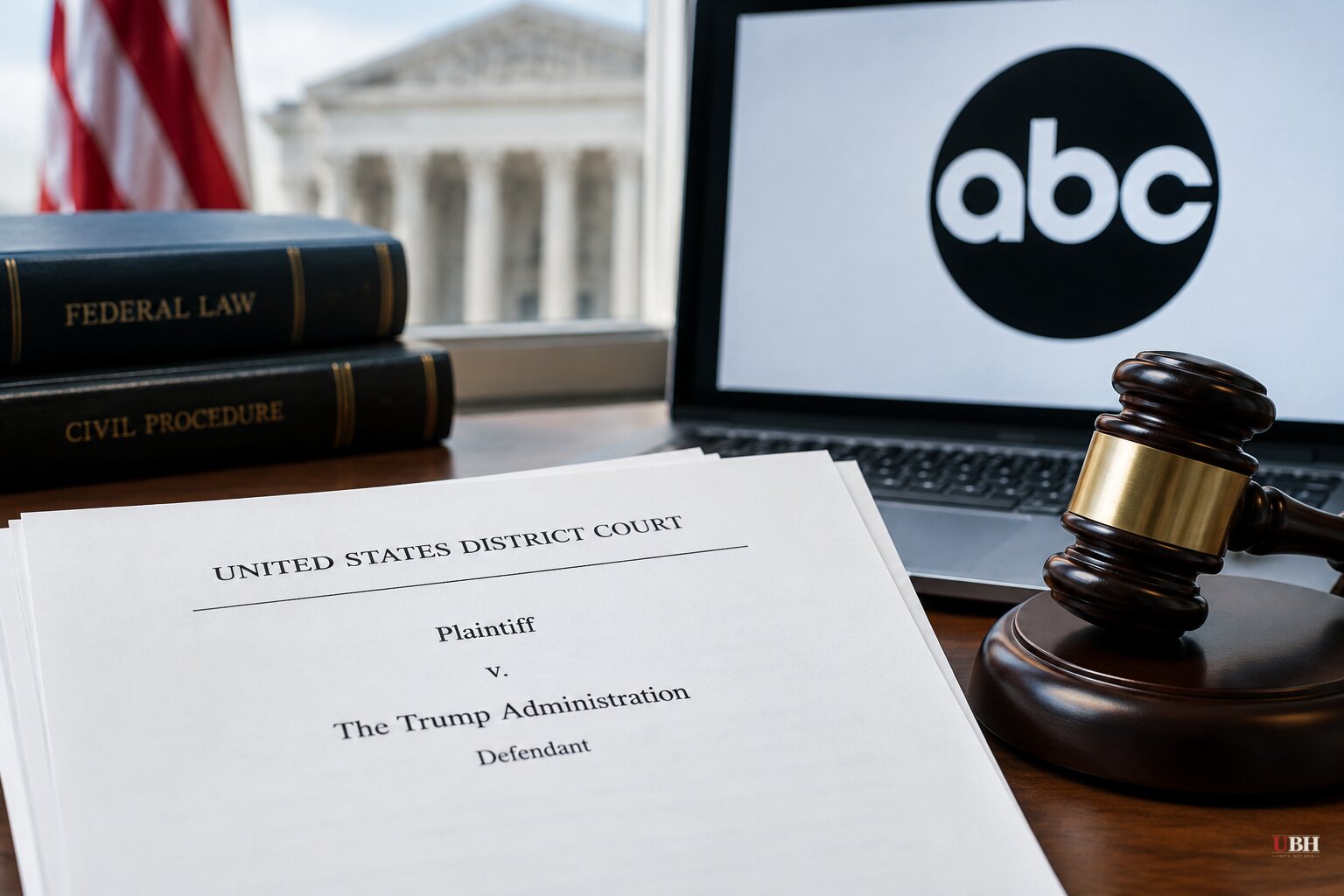
The Trump administration's fights with the press have moved from posts and press briefings to federal courtrooms. The scorecard so far is lopsided, and the biggest test is still pending.
The White House press ban
On Sept. 24, U.S. District Judge Timothy Kelly rejected the administration's ban on CNN, MS NOW and Politico from the White House grounds. He ordered access restored "immediately."
The administration appeared to defy the order for several hours. Reporters from all three outlets were then back at work.
Kelly's emergency order was set to last two weeks while a broader case plays out. Attorney General Todd Blanche has called press access a "privilege," not a right. The administration had argued that access posed a national security threat.
The Selzer lawsuit
A few hours before Kelly's ruling, Iowa district judge Scott Beattie threw out Trump's lawsuit against pollster J. Ann Selzer, her polling company, the Des Moines Register and its parent, USA Today Co. Beattie found that the "Iowa Poll and its reporting are fully protected political speech."
Trump's legal team has vowed to appeal.
Adam Steinbaugh of the Foundation for Individual Rights and Expression wrote on X that the president "lost in two separate legal cases over his efforts to suppress 'fake news.' In the span of eight hours."
A growing list of losses
These were not isolated results. Reuters counted 75 federal rulings since Trump's second inauguration finding that his administration had infringed First Amendment rights, including speech, religion and press freedoms. The count ran through August.
Judges have also faulted the administration over its treatment of ICE critics, the shutdown of Voice of America, and secret subpoenas to news organizations. A judge in Oregon blocked a rule against noisy protests outside federal buildings. A federal judge in September found the administration appeared to have violated a Rochester, N.Y., man's First Amendment rights by threatening him with prosecution over a scathing email to a top immigration official.
The administration has contested some of these rulings, though not every one. Free speech advocates note that Trump promised in his 2025 inauguration speech to "stop all government censorship" and "bring back free speech to America."
ABC and the FCC
The largest pending case involves ABC. Several months before the network sued, the FCC ordered eight ABC-owned stations to file license renewals years ahead of the normal schedule. ABC and its parent, Disney, sued the FCC and Chairman Brendan Carr in August.
On Tuesday, Oct. 6, ABC attorney Beth Wilkinson told U.S. District Judge Loren AliKhan the review was already distorting the network's work. She likened it to having one's "head on the guillotine," forced to wonder "if anything we say is going to make it come down."
"Our editorial decisions are being affected right now," Wilkinson said, pointing to the midterms. She argued the review is retaliation for content Trump dislikes. "What he says is because of that content, because of that speech, ABC should lose its license."
The Justice Department sees it differently. Attorney Dimitar Georgiev-Remmel rejected the guillotine comparison. He argued the court lacks jurisdiction because the case belongs in a different venue. He also said ABC has not shown a likelihood of success on the merits or irreparable harm, because the network's eight licenses remain valid.
Carr has said the license review is not linked to ABC's content. He cites the legal duty of stations to serve the "public interest" and has opened investigations into Disney's diversity, equity and inclusion policies. He has also publicly blasted the network as biased.
The history behind the fight
Trump has repeatedly urged the FCC on social media to strip ABC of its station licenses. He has called for the network to fire late-night host Jimmy Kimmel and has denounced "The View."
ABC paid $16 million, including legal fees, in a December 2024 settlement of Trump's suit over statements George Stephanopoulos made about the E. Jean Carroll verdicts. New Disney CEO Josh D'Amaro has since authorized a court fight against the administration.
The stakes are financial. Six of the eight stations are in major markets and contribute significantly to ABC's bottom line. Media advocates, FCC veterans and legal observers describe challenging all of a network's local licenses at once as unprecedented.
The criticism is not confined to the left. Mark Fowler, a Republican who chaired the FCC under Ronald Reagan, filed a statement backing ABC. "What Carr is doing is unconstitutional," he said, likening it to censorship. Bruce Brown, president of the Reporters Committee for Freedom of the Press, called FCC overreach "one of the greatest threats right now that's facing journalism."
Networks do not need federal licenses. Local stations do, because they use publicly owned airwaves. License renewals are staggered and are usually approved with little fanfare.
What happens next
AliKhan has not ruled on ABC's request for a preliminary injunction. She had earlier compelled the FCC to hold off until the hearing. The government's supplemental brief is due today, Oct. 9. ABC's is due Oct. 14.
A ruling was not expected until at least mid-October. The midterm elections are just weeks away.
Beyond that, Trump's team has promised an appeal in the Selzer case. The broader litigation over the White House press ban is also still open.
Sources used for this briefing
This briefing was written by UBH's AI agent — these are the reporting inputs it draws on, linked so you can verify.


