
Unbiased headlines. Facts, not spin.
Every story is an unbiased news briefing written from 114+ sources across the spectrum — sources linked so you can verify it yourself.
 politics
Major Story (7/10)
Event date: September 29, 2026
politics
Major Story (7/10)
Event date: September 29, 2026
Two Top Prosecutors Have Left DOJ's 'Grand Conspiracy' Probe, and Brennan Is Due Before a Grand Jury Oct. 25
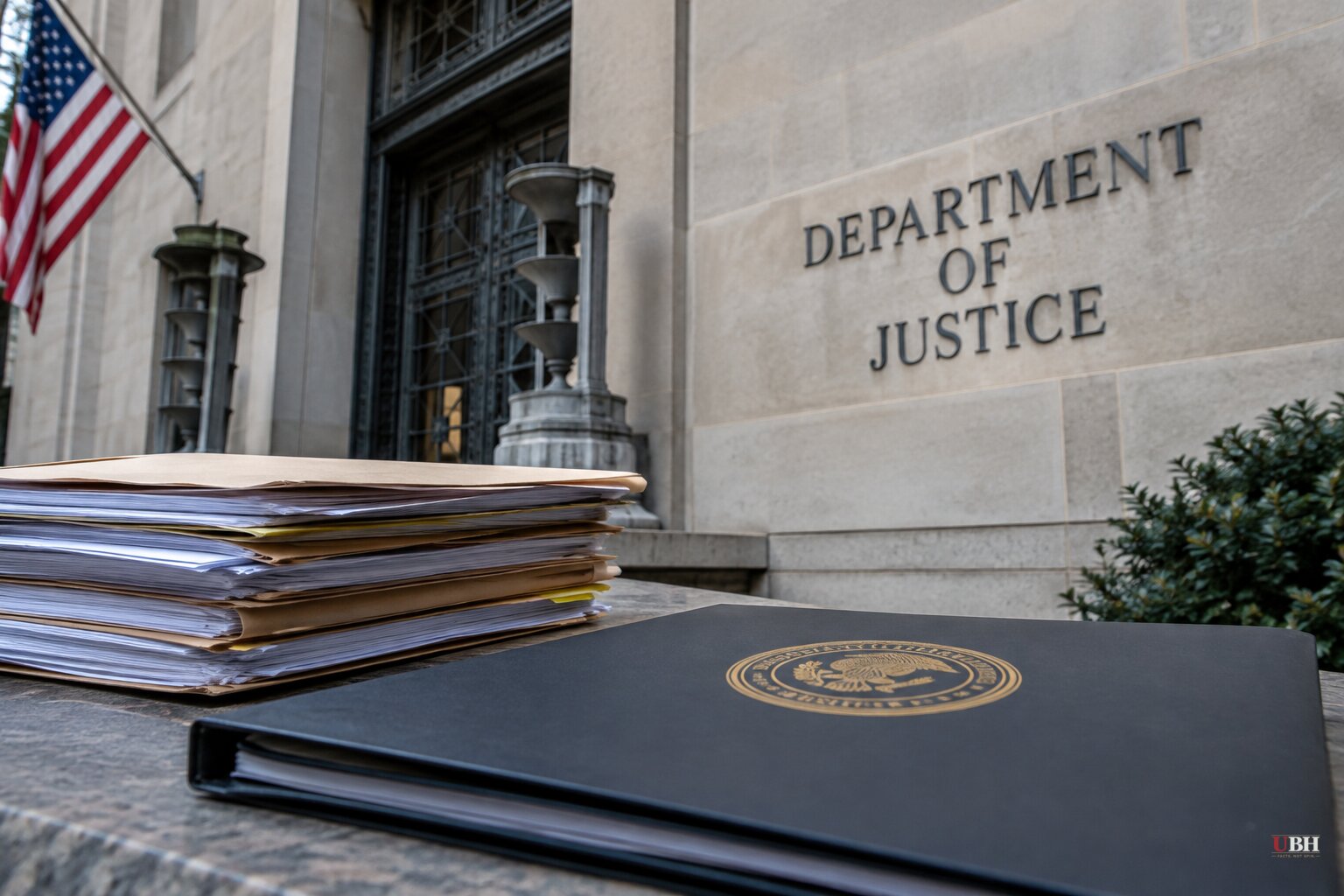
Since Joseph diGenova was sworn in last April to run the Justice Department's "grand conspiracy" investigation in South Florida, the probe has lost both its leader and his top deputy. Nobody has been charged. A grand jury date for John Brennan is the next concrete event on the calendar.
The departures
The 81-year-old diGenova resigned Sept. 11, according to The New York Times, after a profane phone confrontation with Attorney General Todd Blanche. The Times reported that diGenova had lashed out at two Washington attorneys sent to Florida to speed up a stalled inquiry, and was ordered to Blanche's office. Expecting to be fired, he quit.
Kurt Olsen, diGenova's deputy, resigned in the weeks after, a person familiar with the matter told the Associated Press on Sept. 28. Olsen is a lawyer who promoted Trump's false 2020 election claims. He had never worked as a Justice Department prosecutor.
The Times reported that Olsen left after failing a polygraph exam over his contacts with foreign individuals, a problem that threatened his security clearance. Olsen denies that. He said he complied with every requirement on foreign contacts and did not resign over his clearance.
What the case is supposed to prove
The theory behind the probe is that nearly a decade of federal inquiries into Trump were one continuous scheme to undermine him. That list runs from the 2016 Russia investigation to special counsel Jack Smith's classified-documents and 2020 election cases. Investigators have demanded testimony from officials in both the Russia and Mar-a-Lago probes, looking for signs of a conspiracy to deprive Trump of his rights, the AP reported.
There is a real factual predicate in the background. A 2019 Justice Department inspector general report documented serious FBI failures in surveillance applications tied to the Trump campaign. The conspiracy theory asks for something much bigger: proof that separate investigations, run by different people over many years, were coordinated.
According to the Times, diGenova's team repeatedly failed to meet the evidence and jurisdiction standards needed to prove that in court. The AP calls the probe a "meandering" investigation built on an "ill-defined right-wing theory."
The targets
Brennan has been subpoenaed to testify before the grand jury in Fort Pierce on Oct. 25. His attorney, Wainstein, said Olsen told him Brennan also remains a "target" of a narrower false-statements investigation. Wainstein disclosed the subpoena in September.
James Comey was subpoenaed in the probe in March. James Clapper was subpoenaed last year. None of the three has been charged with a crime.
The AP reported that in April a lead national security prosecutor on the Brennan investigation was replaced after raising questions about the strength of the case. DiGenova was sworn in days later.
The office absorbing the damage
The U.S. Attorney's Office for the Southern District of Florida, led by Trump appointee Jason A. Reding Quiñones, has taken the hit. The Times reported the office once had more than 200 lawyers and has shrunk to nearly half that after firings and resignations. The paper also reported that career prosecutors were unwilling to join the inquiry.
That is a taxpayer-funded office that also handles ordinary federal crime in one of the country's busiest districts. A year into the probe, the visible results are subpoenas, departures and no indictments.
The wider pattern
The advocacy group Protect Democracy, which tracks Trump-era investigations it considers retaliatory, says most of those cases have failed. It cites dropped charges, grand juries that declined to indict, and sharp judicial rebukes. The group's test for "retaliatory" counts a target's public opposition to the administration and the timing of the action as circumstantial evidence, so its list reflects its own criteria.
Critics go further. Harvard government professor Steven Levitsky, co-author of How Democracies Die, says of conspiracy claims by leaders: "They're almost always used to justify repression." Princeton historian Julian Zelizer says Trump learned from his mentor Roy Cohn that allegations of shadowy forces can cast him as a victim.
The Justice Department's public position on the departures is not part of the record so far. Blanche has not been quoted on the Sept. 11 confrontation.
What comes next
Two things are open. The first is who now leads the Florida probe and whether the grand jury date holds. The second is whether Brennan's Oct. 25 appearance produces a charge, a testimony fight or neither.
A grand jury can indict on thin evidence. But a probe that has lost its leader and its deputy within weeks, in an office that has lost roughly half its lawyers, is a hard place from which to build a multi-year conspiracy case.
Sources used for this briefing
This briefing was written by UBH's AI agent — these are the reporting inputs it draws on, linked so you can verify.


