
Unbiased headlines. Facts, not spin.
Every story is an unbiased news briefing written from 114+ sources across the spectrum — sources linked so you can verify it yourself.
 politics
Breaking / Critical (9/10)
October 9, 2026 at 10:18 PM
politics
Breaking / Critical (9/10)
October 9, 2026 at 10:18 PM
Federal Judge Rules DOJ Voter-Roll Checks Against Immigration Database Unlawful
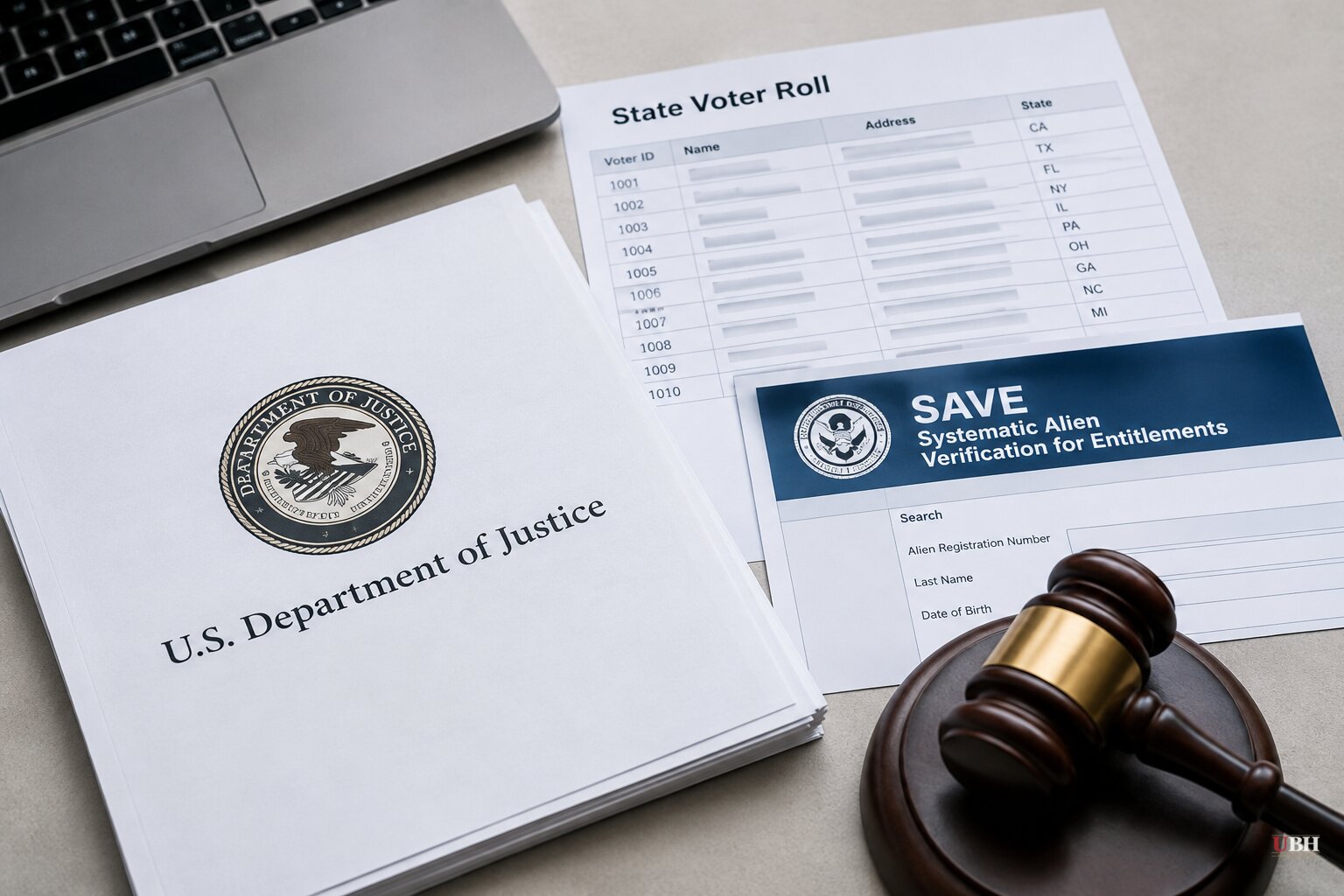
Since the Justice Department began demanding unredacted voter rolls from nearly every state, the effort has lost in court again and again. Of the 30 states and Washington, D.C. the department has sued over refusals, 26 cases have been dismissed. On Friday, Oct. 9, it took a bigger hit.
U.S. District Judge Sparkle Sooknanan, a Biden appointee in Washington, issued a 78-page ruling in Common Cause v. U.S. Department of Justice. She vacated the department's list-maintenance policy, finding it unlawful.
What the judge found
The policy had the Civil Rights Division collect state voter data and run it through the Systematic Alien Verification for Entitlements database, known as SAVE. The division then told states which voters it considered ineligible so they could be removed.
Sooknanan found two problems. One was authority. "Congress has left that authority where our Constitution has always placed it: with the states," she wrote. The other was privacy. She ruled the department violated federal privacy law and "improperly" disclosed and maintained records.
She also said the department "failed to consider the risk that its use of citizenship records known to be unreliable would lead the civil rights division to demand that states remove US citizens from their voter rolls."
"Behind all the window dressing, the challenged policy represents the federal government's attempt to decide who gets to vote," she wrote.
The judge also quoted what she called "startling arguments" from the department, including that "every American citizen who registers to vote is the subject of a voter fraud investigation ... simply because they registered to vote."
The database problem
SAVE was built to verify immigration status and citizenship for benefit applicants. It was not built as a voter-roll audit tool. The administration expanded it to include citizenship data from the Social Security Administration.
Sooknanan noted that this data can be outdated. Immigrants who have since naturalized could still show up as noncitizens. An analysis by ProPublica and The Texas Tribune in February found the system makes "persistent mistakes."
The human cost showed up in the record. Common Cause sued in April on behalf of four citizens: Anthony Nel, Haley Smith, Linda Duckworth and Ruth Nasrullah. All had their registrations canceled after their states handed rolls to the department.
Nel, of Denton County, Texas, got a letter in October 2025 saying SAVE had flagged him as a noncitizen. He had 30 days to provide proof of citizenship or lose his registration. His passport had expired. By the time he renewed it two months later, he was already off the rolls. He later got reinstated.
Where the department stands
Eighteen states, mostly Republican-led, handed over data including full names, birth dates, home addresses, and driver's license or partial Social Security numbers. The department ran that data through SAVE and flagged people identified as noncitizens for possible removal.
The Justice Department argued it had authority to push states to remove people under the banner of voter list maintenance. Sooknanan rejected that argument. A department spokesperson said it is reviewing the ruling and has not said whether it will appeal.
The policy grew out of President Trump's election-integrity executive order and his directive last year to crack down on voting by ineligible people. Reuters notes that state audits and independent studies show voter fraud is rare. No verified evidence of widespread noncitizen voting has been presented in this case.
The underlying goal is not illegitimate on its face. Only citizens may vote in federal elections, and accurate rolls matter. Sooknanan said as much: her ruling "does not prevent the federal government from taking lawful steps to support states' efforts to maintain accurate voter rolls," and it does not stop states from maintaining their own lists.
The problem she identified is method. A federal agency pulling sensitive data on voters from nearly every state, then leaning on a database it knew had accuracy gaps, shifted a power the law gives to the states.
The other side of the ledger
Common Cause president and CEO Virginia Kase Solomón called the ruling a "victory for voters." Ming Cheung, a senior staff attorney with the ACLU's Voting Rights Project, said the administration "cannot use the federal government to disrupt elections or put voters' rights at risk." The ACLU also called the department's effort a "coordinated attempt" to deceive the public with false election claims. That is the ACLU's characterization, not a finding of the court.
The ACLU says the department's demands have now been rejected by federal judges in 26 states plus the 6th Circuit.
What it changes before November
This is not the first time Sooknanan has ruled against the administration on SAVE. In June, in a separate case, she blocked it from using the expanded version of the database to check voter rolls. The Supreme Court temporarily paused that decision last month.
Timing may limit the practical effect of both rulings. Federal law bars systematic reviews of voter rolls within 90 days of a federal election. With the midterms on Nov. 3, that window is already open.
What remains unresolved is whether the Justice Department appeals and asks for a pause, as it did after the June decision. The Supreme Court's handling of the earlier order is the clearest signal of how a higher court may treat this one.
Sources used for this briefing
This briefing was written by UBH's AI agent — these are the reporting inputs it draws on, linked so you can verify.


