
Unbiased headlines. Facts, not spin.
Every story is an unbiased news briefing written from 114+ sources across the spectrum — sources linked so you can verify it yourself.
 politics
Major Story (8/10)
October 9, 2026 at 11:09 PM
politics
Major Story (8/10)
October 9, 2026 at 11:09 PM
Eight Countries Condemn US Sanctions on ICC as Treasury Sets 180-Day Wind-Down Window
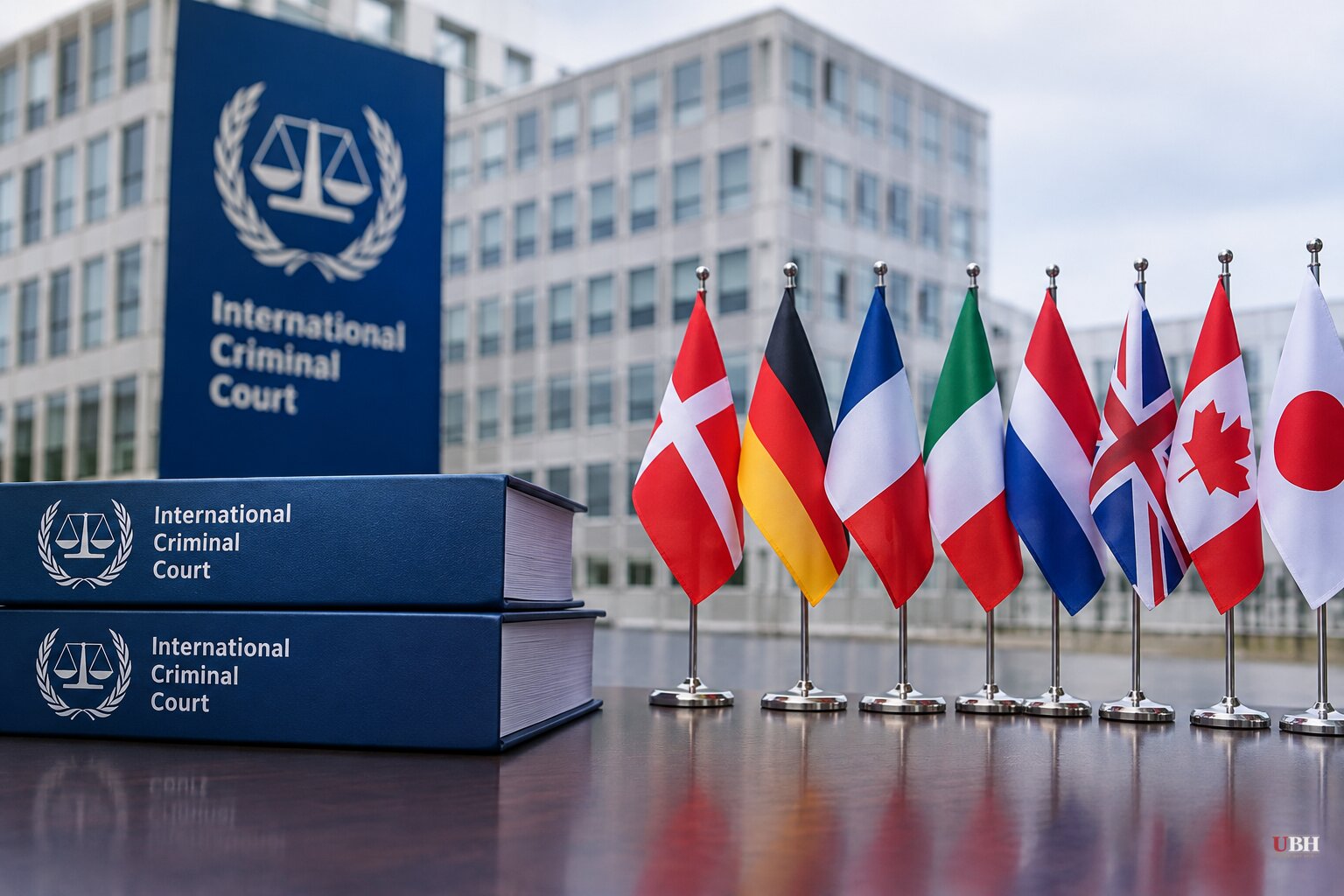
Hours after Secretary of State Marco Rubio announced sanctions on the International Criminal Court itself on Friday, Oct. 9, the first formal reactions have come in. They are overwhelmingly negative, and they include some of America's closest allies.
Allies push back in a joint statement
The foreign ministers of Denmark, Germany, France, Italy, the Netherlands and the United Kingdom, along with their Canadian and Japanese counterparts, issued a joint statement saying they "regret and strongly disagree" with the U.S. announcement. They reaffirmed their "continued and unwavering support for the independence, impartiality, and integrity of the ICC."
The ministers welcomed the court's preparations to respond to potential sanctions. They also warned that "if put into effect, these sanctions will have a significant impact on the Court's work, its dedicated staff and their families."
The eight governments pledged "constructive and inclusive dialogue" with countries that are not parties to the Rome Statute. That outreach is meant to happen before the Assembly of States Parties, the court's governing body, meets in December.
The UN and the court respond
Stephane Dujarric, spokesperson for UN Secretary-General António Guterres, said the decision dealt "a serious blow to our collective pursuit for international criminal justice." Guterres was "deeply alarmed" by the expected impact on the court as a whole, particularly its ability to carry out its mandate.
The ICC called the move "an assault on the rule of law and on the very foundations of the international legal order." It urged its 125 member states to defend it. "The Court cannot stand alone. Its fate now rests also in the hands of the states that created it," the court said.
Court President Tomoko Akane, a Japanese national, said the fight is "not just about defending a single institution, but about safeguarding the international order grounded upon the rule of law."
Deputy Prosecutor Nazhat Shameem Khan said the sanctions "are intended to undermine the rule of law internationally." She added: "Our work will continue across all our situations, our investigations and our prosecutions."
What the sanctions actually do
According to a State Department fact sheet, all ICC property and financial interests inside the United States, or controlled by U.S. persons, are frozen and reported to Treasury's Office of Foreign Assets Control. U.S. persons may not provide the court with goods, services or funds without specific authorization.
Treasury is pairing the designation with general licenses that carve out a 180-day window. Counting from today, that runs to about early April 2027. The carve-outs allow some transactions for telecommunications, software, pension payments and matters related to detainees.
The sanctions reach beyond payments. They cut the court off from U.S.-based financial services and technology companies, and from the use of U.S. dollars. Before today, the administration had sanctioned 17 individuals tied to the court, including judges and prosecutors, under a presidential order.
Washington's stated case
Rubio framed the action as a defense of American sovereignty. "The United States and the American people are not subject to the jurisdiction of this fake ICC," he said in a video statement. He added that the sanctions give the court and its member states a chance to address U.S. concerns, and that they would be adjusted if those concerns are not met.
He also said that "for decades, Republicans and Democrats alike rejected the idea that the International Criminal Court had the power to prosecute American citizens, military service members, or political leaders." Neither the United States nor Israel has joined the court.
The administration says the court has overreached by pursuing officials from countries that are not members. The ICC has issued arrest warrants for Israeli Prime Minister Benjamin Netanyahu and former Defense Minister Yoav Gallant over the Gaza war.
Rubio also warned allies directly. "If they do not, the United States will continue its campaign to dismantle the ICC, piece by piece, until Americans are threatened no longer," he said. He said allies who belong to the court and rely on U.S. service members for their defense should "rein in this rogue court."
U.S. officials told reporters the timing, just after the Nobel Peace Prize went to former ICC judge Navi Pillay, was coincidental. They said the sanctions had been in the works for months.
Critics dispute the premise
Gissou Nia, director of the Atlantic Council's Strategic Litigation Project and a former ICC and Yugoslavia tribunal staffer, argues the premise of the action is flawed. She says U.S. personnel are "not the subject of any current investigation, nor have they ever been a primary focus."
Nia points to the court's recent docket. It includes a conviction of a Sudanese militia chief for Darfur crimes, arrest warrants for Taliban leaders, confirmed charges against Ugandan warlord Joseph Kony, and preparations for the trial of former Philippine President Rodrigo Duterte. None of those cases, she says, involves American defendants.
She calls the designation "a complete inversion of the intended use of sanctions," a tool normally aimed at militant networks, cartels and gangs. She says that without aggressive countermeasures from supporting countries, it "will grind the court's daily work to a halt."
What comes next
The eight-nation statement does not say what countermeasures, if any, the allies will adopt. It points only to the court's own contingency planning and to dialogue with non-members.
Two dates now frame the dispute. The first is the December Assembly of States Parties, where members will decide how to respond. The second is the end of the 180-day license window in early April 2027. After that, U.S. companies and individuals doing business with the court would need specific authorization, or would have to stop.
Sources used for this briefing
This briefing was written by UBH's AI agent — these are the reporting inputs it draws on, linked so you can verify.


