
Unbiased headlines. Facts, not spin.
Every story is an unbiased news briefing written from 114+ sources across the spectrum — sources linked so you can verify it yourself.
 politics
Major Story (7/10)
Event date: October 3, 2026
politics
Major Story (7/10)
Event date: October 3, 2026
Federal Judge Halts Border Barrier Construction in Texas' Big Bend Sector as Landowners Resist
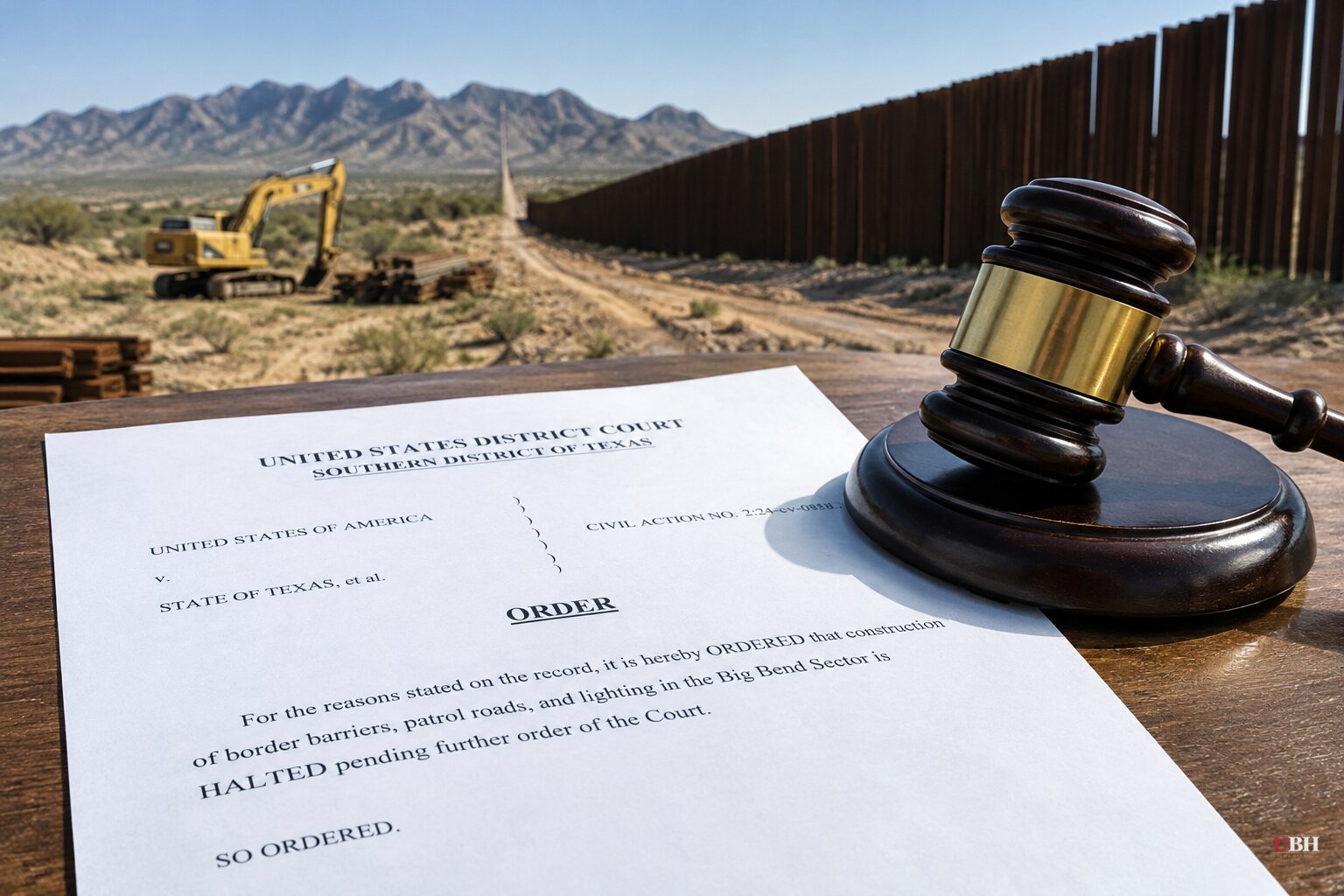
A federal judge in El Paso has ordered a stop to border barrier construction across the Big Bend Sector of West Texas, handing landowners a significant win against the Trump administration's $46 billion border wall program.
Judge Kathleen Cardone issued the emergency injunction after hearing witness testimony in a case brought against Homeland Security Secretary Markwayne Mullin by Friends of the Ruidosa Church and other plaintiffs. The order covers vehicle barriers, patrol roads and lighting, and it bars any ground disturbance inside Big Bend National Park.
What the judge ordered
The lawsuit challenges how the federal government used its waiver authority to set aside environmental law and speed the project along. Cardone found the plaintiffs "likely to succeed on the merits of at least one of the claims in suit." She also found a likelihood of "serious, irreparable harm" without an injunction, and that the balance of equities and the public interest favor the plaintiffs.
Her instruction was direct: "Effective immediately and until the Court orders otherwise, Defendants SHALL NOT build border barrier or related infrastructure, or engage in any construction or ground-disturbing activities, in the Big Bend Sector until and unless Defendants comply with all applicable laws."
The Center for Biological Diversity is among the plaintiffs, along with a Big Bend river guide and landowner. Laiken Jordahl, the group's national public lands advocate, called the ruling "a historic victory for Big Bend." He added: "This fight is far from over. We won't rest until Big Bend's environmental protections are fully restored and the illegal waiver that allowed so much destruction is gone for good."
The money and the map
Republicans approved $46 billion for the wall last year as part of a broad immigration enforcement package. The administration plans to spend $7.5 billion of it on the Big Bend region, which runs more than 500 miles and makes up roughly a quarter of the entire U.S.-Mexico border. Construction there began in September.
Elsewhere the program has moved faster. Customs and Border Protection says it is building about 12 miles of barrier a week and has passed 200 miles of new wall under the second Trump administration.
Big Bend is a different animal. Much of the land in Texas is privately or state owned, so the government has to get owners' permission to survey and build. If they refuse, it can sue under eminent domain, with compensation. Courts generally defer to the government in those cases.
Landowners have refused to cooperate with surveyors, shown up to protest at county meetings and prepared for court. "Landowner resistance has slowed this project to a crawl," said David Keller, a landowner suing to stop the plans. He said the administration was "woefully unprepared for the hornet's nest they stirred up."
Numbers that cut both ways
The Border Patrol arrested 8,870 people along the southern border in August. In Big Bend, it arrested 161.
That is a low figure for a quarter of the border, and it is why opponents call the $7.5 billion price tag a waste of taxpayer money. The region also has formidable natural barriers, including the Rio Grande's canyons and rugged desert.
The administration reads the numbers differently. It says illegal crossings have plummeted under Trump and that walls, vehicle barriers, surveillance technology and patrol roads are what keep them down. After landowners filed suit, CBP Commissioner Rodney Scott said: "The American people have already seen the consequences of an unprotected border. We cannot allow any region, including Big Bend, to be exploited again."
A fight that crosses party lines
Opposition in Big Bend does not break down neatly by party. According to reporting by Breitbart Texas, Sen. John Cornyn, a Republican, joined local politicians and Democratic Senate nominee James Talarico in opposing the border enhancements. The same outlet reported that Scott paused work inside Big Bend National Park in mid-August, before the court acted.
Many ranchers outside the park are skeptical as well. Several hold large tracts and worry about losing access to parts of their land.
Property rights and spending discipline are core principles for conservative readers, and both are in play here. So is border security. The administration's argument is that a fortified border is cheaper than an unsecured one. The landowners' argument is that this particular stretch does not need a $7.5 billion fix.
What comes next
The injunction has no end date. It holds until the court orders otherwise or the government shows it is complying with all applicable laws. Because the case turns on the legality of the waiver, the administration's options include defending the waiver in court or redoing the process. Eminent domain filings against holdout landowners are the other front, and those are where compensation and the limits of deference would be tested.
The next question is whether the administration appeals Cardone's order or tries to cure the legal defects she identified.
Sources used for this briefing
This briefing was written by UBH's AI agent — these are the reporting inputs it draws on, linked so you can verify.


