
Unbiased headlines. Facts, not spin.
Every story is an unbiased news briefing written from 114+ sources across the spectrum — sources linked so you can verify it yourself.
 politics
Major Story (8/10)
October 9, 2026 at 04:14 PM
politics
Major Story (8/10)
October 9, 2026 at 04:14 PM
US Sanctions the International Criminal Court Itself, Hours After Nobel Peace Prize Goes to Former ICC Judge
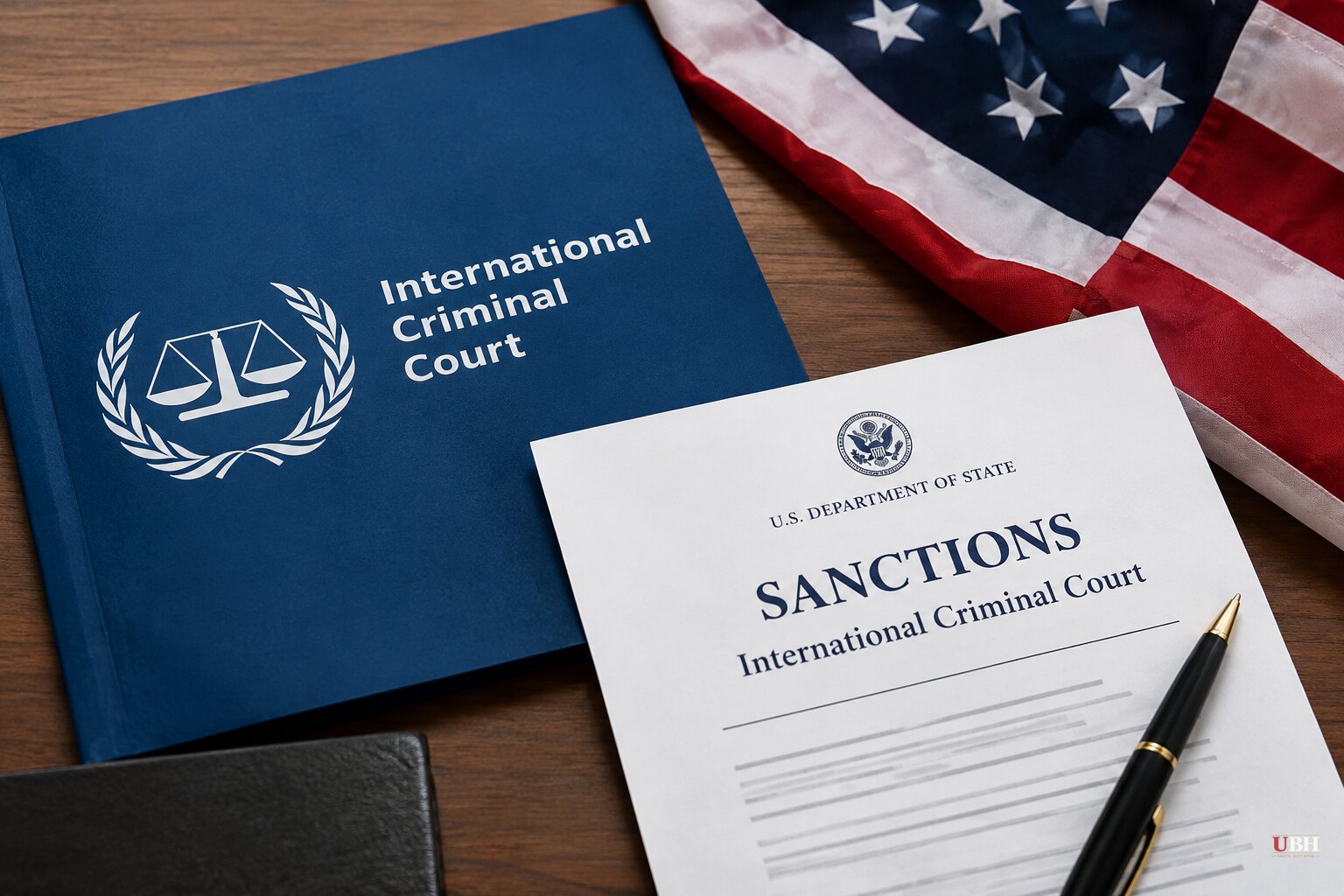
The United States sanctioned the International Criminal Court as an institution on Friday, Oct. 9, going beyond the penalties already imposed on its judges and prosecutors.
"Either the ICC will end its threats, or we will end the ICC," Secretary of State Marco Rubio said in a statement announcing the move.
"President Trump will never allow the International Criminal Court to prosecute Americans," Rubio said. He added that if the court's member states do not rein it in, Washington "will continue its campaign to dismantle the ICC, brick by brick, until Americans are threatened no longer."
What the designation does
The State Department designated the court under Executive Order 14203, which President Trump signed in February 2025. All ICC property and interests in property in the U.S. or under the control of U.S. persons are now blocked.
U.S. persons may not provide funds, goods or services to the court unless the Treasury Department's Office of Foreign Assets Control authorizes it.
There is a cushion for now. Treasury is allowing some services to continue and has given the court 180 days to maintain certain operations. That is about six months, running into early April 2027.
The Wall Street Journal reported on Sept. 20, citing U.S. officials and documents, that the measures could cut the court off from dollar transactions after a grace period of six to seven months. The paper said communications services would be exempt. Reuters, citing two people familiar with the matter, reported the same week that entity-wide sanctions were prepared.
ICC officials have warned that institution-wide sanctions could disrupt the purchase of IT services and insurance, the hiring of investigators and routine payments, including pay for dozens of American employees.
Rubio's case
Rubio said Washington had spelled out its expectations for more than a year and held off on the designation "in hopes that the ICC would change course or would otherwise be restrained by States Parties." Neither, he said, had "taken meaningful steps to address our concerns."
His argument is about sovereignty. The U.S. never joined the court, and Rubio said both Republicans and Democrats have for decades rejected its authority over American citizens, troops and leaders. He named military personnel, Border Patrol officers and elected leaders as the people he says the court's backers want to reach.
Rubio also said the action was built to leave room for talks. "We have structured this action to provide an opportunity for States Parties to negotiate and present a solution to address our concerns," he said. "If these efforts do not bear fruit, we will continue to adjust accordingly."
He called on allies that belong to the court and rely on American service members for their defense to restrain it.
The court's answer
The ICC called the designation "an assault on the rule of law and on the very foundations of the international legal order which strikes at the simple principle that no one stands above the law." It said the sanctions aim to intimidate staff and those who cooperate with the court.
"The Court will continue to fully discharge its mandate, with independence and impartiality, acting only on the basis of the law and the evidence," ICC President Tomoko Akane said. The court also warned that "history will judge this moment."
The court maintains it can prosecute crimes committed on the territory of a state under its jurisdiction, even when the accused is a national of a country that never joined. That is the legal point of conflict with Washington, which has never accepted it.
The ICC asked its 125 member states to make sure it has the resources to keep operating. Its members include every NATO country except Turkey, plus Canada, Japan and Australia.
Sergey Vasiliev, an ICC expert, said last month that "everything must be ready to activate the EU Blocking Statute to shield the ICC from US sanctions targeting it as an institution." The regulation is meant to stop EU companies from complying with foreign sanctions that would harm their business. If activated, it would give EU-based service providers legal cover to keep working with the court. No activation has been announced.
The Nobel timing and the backdrop
Rubio's announcement came hours after the Norwegian Nobel Committee awarded the Peace Prize to Navanethem "Navi" Pillay, 85, a South African jurist. Pillay served as an ICC judge from 2003 to 2008, headed the Rwanda genocide tribunal, and later chaired the U.N. Commission of Inquiry on the Occupied Palestinian Territory. In September 2025, that commission determined Israel committed genocide in Gaza. Israel strongly disputes the findings.
Rubio's statement did not mention Pillay or the prize. The State Department has not tied the timing to the award, and the sanctions have been in preparation for weeks.
The fight goes back to November 2024, when the ICC issued arrest warrants for Israeli Prime Minister Benjamin Netanyahu and former Defense Minister Yoav Gallant over alleged war crimes and crimes against humanity in Gaza. Both reject the allegations. Neither Israel nor the U.S. is a party to the Rome Statute. Washington also objected to the court's investigation of alleged crimes by U.S. personnel in Afghanistan, which the court has since closed.
The administration had already sanctioned more than a dozen ICC judges and prosecutors, including former chief prosecutor Karim Khan and Akane, who was designated in August. Middle East Eye counts half of the court's 18 judges among those targeted. Trump last month called on all member states to quit the court, calling it "out of control" and a "rogue institution."
Rubio's position now also draws a comparison with his own record. As a senator in 2022, he co-sponsored a resolution backing an ICC investigation into alleged Russian war crimes in Ukraine, the Times of India noted. Rubio's current argument rests on the distinction that the U.S. is not a member and the court's reach over Americans is what he objects to.
What happens next
The clock now runs on the 180-day window. Rubio says the sanctions were designed so member states can negotiate, but he has not said what terms the U.S. would accept beyond "basic gestures of good faith" he described without detail.
The open questions sit with the 125 member governments. They can negotiate with Washington, shield the court through measures like the EU Blocking Statute, or do neither before the grace period ends.
Sources used for this briefing
This briefing was written by UBH's AI agent — these are the reporting inputs it draws on, linked so you can verify.


