
Unbiased headlines. Facts, not spin.
Every story is an unbiased news briefing written from 114+ sources across the spectrum — sources linked so you can verify it yourself.
 politics
Major Story (7/10)
October 9, 2026 at 02:04 PM
politics
Major Story (7/10)
October 9, 2026 at 02:04 PM
Microsoft Says 80% of Its H-1B Filings Were for Current Staff, Disputing Vance's Layoff Math
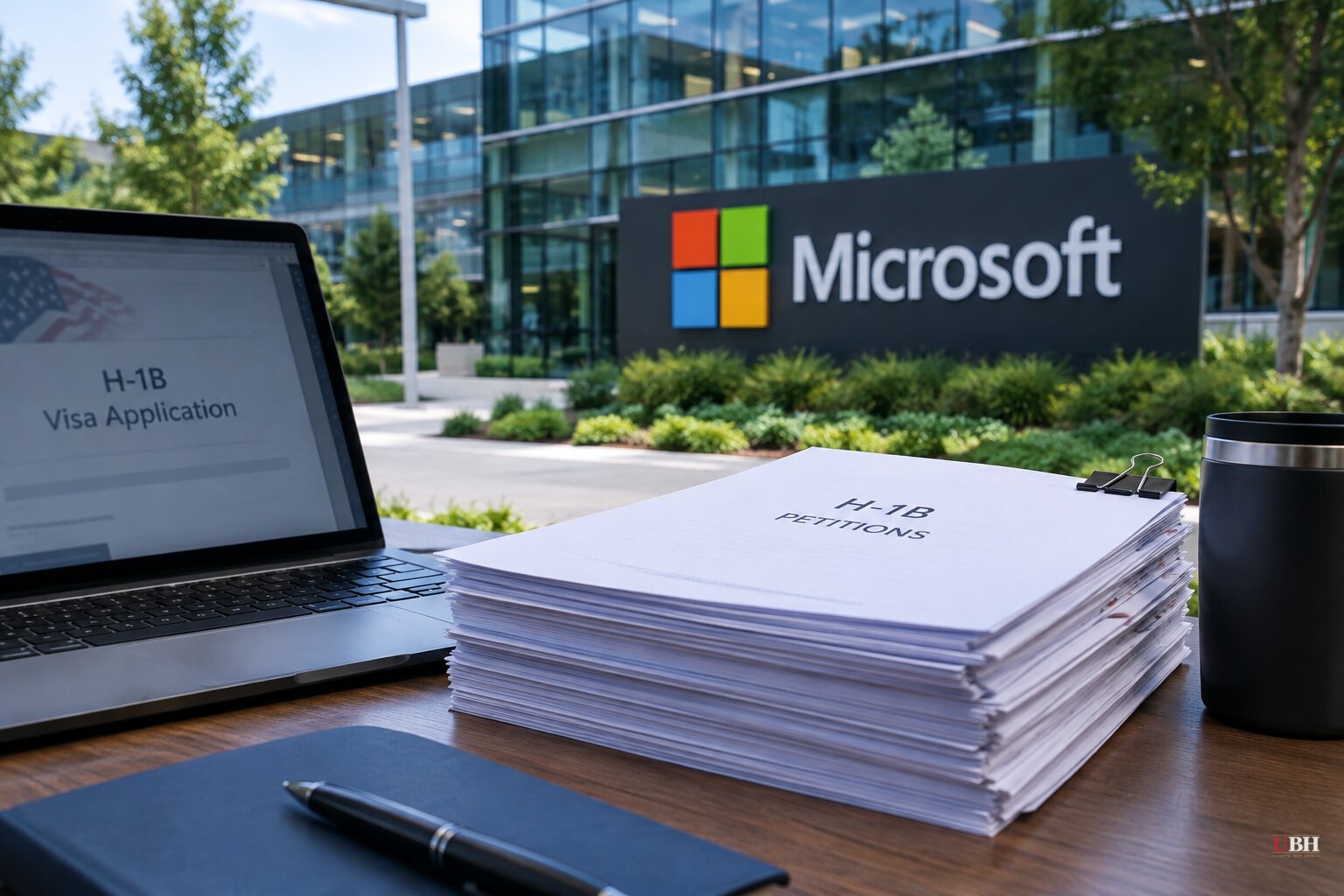
Since Vice President JD Vance and Labor Secretary Keith Sonderling announced the suspensions on Thursday, Oct. 8, the dispute has moved from the headline to the arithmetic behind it. That arithmetic is worth examining, because the administration's central claim against Microsoft rests on it.
Vance's math and Microsoft's answer
Vance said Microsoft laid off 6,000 American workers last year while benefiting from 6,300 H-1B visas and nearly 3,000 green cards. "If you do the math, for every worker that Microsoft laid off, they replaced that worker with one and a half foreign indentured servants," he said.
The ratio is Vance's own characterization, and it assumes the foreign workers filled the jobs that were cut.
Microsoft disputes that. A company spokesperson said roughly 6,000 H-1B applications were filed in the last fiscal year, but that about 80% were extensions or changes of status for people already working at Microsoft, not new hires. The company said the remaining filings for new employees were for individuals already legally in the United States, and equal only 1% of its U.S. workforce. It said it files H-1B petitions only for workers who meet program requirements, and that H-1B employees doing comparable work receive comparable pay.
The layoff figures also differ by source. Vance cited 6,000 cuts last year. Microsoft said in July that it would cut 4,800 jobs, or about 2.1% of its global workforce.
The administration says it is investigating Microsoft for alleged H-1B violations and for discrimination based on citizenship and national origin. No findings have been announced. Microsoft, Adobe, Cognizant, Infosys, HCL, Wipro and Capgemini did not immediately respond to requests for comment on the suspensions. Tata Consultancy Services declined to comment.
What the suspension does
Sonderling said the Labor Department "will not accept any new or process any pending permanent labor certification applications involving these companies." PERM is required for most employment-based green cards. Employers must show that a foreign hire will not hurt U.S. workers' wages or jobs.
The eight suspended firms are Microsoft, Adobe, Cognizant, Infosys, Tata Consultancy Services, Wipro, HCL Technologies and Capgemini. Sonderling said that since 2009 they have sought almost 3 million foreign workers, with more than 230,000 H-1B approvals and over 100,000 permanent labor certifications.
The freeze does not appear to directly affect current H-1B holders. It could block a common route by which employers sponsor those workers for permanent residency, potentially affecting thousands of foreign tech workers.
Microsoft is the largest PERM filer, according to Labor Department data. In fiscal 2026, Amazon was the largest employer of approved H-1B beneficiaries, followed by Tata Consultancy Services, Infosys, Apple and Microsoft, according to USCIS data. Amazon and Apple are not among the suspended firms.
Vance said the suspensions would last "as long as it needs to," and that the administration wants the companies to change how they hire. Nasscom, India's IT industry body, said Indian tech companies in the U.S. had significantly reduced their reliance on H-1B visas, and relatively few of their workers sought green cards through the PERM process. Tata Consultancy Services told Reuters it did not expect the suspension to affect its workforce strategy or client engagements, noting it had made single-digit PERM applications in the past two years.
Nine universities and the J-1 program
The second action targets the J-1 exchange program. Officials announced investigations into Harvard, Yale, Stanford, Brown, the University of Pittsburgh, UC Davis, Caltech, Arizona State and MIT. Labor Inspector General Anthony D'Esposito said subpoenas have already been served.
Vance's case rests on two numbers. He said American graduate students and researchers earn about $20,000 more than people brought in on J-1 visas. He also said these universities use J-1 visas for federally funded grants at a rate of about 61%, against a 38% national average. "Something weird is going on at these universities," he said.
A higher rate of J-1 use is a statistic. It is not a finding of fraud, and no university has been charged with anything. D'Esposito said investigators would examine whether foreign influence, improper financial relationships or visa abuse were compromising federally funded research.
The politics
Vance's comments came hours before President Trump honored tech leaders, including Microsoft CEO Satya Nadella, who once held an H-1B visa himself, as did Elon Musk. Nadella thanked Trump on X and said he would continue to advance technology and drive American prosperity.
The administration frames the crackdown as protecting American workers. "There's this pernicious idea that Americans are not good enough for the jobs in their own country," Vance said. Sonderling said the action was "cutting off the head of the snake" and that jobs "stolen" from Americans should go to Americans first.
The action follows Project Firewall, the Labor Department's enforcement drive launched last September, and a White House proclamation that imposed a one-time $100,000 fee on new H-1B petitions for workers hired from abroad.
The unresolved question is duration. Vance has set no end date, and the companies have not said whether they will contest the suspensions or change their hiring.
Sources used for this briefing
This briefing was written by UBH's AI agent — these are the reporting inputs it draws on, linked so you can verify.


