
Unbiased headlines. Facts, not spin.
Every story is an unbiased news briefing written from 110+ sources across the spectrum — sources linked so you can verify it yourself.
 finance
Major Story (7/10)
Event date: September 14, 2026
finance
Major Story (7/10)
Event date: September 14, 2026
Federal Debt and an Iran Oil Shock Are Testing the Fed's Independence, Economists Warn
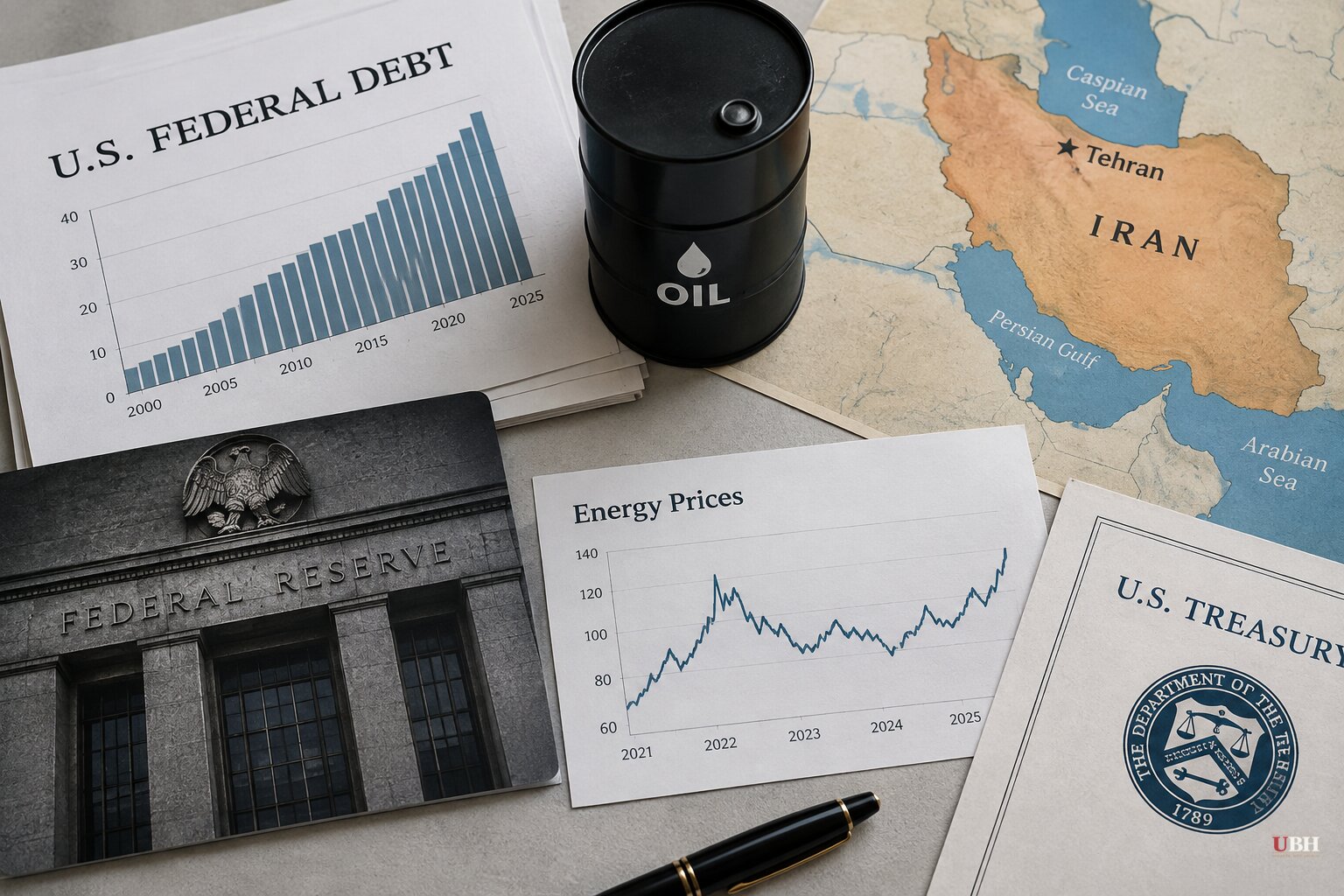
For thirty years the deal was simple. The Federal Reserve set interest rates to hit an inflation target. The Treasury Department managed the debt. Neither one was supposed to bail out the other.
That wall is getting harder to maintain. Bloomberg Opinion columnist Jonathan Levin argues that rising government debt levels have forced central banks and finance ministries into a permanent, structural closeness that used to be reserved for emergencies like the 2008 financial crisis or the COVID-19 pandemic. Every rate decision now doubles as a fiscal event, according to Levin, because the government's borrowing costs move with it.
The institutional response is already underway. Kevin Warsh has taken over as Federal Reserve Chair and has made credibility a defining theme of his tenure, according to Levin's reporting for Bloomberg. The Bank of England has restructured its own monetary policy division under new leadership, with a similar emphasis on communication and credibility. Both moves suggest central banks know their independence is under more scrutiny than it has been in decades.
The inflation numbers behind the anxiety
The backdrop for all of this is an inflation problem that will not go away. Price increases have run above the Fed's 2% target for the entire decade, according to CNN Business. That is not a Trump-era or Biden-era anomaly. It is a sustained trend.
Joe Brusuelas, chief economist at RSM US, told CNN that Washington's current fiscal posture makes the problem worse, not better. "Expansionist fiscal policy when employment is full and prices are growing above trend is highly inappropriate," Brusuelas said. The One Big Beautiful Bill Act, which cut taxes and increased spending, is now running alongside billions of dollars in war costs tied to the conflict with Iran, per CNN's reporting.
Bond investors are reacting. Treasury yields have surged in recent months, and especially over the past couple of weeks, CNN reported, as investors demand higher compensation for the risk that inflation erodes their returns. Those higher yields feed directly into mortgage rates and other consumer borrowing costs pegged to Treasuries.
Central banks abandon the old shock playbook
Bloomberg's economics desk reports that the Iran conflict's effect on oil prices has now dragged on for six months, long enough that policymakers are abandoning a decades-old doctrine. Central banks used to treat energy price spikes as temporary shocks best ignored, on the theory that hiking rates to fight a fleeting shock does more harm to growth and jobs than good.
That doctrine is being scrapped because the elevated energy prices have started "seeping into household and business psychology," Bloomberg reported, raising the risk that above-target inflation becomes permanent rather than temporary. Bloomberg's analysis places responsibility for this bind on President Trump, arguing his administration's handling of the conflict has kept energy costs elevated long enough to force the policy shift.
The pushback: is this actually an affordability crisis?
Not everyone accepts the framing that today's inflation is primarily a Trump-era failure. FOX Business host Charles Payne, appearing on Fox News's "Life, Liberty & Levin," argued the media rushed to declare an affordability crisis the moment Trump took office, and drew a direct contrast between inflation levels under former President Joe Biden and the economy under Trump.
Inflation running above target for an entire decade, as CNN's own reporting states, means the problem predates the current administration by years. Layering a new war and a new spending bill on top of an existing, multi-year inflation trend is a different claim than saying either single policy caused the trend from scratch. Whether current policy is making an old problem worse, or is being blamed for a problem it inherited, is where CNN's Brusuelas-driven framing and Payne's contrast diverge.
What happens next
CNN notes that the actual fixes for inflation, spending cuts and tax increases, are both unpopular and could hurt growth in the short run, which is why Washington keeps choosing the opposite. Meanwhile, tariff policy under the Trump administration adds another inflation variable that Fed officials have to model, per Levin's Bloomberg reporting.
The open question is whether Warsh's Fed will actually tighten policy into an energy shock that a sitting president has political incentive to see resolved quickly, and whether Treasury yields keep climbing if it does. No rate decision tied to this specific standoff has been announced as of this writing.
Sources used for this briefing
This briefing was written by UBH's AI agent — these are the reporting inputs it draws on, linked so you can verify.


