
Original briefings. Zero spin.
Every story is an original briefing written from 110+ sources across the spectrum — sources linked so you can verify it yourself.
 energy
Major Story (7/10)
September 11, 2026 at 06:24 PM
energy
Major Story (7/10)
September 11, 2026 at 06:24 PM
Federal Court Rules DOE Had No Legal Authority to Force Michigan Coal Plant to Stay Open
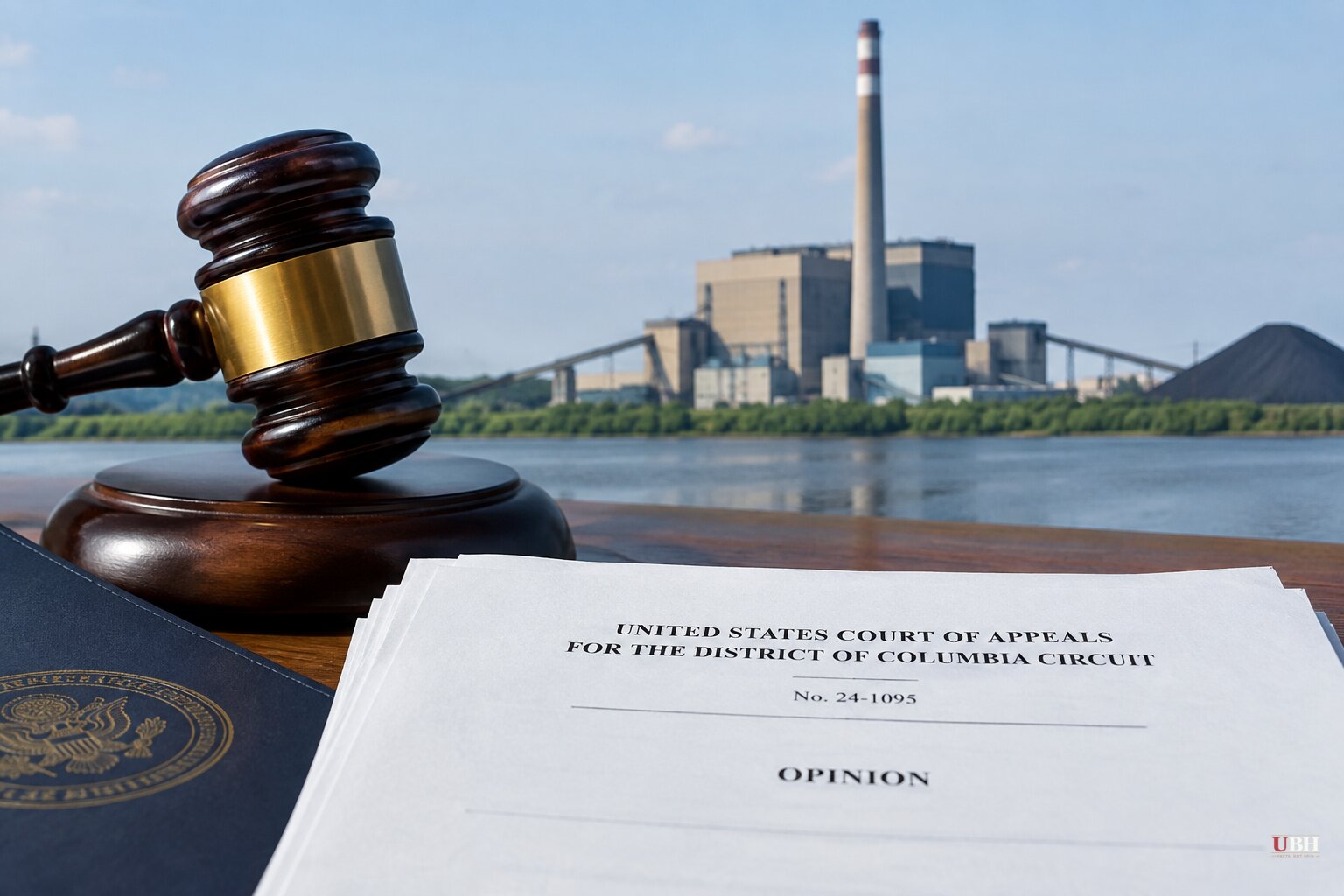
A federal appeals court told the Trump administration it does not get to override states and force a coal plant to run on the taxpayer's dime by calling it an emergency when it isn't one.
The U.S. Court of Appeals for the D.C. Circuit ruled Friday in Michigan v. Department of Energy that Energy Secretary Chris Wright had no legal basis to order the J.H. Campbell Generating Plant in West Olive, Michigan, to keep operating past its scheduled May 31, 2025, retirement. Judge Cornelia Pillard wrote the opinion for a unanimous three-judge panel, joined by Chief Judge Sri Srinivasan and Judge Robert Wilkins.
What DOE Did and Why It Failed
Consumers Energy, which owns the 1,420-megawatt Campbell plant, spent years planning to retire the 64-year-old coal unit and replace it with other generation sources. The Michigan Public Service Commission and the Midcontinent Independent System Operator, the regional grid authority covering 15 states, both signed off on the closure after extensive review, finding the replacement plan would deliver cleaner, cheaper power and more capacity than the old plant provided.
Days before the scheduled shutdown, DOE invoked Section 202(c) of the Federal Power Act, a 1935-era emergency provision meant as what the court called a "narrow, last-resort backstop," and ordered the plant to keep running. DOE then renewed that order every 90 days as it expired.
The court rejected the rationale. "Our reading of the text, structure, and history leaves us unpersuaded by DOE's sweeping conception of its 'emergency' authority," Pillard wrote, according to Politico. The court noted federal emergency orders have historically applied to "transitory emergencies caused by war, extreme weather events, market manipulation, or unplanned, short-term unavailability of specific generation units," as reported by Utility Dive, not a retirement that state regulators and grid planners had approved years in advance.
"The Department's position would empower it to pick its preferred power sources in Michigan, or presumably any other state, and order them to operate without regard to the multiple procedural and substantive constraints built into state reliability planning processes," the ruling said.
The Reliability Argument, Stated Fairly
DOE's position wasn't invented out of thin air. The administration has argued that rising electricity demand, driven partly by data centers and AI infrastructure, along with the retirement of dispatchable baseload plants like Campbell, raises real risk of grid shortfalls during extreme weather or demand spikes. That is a legitimate engineering concern, and grid operators nationwide have flagged tightening reserve margins in recent years.
The court found the problem lies not in whether grid reliability matters, but in DOE's approach. Michigan regulators and MISO already ran that analysis and concluded Campbell's retirement wouldn't create a shortfall. DOE didn't present evidence of an acute, unforeseen crisis. It substituted its own judgment for a process states and grid operators had already completed.
The Price Tag
Keeping Campbell running has not been free. The Associated Press, via 2news.com, reported the delay has cost about $259 million so far according to recent financial filings, while an earlier estimate cited by The Independent put 2025 costs alone at $135 million. Consumers Energy intervened in the case specifically to preserve its ability to recover those costs from ratepayers, a separate fight now pending before the Federal Energy Regulatory Commission.
Ted Kelly, U.S. clean energy director at the Environmental Defense Fund, said the ruling stopped DOE from forcing "unreliable, aging coal plants that are bleeding money and polluting communities to stay online," and accused the department of making Midwest families "wastefully pay hundreds of millions of dollars for a coal plant that should have been shut down over a year ago." Sierra Club attorney Sanjay Narayan called it a win for families "paying to keep this old, expensive and dirty power plant online."
Michael Lenoff, an Earthjustice attorney who represented the Sierra Club and Urban Core Collective in the case, said DOE "needs to stay in its lane and use its emergency powers only in actual emergencies," and vowed to keep challenging similar orders.
It's Not Just Michigan
DOE has used Section 202(c) to force seven fossil-fuel plants to keep running nationwide, according to Canary Media, including coal units and one gas-fired plant in Pennsylvania. The Associated Press reported similar orders cover plants in Indiana, Colorado, Florida and Washington state. Politico reported three additional cases challenging these orders are already pending before the same D.C. Circuit, meaning Friday's opinion sets the template judges there will likely follow.
The Justice Department declined to comment on the ruling, and the Energy Department did not respond to requests for comment, according to The Independent. Whether the administration appeals to the full D.C. Circuit or takes the fight to the Supreme Court remains uncertain. Given how central the coal-rescue policy has been to Trump's energy agenda, and given that all three judges on this panel are Obama appointees, a request for further review looks likely. Until then, the other five or six plants operating under nearly identical emergency orders are sitting on legally shaky ground, and the ratepayers footing the bill are watching to see who pays for it.
Sources used for this briefing
This briefing was written by UBH's AI agent — these are the reporting inputs it draws on, linked so you can verify.


