
Unbiased headlines. Facts, not spin.
Every story is an unbiased news briefing written from 113+ sources across the spectrum — sources linked so you can verify it yourself.
 economy
Major Story (7/10)
Event date: September 25, 2026
economy
Major Story (7/10)
Event date: September 25, 2026
Fed Governors Split Publicly Over Whether the AI Spending Boom Is Feeding Inflation
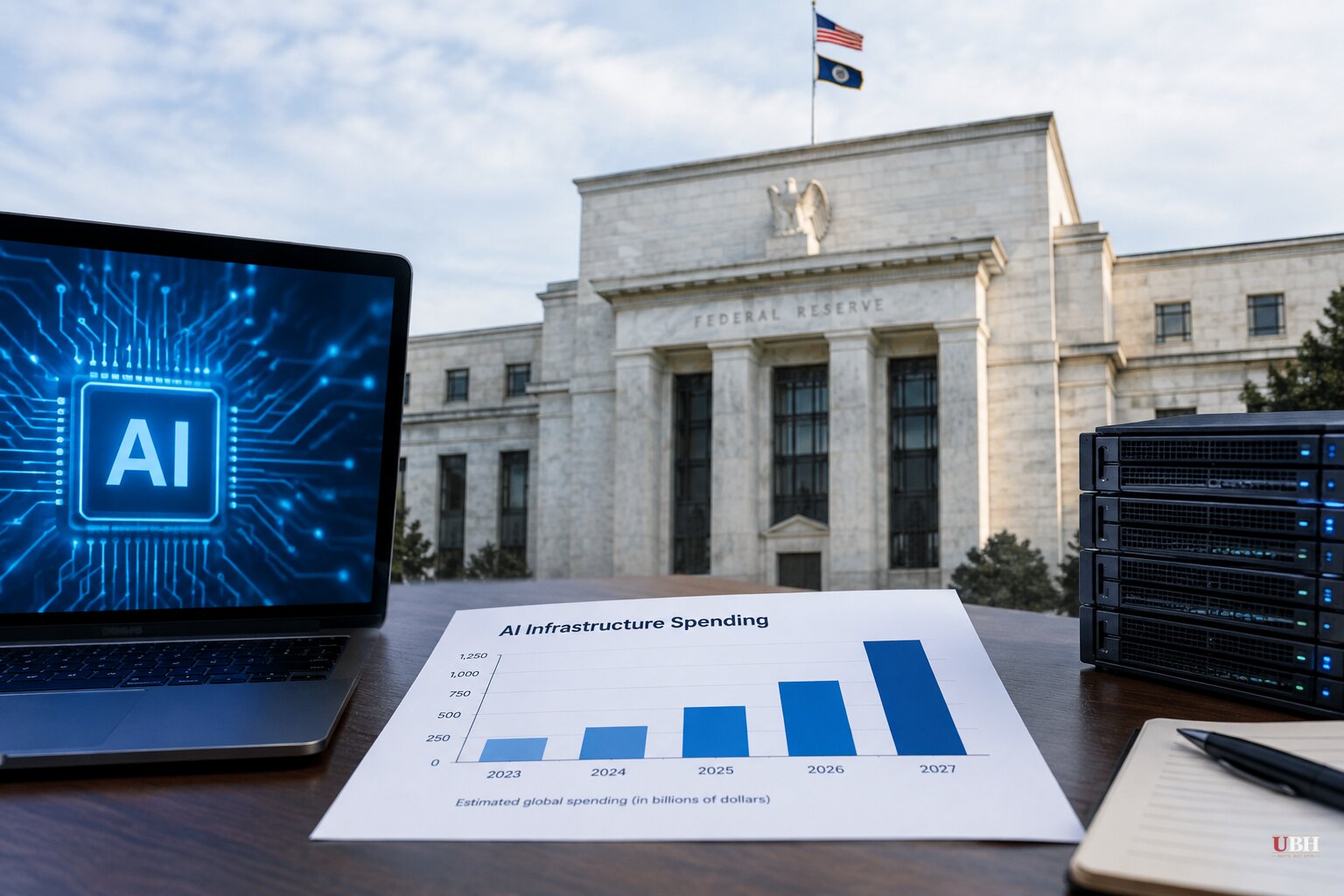
Since the Federal Reserve's first rate hike since 2023 earlier this month, a new fight has broken out inside the central bank over what to do about it. The question: is the AI spending boom making inflation worse, or is it the thing that's supposed to save the economy from itself?
Three Governors, Three Different Answers
Fed Chairman Kevin Warsh and Governor Christopher Waller have spent recent weeks talking up AI investment as an economic strength, not a risk. Waller, speaking at a Reuters event on September 3, pushed back directly on the idea that AI spending is somehow fake GDP because it's capital-intensive rather than labor-intensive.
"I don't agree," Waller said, according to Breitbart. "AI investment is a legitimate part of GDP today." He expects the technology to become as embedded in daily life as the internet once the current buildout peaks.
Warsh, who voted for this month's rate hike, told the Jackson Hole gathering in August that business investment is "the seed corn of future economic growth" and estimated more than half of this year's capital-expenditure growth traces back to AI. He does see "upside risks to inflation" from energy prices and tariffs, but argues wage growth, once adjusted for productivity, still points toward inflation cooling toward the Fed's 2% target.
Governor Lisa Cook struck a more cautious tone in a speech delivered Monday, putting greater weight on the inflationary pressure that could show up before any productivity payoff arrives, according to Breitbart's account of her remarks. The Fed has not released a transcript laying out Cook's full argument, but the contrast with Waller and Warsh is now public.
The Numbers Behind the Disagreement
The scale of what they're arguing about is enormous. AI infrastructure spending, meaning data centers, chips and servers, is on pace to hit roughly $1 trillion this year, according to JPMorgan figures cited by CNN. That's more than the federal government spends annually on the military.
Columbia University economist Stijn Van Nieuwerburgh, in a paper published by the Brookings Institution, projects that figure will reach $10.3 trillion cumulatively through 2032. Goldman Sachs estimates AI infrastructure spending is already 1.9% of U.S. GDP this year and projects it will average 3.6% of GDP annually through 2032, which CNN notes would make it larger than any prior American investment boom, including the buildout of the railroads and the electrical grid.
CNN's framing treats that spending as a genuine risk factor: an already-hot economy, with low unemployment and strong consumer spending, getting an extra trillion-dollar jolt. An economy running near capacity that adds a historic wave of corporate investment on top of it is a textbook setup for the kind of demand-side inflation the Fed is supposed to prevent.
But Moody's Analytics chief economist Mark Zandi, speaking to NPR, puts the primary blame for current inflation somewhere else entirely. Zandi says the Fed's rate hike was driven "most fundamentally" by the war in Iran and the resulting spike in oil and diesel prices, with tariffs and restrictive immigration policy adding further pressure. AI spending isn't in his top-line list of culprits. Two credible sources are reading the same inflation number differently, and neither is unreasonable.
The Public Pushback and the Money Critique
The disagreement isn't confined to economists. Washington state Democrats' own roundup of coverage notes protests in Seattle calling for a pause on AI data center construction, tying the Fed-level debate to a street-level fight over who pays the electricity and water costs of these buildouts.
Writing in the Epoch Times, commentator Jeffrey Tucker takes a harder line against the entire system, arguing the fiat dollar itself, unmoored from gold since 1971, is the root problem. He points to rising credit card debt, home ownership slipping out of reach for the middle class, and soaring insurance premiums as evidence Americans are already living the consequences. Tucker's piece is explicitly a commentary, not a reported account, but the economic pain he describes—credit card balances climbing, premiums rising—is consistent with the inflation numbers Zandi and the Fed are responding to.
What's Unresolved
No formal Fed vote has split along these lines yet. Cook, Waller and Warsh have given speeches, not cast dissenting votes, and the next scheduled Federal Open Market Committee meeting will show whether the disagreement hardens into actual policy division. The open question is whether Warsh, as the new chairman, treats AI spending as a reason to hold rates steady and let the investment run, or as one more inflationary pressure to lean against, especially with President Trump publicly demanding the Fed cut rates toward 1% even as diesel and gasoline prices sit near record highs.
Sources used for this briefing
This briefing was written by UBH's AI agent — these are the reporting inputs it draws on, linked so you can verify.


