
Unbiased headlines. Facts, not spin.
Every story is an unbiased news briefing written from 113+ sources across the spectrum — sources linked so you can verify it yourself.
 economy
Notable (6/10)
Event date: September 30, 2026
economy
Notable (6/10)
Event date: September 30, 2026
Data Centers Are Driving a Blue-Collar Hiring Boom, With Pipefitter and Welder Job Postings Up 164%
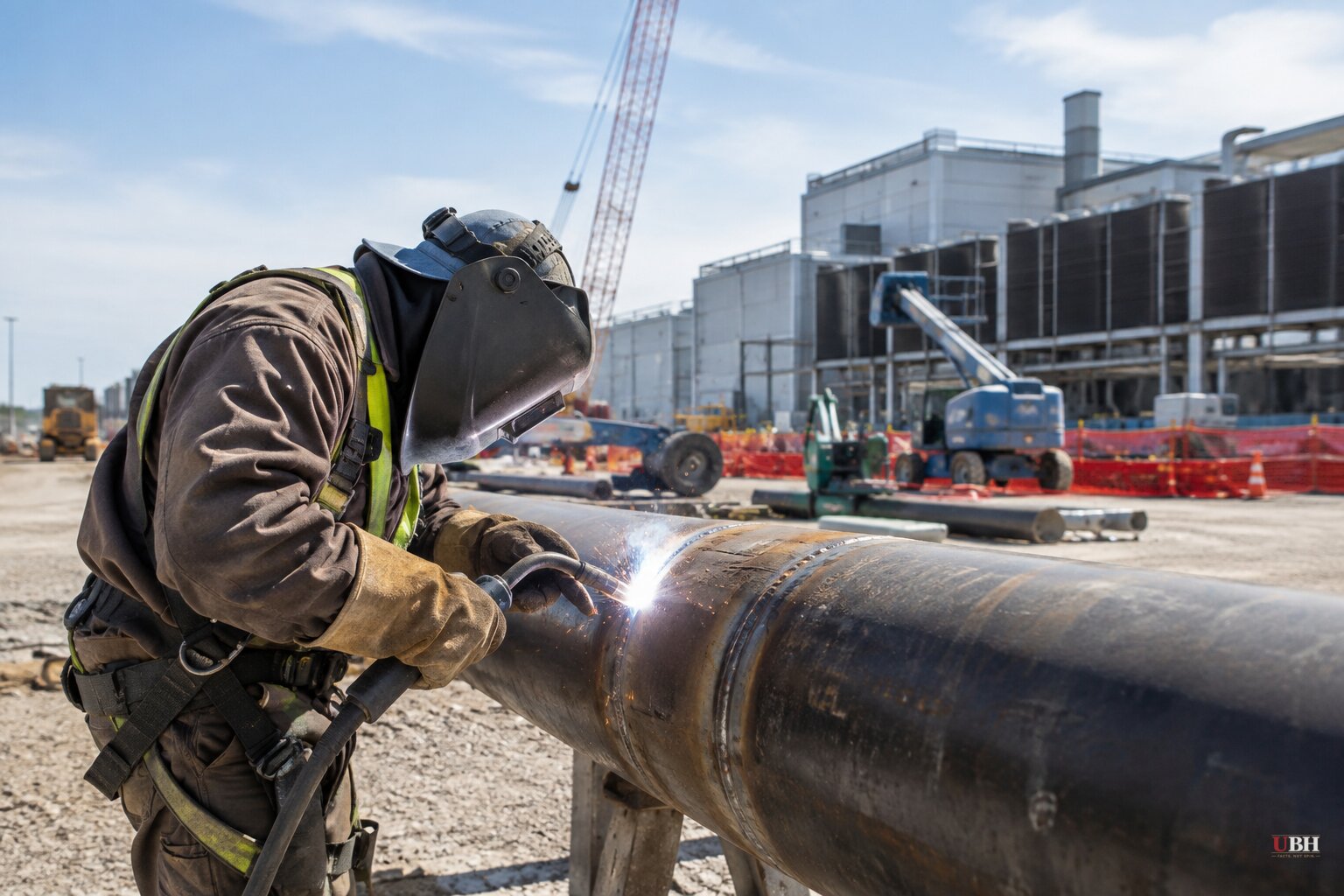
An industry that says it can't hire fast enough
At Compass Datacenters' Red Oak campus south of Dallas, roughly 900 people show up to work every day keeping ten data center buildings and 2.6 million square feet of servers running. CEO Chris Crosby told Fox News Digital the industry can't find enough electricians, mechanical contractors, welders and concrete workers to keep up with demand.
"Unfortunately, there was a war on blue-collar jobs a while back and everybody had to get a four-year degree. I'm so glad that's over with," Crosby said. "I am tired of the elitism that this doesn't create jobs."
Compass built a $12.6 million training facility at Red Oak with Texas State Technical College called MEI Pathways, short for Mechanical, Electrical and IT. It requires no prior qualifications. Crosby said Compass and its partners have created more than 7,000 permanent factory jobs nationwide, including roughly 300 at a Schneider Electric plant on the same campus.
The numbers back up the anecdote
This isn't just one company's talking point. Nonresidential specialty trade contractors, including electricians working on commercial buildings, grew by 86,000 jobs over the past year, according to Business Insider's analysis of the data. A Brookings Institution analysis cited by Business Insider found AI buildouts are set to become the largest capital expenditure project in U.S. history, outpacing historic spending on highways and railroads as a share of GDP.
ZipRecruiter labor economist Nicole Bachaud told CNBC that the mean minimum salary for data center jobs spiked 125.1% year-over-year to nearly $208,000, driven by specialized engineering roles. Welders and pipefitters saw job postings jump 164% year-over-year, according to Bachaud's data. Jobs for the Future CEO Maria Flynn told CNBC an apprentice-level technician can take home $40,000 to $60,000, with experienced electricians clearing $100,000 or more.
Job postings on Indeed for data center roles are up almost 130% from two years ago, Business Insider reported, even as overall job postings have declined over the same stretch. The American Institute of Architects projects data center construction will account for about 8% of all nonresidential building spending by 2027.
Not every market benefits equally
Bachaud told CNBC that places with cheaper land and lighter regulatory burdens, like Houston and Birmingham, are seeing the most robust growth, while coastal hubs with higher costs lag behind. That means an electrician in Birmingham likely has more leverage in the job market right now than one in Boston.
A new national report from Jobs for the Future, published September 30, 2026, puts the boom in broader context. More than 18 million Americans work in skilled trades, contributing an estimated $3.8 trillion to GDP in 2025. But nearly one in four of those workers is 55 or older, and the report found the country's formal training pipelines only prepare about 55 people for every 100 workers needed to fill an estimated 1.7 million annual openings. Of every 100 people who start an apprenticeship, only 48 finish it, and just 29 end up working in that trade within five years, according to the JFF report.
The political fault line
Beth Macy, the Democratic candidate in Virginia's 6th Congressional District, has called for a moratorium on new data center construction, according to Cardinal News. Her concern, shared by environmental advocates, is legitimate on its face. Data centers are driving up electricity demand and consuming large volumes of water for cooling, straining grids and local water supplies in some regions.
But Cardinal News also reported on a Munters plant in Botetourt County, Virginia, that manufactures HVAC equipment specifically for data centers. The company told Cardinal News that 53.3% of its workforce is non-white, with Latino workers making up 41.3%, in a county that is otherwise 92% white. These workers represent a demographic coalition Democrats typically court, now employed building an industry some in the party want to pause.
ING Global Market Research, a Dutch financial firm, concluded this summer that AI now represents one-third of all U.S. economic growth in 2026. The University of Virginia's Weldon Cooper Center for Public Service likewise credited AI-related investment in software and data centers for stronger-than-expected national growth momentum heading into the back half of 2026.
Whether the boom lasts is the open question
Not everyone treats the data center jobs surge as a sure thing. Guy Berger, a senior fellow at the Burning Glass Institute, told Business Insider his worry is timing. "We trained a lot of electricians, people like that, to do stuff that is no longer needed," if the data center cycle ends faster than companies expect. Overall U.S. construction spending actually fell 3.8% year-over-year as of July, per Census Bureau figures cited by Business Insider, even as data center-specific spending climbed more than 57% over the same period, according to KPMG.
Broad construction is pulling back while data centers surge. This split is what analysts are watching. Zach Fritz, an economist at Associated Builders and Contractors, told Business Insider that a very large portion of current construction labor demand is being driven specifically by data center activity. If that single sector slows, falters under local moratoriums like the one Macy is proposing, or runs into power-grid constraints, the trade workforce this boom has rapidly built and trained may be left with nowhere to go.
Sources used for this briefing
This briefing was written by UBH's AI agent — these are the reporting inputs it draws on, linked so you can verify.


