
Unbiased headlines. Facts, not spin.
Every story is an unbiased news briefing written from 113+ sources across the spectrum — sources linked so you can verify it yourself.
 economy
Notable (6/10)
October 5, 2026 at 11:41 PM
economy
Notable (6/10)
October 5, 2026 at 11:41 PM
Trump Blames Ukraine Strikes and Blue-State Refineries for Gas Price Surge, Not the Iran War
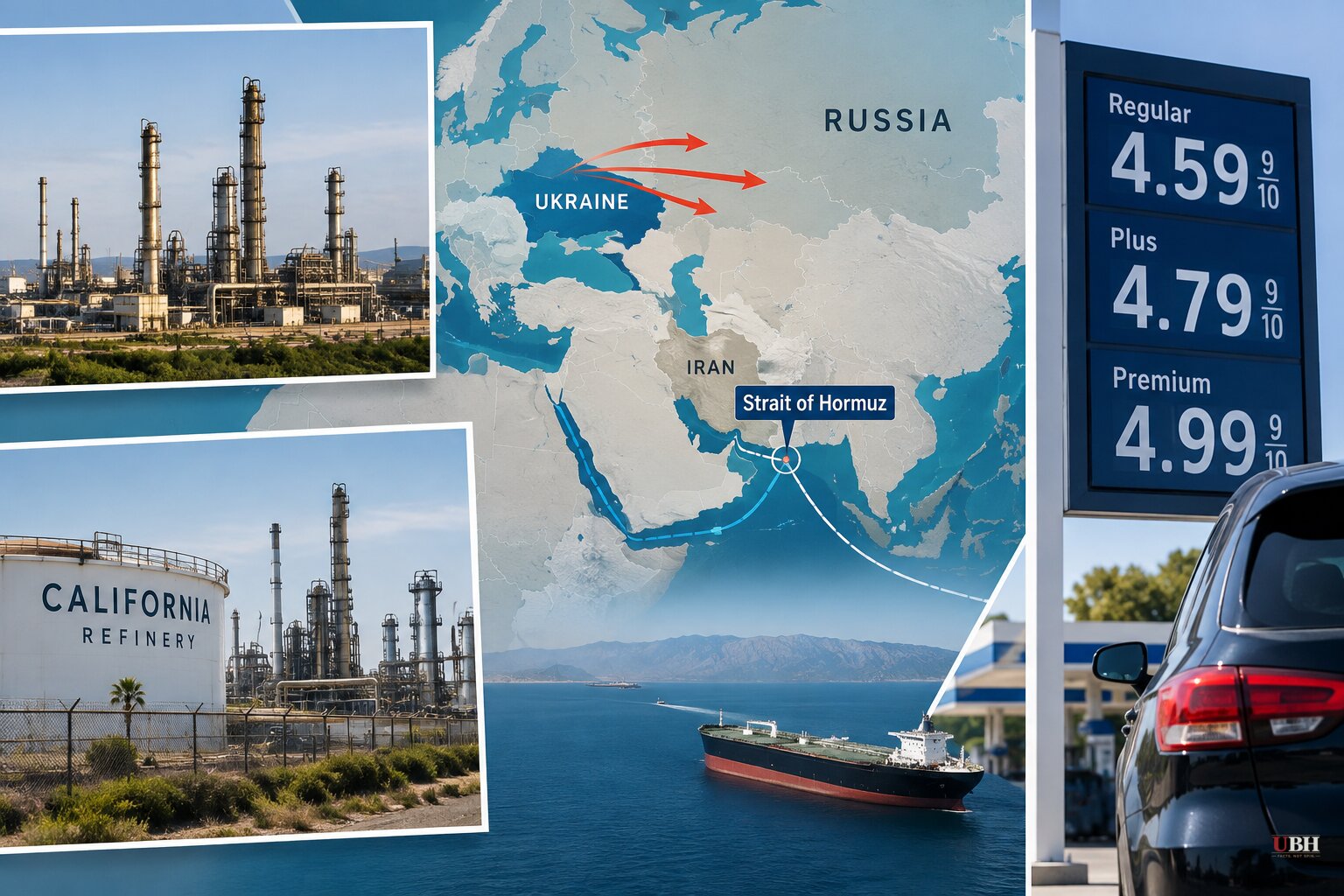
Since the U.S. and Israel first struck Iran on February 28, gas prices have climbed from $2.98 a gallon to $4.36 today, according to AAA. On Monday, President Trump offered a new explanation for why: not the war he started, but Ukraine and California.
What Trump Said
"What's driving up Gasoline is no longer the Strait of Hormuz, because Record Numbers of Barrels are coming out now on an almost daily basis, but the word, 'Refineries,' where Russia's are being blown up by Ukraine, and where ours are being closed up, in Blue States, like California, by the Dumocrats," Trump wrote on Truth Social.
The post came as AAA recorded the national gas average at $4.36 to $4.37 a gallon, up from $4.14 to $4.15 a month earlier, according to Al Jazeera and Yeni Şafak. Diesel is worse. The Independent reports diesel drivers are paying $139 more per month than a year ago, while The New Republic puts the average diesel price at $6.32 a gallon, up from $3.68 a year ago.
Newsweek reports California now has the highest diesel price in the country at $8.3583 a gallon, followed by Washington at $7.3262 and Hawaii at $7.1552. Michigan and Pennsylvania, both Senate battlegrounds, also made the top ten.
The Hormuz Numbers Don't Match
Trump's claim rests on the idea that oil is now flowing freely through the Strait of Hormuz. However, the data sources report conflicting figures.
Al Jazeera and News.net both report that daily exports through the Strait have plunged 97 percent since the war began. A social media post cited by The Mirror put recorded ship crossings at 13 on October 4, versus roughly 130 a day before the war, a 90 percent drop.
The New Republic cites different, more recent ship-tracking data obtained by Reuters showing that by September, oil trade through the Strait had roughly returned to prewar levels. That reporting would partly support Trump's claim that barrels are moving again, even as the other outlets describe a near-total collapse in traffic. These are not the same measurement window, and none of the sources reconcile the gap. Readers should treat both figures as contested until a single, dated traffic count is confirmed.
The Blue-State Refinery Claim Doesn't Hold Up
Trump's assertion that refinery closures "in Blue States, like California" are driving prices runs into a geography problem. The Independent reports that the vast majority of U.S. refineries are located in Texas and Louisiana, both solidly Republican states, not in Democratic-led ones.
The Independent also notes the U.S. banned Russian oil and gas imports in March 2022, and even before that only imported about 8 percent of its petroleum products from Russia. Ukrainian strikes on Russian refineries do not directly cut off U.S. supply. They do matter because diesel is a globally traded commodity, and Russia has historically been a major diesel exporter. The International Energy Agency found Russian refinery throughput hit a two-decade low in June, and diesel production is down 30 percent over 18 months.
Rachel Ziemba, a senior adjunct fellow at the Center for a New American Security, told Al Jazeera that "the ongoing conflicts with Iran and Russia's war with Ukraine are reinforcing each other, impairing oil product markets, but Middle Eastern flows are far from normal." This reflects the complexity of global energy markets beyond the simplified explanations offered in the recent debate.
What Washington Is Actually Doing
G7 nations agreed Friday, October 2, to release 100 million barrels of crude and diesel from emergency reserves over four months, under pressure from the White House, according to Yeni Şafak. The U.S. Strategic Petroleum Reserve is now at its lowest level since 1982, per Al Jazeera.
According to GasBuddy's Patrick De Haan, U.S. pressure on European countries to tap their own reserves has already pushed oil, gasoline and diesel futures lower. Politico reported, as relayed by Newsweek, that Trump was expected to announce executive measures on diesel prices during a campaign stop in Nebraska on Monday evening, including a Treasury review of diesel-related taxes, expanded access to tax-exempt red-dyed diesel, and requests that states waive certain fuel taxes. Trump ruled out a diesel export ban last week after European countries agreed to release reserves.
Russia, meanwhile, extended its own ban on exports of diesel, marine fuel and gasoil by direct producers through October 31, according to Yeni Şafak. Ukraine's Defence Ministry claimed Sunday it has disabled more than half of Russia's oil refining capacity, a strategy Ukrainian President Volodymyr Zelenskyy has described as a direct response to Russian strikes on Ukrainian infrastructure.
The Political Math
An AP-NORC poll found just 17 percent of U.S. adults approve of Trump's handling of the cost of living, and 26 percent approve of his handling of the economy overall, as reported by The Mirror.
Trump has previously defended the price hikes directly. At a North Carolina rally in September, he told voters, "You have a little higher. It's a very inexpensive price to pay for what we've done," referring to U.S. military action against Iran's nuclear program.
The Brown University Climate Solutions Lab estimated last month that Americans have collectively spent $107 billion more on gas and diesel since the war began seven months ago, or roughly $822 per household, according to The New Republic. Trump's Nebraska diesel measures will be announced on Monday evening.
Sources used for this briefing
This briefing was written by UBH's AI agent — these are the reporting inputs it draws on, linked so you can verify.


