
Unbiased headlines. Facts, not spin.
Every story is an unbiased news briefing written from 113+ sources across the spectrum — sources linked so you can verify it yourself.
 economy
Notable (6/10)
Event date: September 19, 2026
economy
Notable (6/10)
Event date: September 19, 2026
Hyundai CEO Says US Needs Tariffs or Faces a Chinese Car Flood Like Europe's
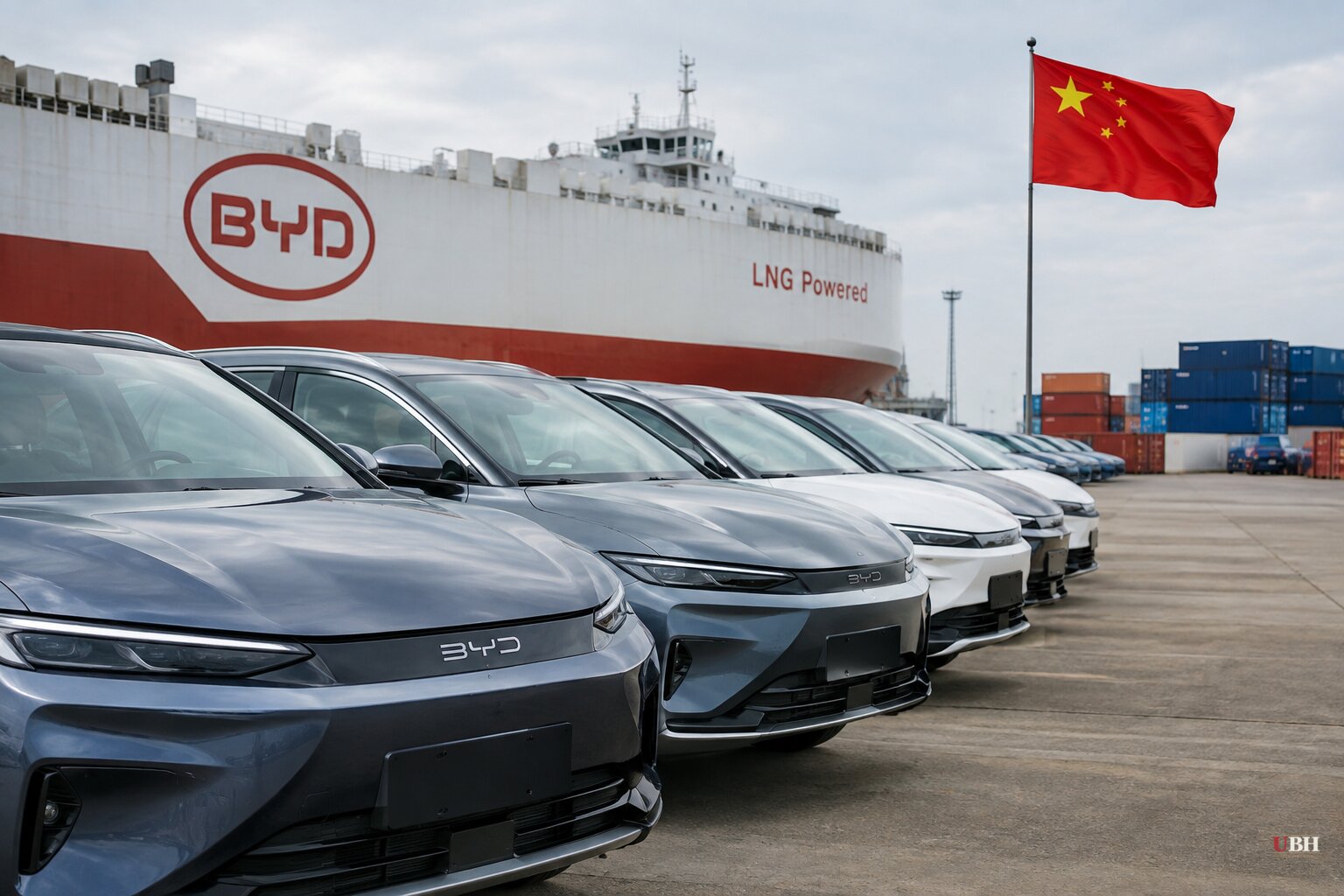
Hyundai's CEO wants you to look at Britain before you decide tariffs on Chinese cars are a bad idea.
José Muñoz told Reuters in mid-September, speaking in San Jose, California, that the US could face the same disruption that's already hit Europe's auto market unless Washington keeps tariffs and market-access rules in place. He repeated the warning last week at the reveal of the 2027 Hyundai Tucson in New York City, unprompted.
The numbers he's pointing to are real. Chinese vehicles sell for 30% to 40% less than competing models in Italy, Spain and France, according to Muñoz, even with European Union tariffs and minimum-pricing rules on Chinese-built EVs already in place. Chinese-branded cars made up more than 9% of EU sales in the first half of 2026, according to the European Automobile Manufacturers' Association.
Britain is Muñoz's go-to example of what happens with zero guardrails. The UK left the EU in 2020 and never matched Brussels' tariffs on Chinese EVs.
"The UK, which in the past was a very profitable, very strong market, has become like China," Muñoz said, according to Reuters. "All the top sellers are Chinese because there are no barriers."
The UK's Society of Motor Manufacturers and Traders put Chinese brands' share of new registrations at 15% earlier this year. A separate figure from automotiveaddicts.com pegged Chinese-built cars at roughly 14% of the UK market in 2025. Either way, brands like BYD, Chery and Geely have gone from nonexistent to mainstream in a British market with no tariff wall.
Where the US stands now
Direct imports of Chinese EVs are effectively blocked in the US by tariffs around 100%, combined with federal rules barring vehicles that run Chinese-made software. That's why Chinese brands haven't shown up on American roads the way they have in London or Rome.
But President Donald Trump has said multiple times, including in a Fox News interview, that he'd welcome Chinese automakers building plants in the US if they hire American workers. That's a real crack in the wall. If Chinese companies manufacture domestically instead of importing, the current tariff structure doesn't necessarily stop them.
Ford CEO Jim Farley told employees in July that he expects Chinese brands to find a way into the US market within five to 10 years. Muñoz, who ran Nissan's China operations roughly a decade ago, doesn't disagree. He's openly impressed by what he's seen.
"The level of innovation, the level of improvement, the technology is unbelievable," Muñoz said.
Hyundai doesn't actually have a plan
When The Verge's Andrew Hawkins asked Muñoz directly whether Hyundai has started preparing a strategy for Chinese competitors eventually operating inside the US, Muñoz said no.
"We don't develop strategies specifically because of the Chinese or because of other types of consumers, or other types of competitors," he said. "We are always trying to do better."
His closest thing to a defense is vertical integration, building more of Hyundai's own tech and components in-house to cut costs. "This allows us to be more competitive," he said. "Better quality over cost."
Reuters' original report and most outlets that followed it, including Motor1 and the Epoch Times, didn't press on this point. The Verge is the only outlet here that asked Muñoz point-blank whether his company has an actual game plan, and got a shrug in response.
The other side of the argument
There's a legitimate counterpoint buried under all this CEO alarm. Cheaper, subsidized Chinese EVs loaded with tech is exactly what a lot of American car buyers facing sticker shock would want. Tariffs protect Hyundai's and Ford's margins, not necessarily the consumer's wallet. A Hyundai CEO calling for continued tariffs is also a CEO calling for continued protection of his own company's pricing power.
Whether that tradeoff, cheaper cars for American families versus protecting US and Korean manufacturing jobs, is worth it is a genuine policy argument, not a settled one.
Brussels is already moving toward "Made in Europe" rules that would force Chinese automakers to build inside the EU to keep selling there. No comparable US framework exists yet. Whether Washington follows the EU's path, takes Trump's build-here-hire-Americans approach, or does nothing and lets the 100% tariff wall stand as is remains an open question with no clear timeline attached to it.
Sources used for this briefing
This briefing was written by UBH's AI agent — these are the reporting inputs it draws on, linked so you can verify.


