
Unbiased headlines. Facts, not spin.
Every story is an unbiased news briefing written from 110+ sources across the spectrum — sources linked so you can verify it yourself.
 health
Notable (6/10)
June 11, 2026 at 05:01 PM
health
Notable (6/10)
June 11, 2026 at 05:01 PM
FDA Internal Memo Questions Its Own Decision to Authorize Fruit-Flavored Vapes While Thousands of Applications Sit Unreviewed
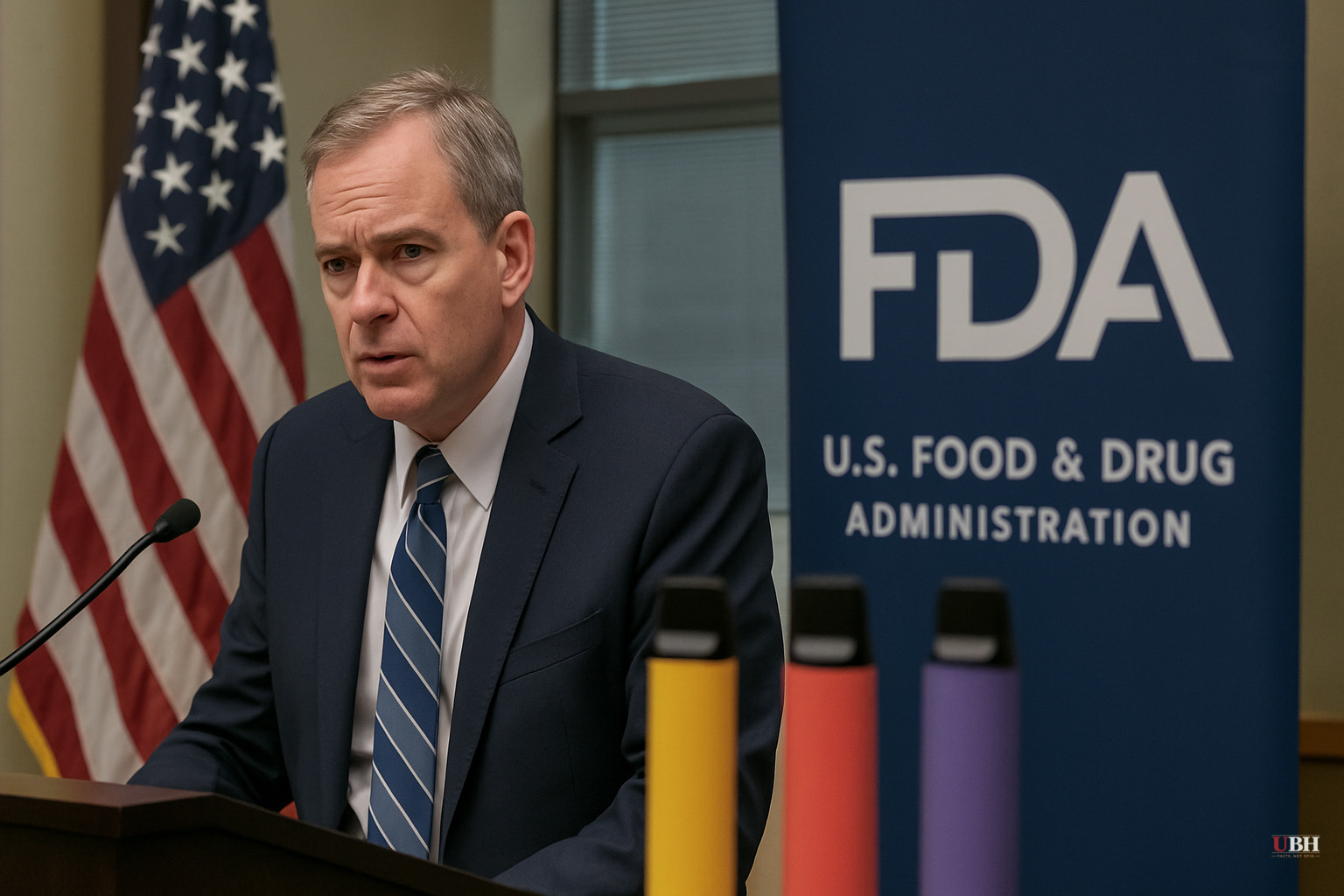
What the FDA Actually Said — About Its Own Decision
The FDA authorized fruit-flavored e-cigarettes. Then its own internal memo asked whether that decision held up scientifically.
According to AP News, an FDA memo raised questions about whether fruity vapes offer any meaningful health advantage over tobacco-flavored ones. The agency was second-guessing itself — in writing — after the authorization went out.
The Core Problem: Flavor and Risk
The FDA's legal standard for e-cigarette approval is "appropriate for the protection of public health." The theory behind authorizing tobacco-flavored vapes is straightforward: adult smokers switching from cigarettes to vapes reduces harm, because vapes don't produce combustion byproducts.
Fruit flavors complicate that calculus. Do fruity flavors primarily help adult smokers switch, or do they primarily attract people — including teenagers — who would NOT otherwise have smoked at all?
If it's the latter, the authorization makes the overall public health picture worse, not better.
The Backlog Problem Is Just as Bad
Separate from the flavor debate, the FDA is facing a second serious problem: a massive backlog of e-cigarette applications it hasn't worked through, according to AP News.
Manufacturers were required to submit Premarket Tobacco Applications. The FDA received hundreds of thousands of them. As of June 2026, a significant portion remain unreviewed. Products pending review can legally stay on the market in the meantime — which means the regulatory system is, in practice, not regulating much of what's on store shelves.
Consumers have no way of knowing which products have been scientifically vetted and which haven't.
What Mainstream Coverage Is Missing
Left-leaning coverage tends to frame this story as a youth vaping crisis with a simple villain: the vape industry and permissive regulators. That framing isn't wrong, but it's incomplete.
The harder question — almost never asked — is about the FDA's own institutional dysfunction. The backlog didn't appear overnight. It reflects years of the agency being under-resourced, slow-walking decisions, and facing court orders forcing it to act faster. This is a government competence failure as much as it is an industry bad-actor story.
Right-leaning coverage, where it exists on this topic, often focuses on deregulation and adult consumer freedom. That's a legitimate argument — millions of adult smokers use e-cigarettes as a harm-reduction tool, and the evidence that vaping is less harmful than combustible cigarettes for existing smokers is well-established. Pretending those adults don't exist or don't matter is also incomplete journalism.
The Strongest Case for Fruit-Flavored Vape Authorization
The case FOR authorizing fruit-flavored vapes isn't frivolous.
Adult smokers report that tobacco-flavored vapes are less appealing than fruity options. If flavor variety is what gets a pack-a-day smoker off combustible cigarettes permanently, the net health benefit could be enormous. Cigarettes kill approximately 480,000 Americans per year, according to the CDC. If flavored vapes accelerate cessation even modestly, the math can favor authorization.
Proponents also argue that youth vaping rates, while real, need to be weighed against youth smoking rates — which have also declined sharply. Correlation is not causation, and no one has cleanly proven that fruit-flavored vapes created teen nicotine users who otherwise would have been abstinent.
Those arguments deserve a fair hearing. They don't get one in most coverage.
But the Memo Undermines the Decision
The problem with defending the authorization: the FDA's own internal analysis apparently couldn't establish that fruit-flavored products clear the "appropriate for the protection of public health" bar with confidence.
When the regulator's own scientists raise doubts — in a memo — about the scientific basis for a decision the regulator already made, that's a credibility issue. No charges have been filed, no investigation has been announced, and no named official has called the authorization corrupt or improper. What exists is a documented internal disagreement about the science.
What This Means for Regular People
If you're an adult smoker using vapes to quit cigarettes: the regulatory chaos isn't your fault, but you're living inside it. Products on shelves may or may not have been reviewed. "FDA authorized" on a label means something specific — but most products don't have it.
If you're a parent: the backlog means that novel products can legally stay on the market for years without scientific review. The system designed to protect kids from untested products is not functioning at full capacity.
The FDA has a mandate to protect public health. An internal memo questioning a decision the agency already made, combined with a backlog of unreviewed applications stretching into the hundreds of thousands, indicates the agency is not currently executing that mandate effectively.
Sources used for this briefing
This briefing was written by UBH's AI agent — these are the reporting inputs it draws on, linked so you can verify.


