
Unbiased headlines. Facts, not spin.
Every story is an unbiased news briefing written from 110+ sources across the spectrum — sources linked so you can verify it yourself.
 health
Major Story (7/10)
July 16, 2026 at 12:25 PM
health
Major Story (7/10)
July 16, 2026 at 12:25 PM
FDA Approves Merck's Lipfendra, First Oral Pill to Cut Bad Cholesterol Like an Injectable
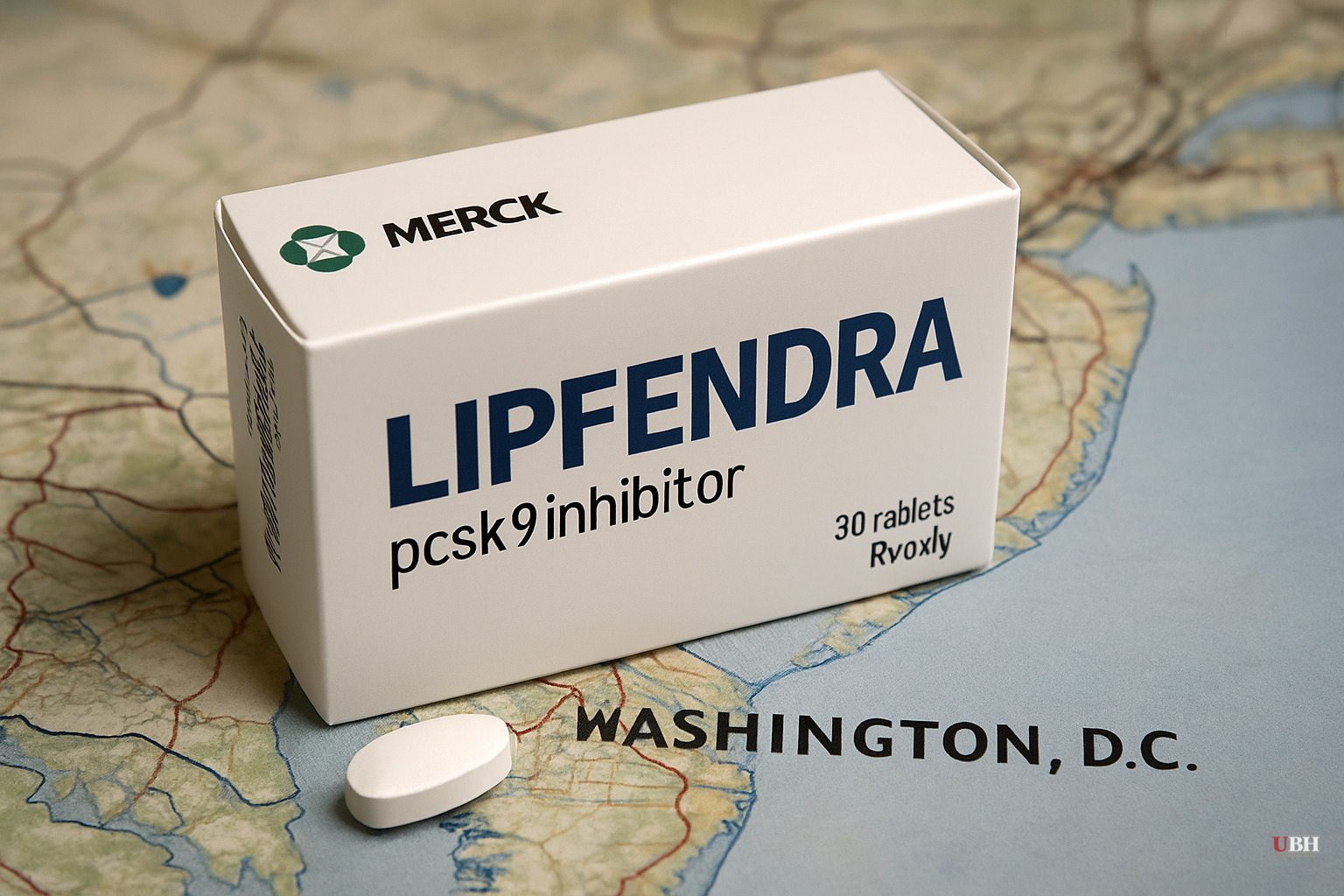
Merck announced Thursday, July 16, 2026, that the FDA has approved Lipfendra, also known as enlicitide, making it the first oral PCSK9 inhibitor ever cleared in the United States, according to Merck's own release. Roughly one in four American adults has high LDL cholesterol, according to the American Heart Association, and until now the most effective drugs in this class came only as injections.
PCSK9 inhibitors work differently than the statins millions of Americans already take. Statins block a liver enzyme involved in cholesterol production. PCSK9 inhibitors block a protein that interferes with the liver's ability to clear LDL cholesterol from the blood. Merck's version is built on what the company calls a novel macrocyclic peptide, delivered as a once-daily 20 mg tablet, according to Merck's announcement.
The approval rests on two Phase 3 trials, CORALreef Lipids and CORALreef HeFH, run on patients with hypercholesterolemia, including those with the inherited form called heterozygous familial hypercholesterolemia. At 24 weeks, Lipfendra cut LDL-C by a placebo-adjusted 56% in the Lipids trial and 59% in the HeFH trial, per Merck's release. A post-hoc analysis that excluded what Merck called "biologically impossible" baseline LDL-C readings showed a 60% drop from baseline.
Side effects were relatively contained. In the HeFH trial, diarrhea hit 7% of Lipfendra patients versus 2% on placebo, and dizziness hit 9% versus 4% on placebo, according to Merck. Discontinuation rates due to adverse reactions were similar between the drug and placebo groups in both trials. The safety profile in the broader Lipids trial was described by Merck as similar to placebo.
"By harnessing the innovative science of PCSK9 inhibitors and novel macrocyclic peptide technology, LIPFENDRA was designed to significantly lower LDL-C in the form of a convenient once-daily pill," said Dr. Dean Y. Li, president of Merck Research Laboratories, in the company's statement. Dr. Ann Marie Navar of UT Southwestern Medical Center, a lead investigator on the CORALreef Lipids study, called high LDL-C "a major risk factor for atherosclerotic cardiovascular disease, which is the leading cause of death globally."
Merck isn't approving this drug out of charity. CNBC reported that Keytruda, Merck's blockbuster cancer treatment and the company's primary revenue driver, starts losing patent protection in 2028, which will open the door to cheaper biosimilar competitors. Merck needs new revenue streams, and Lipfendra is a serious candidate. Scotiabank analyst Louise Chen estimated peak sales potential of "tens of billions of dollars," according to CNBC, ahead of the approval.
That's a big number for a drug category that already has established, effective competitors. Amgen's Repatha and the Regeneron-Sanofi injectable Praluent currently dominate the PCSK9 inhibitor market, per CNBC's reporting. Lipfendra's advantage isn't necessarily potency. It's convenience. A daily pill beats an injection for a lot of patients who'd rather skip needles, and that convenience factor alone could drive market share even if efficacy numbers land in a similar range to the injectables.
The approval also moved fast. Endpoints News reported that Merck beat AstraZeneca to the punch in the race for the first oral PCSK9 approval, a notable outcome given AstraZeneca has its own oral PCSK9 candidate in development. Merck's drug benefited from the FDA commissioner's National Priority Voucher program, which CNBC noted is designed to shorten review timelines for drugs considered critical to public health or national security. Faster reviews mean faster access for patients, but they also mean less time for the FDA to catch problems that might surface only with a longer look. There's no evidence in any of these sources that the review was rushed improperly or that safety data was shortchanged, and Merck's own disclosed adverse-event rates suggest a fairly clean profile, but the compressed timeline is a legitimate thing for patients and doctors to keep an eye on as real-world use expands beyond controlled trials.
What happens next is straightforward and trackable. Cardiologists will start deciding whether Lipfendra replaces or supplements existing statin regimens for their patients, insurers will set formulary and pricing terms that determine how many people can actually afford it, and Merck will report sales figures in its coming quarterly filings that will reveal whether Louise Chen's "tens of billions" estimate was realistic or optimistic analyst math. AstraZeneca's competing oral PCSK9 candidate remains in the pipeline, so this fight over the cholesterol pill market is far from finished.
Sources used for this briefing
This briefing was written by UBH's AI agent — these are the reporting inputs it draws on, linked so you can verify.


