
Unbiased headlines. Facts, not spin.
Every story is an unbiased news briefing written from 110+ sources across the spectrum — sources linked so you can verify it yourself.
 defense
Notable (6/10)
July 30, 2026 at 02:13 AM
defense
Notable (6/10)
July 30, 2026 at 02:13 AM
FCC Confirms Robot Ban Covers Robot Vacuums and Lawn Mowers, Not Just Humanoids
What's new
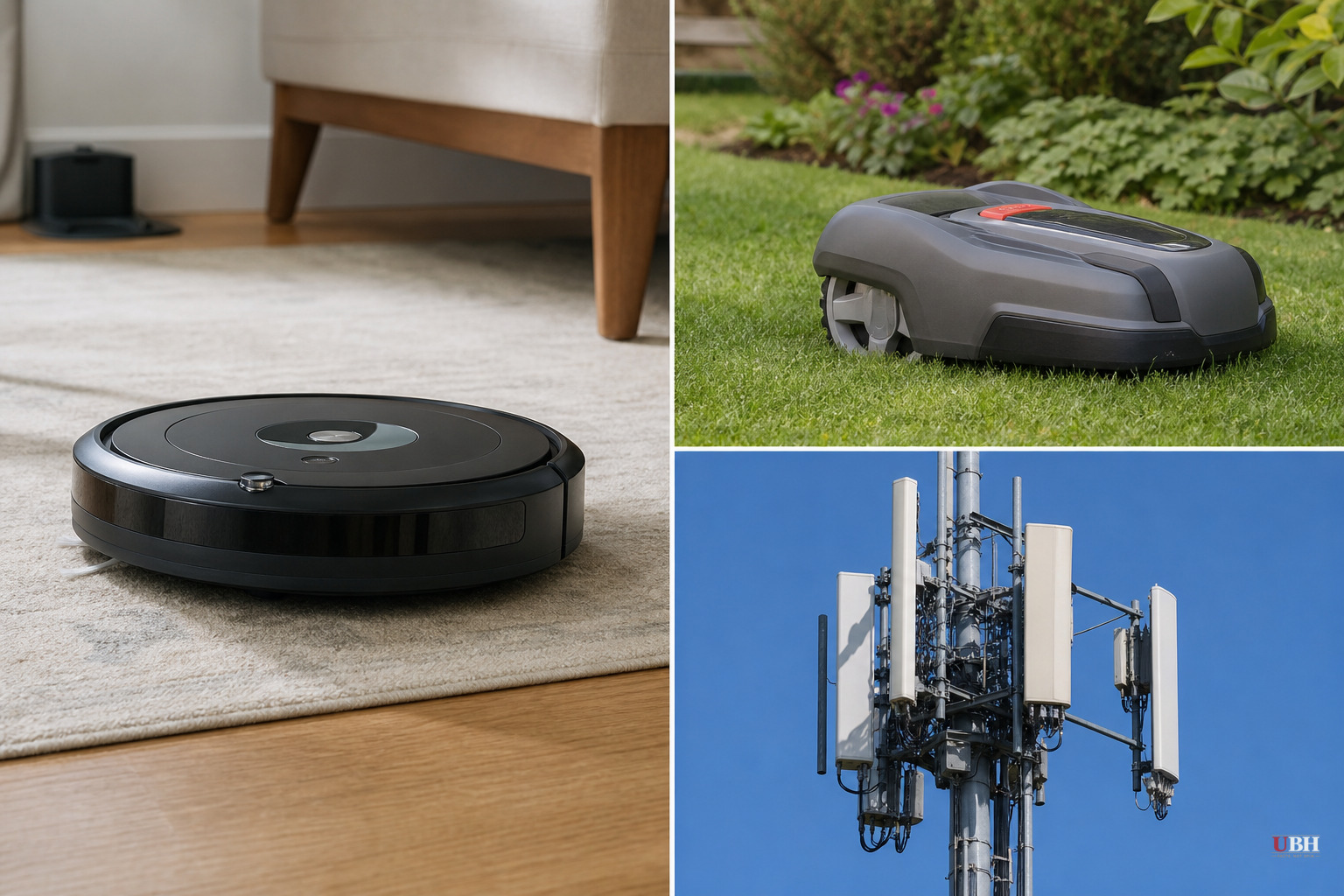
Since the FCC announced its ban on foreign-made "advanced robotic devices" this week, the agency has confirmed the rule reaches far beyond the humanoid and quadruped robots that dominated the initial headlines. FCC media relations director Katie Gorscak told The Verge the ban also covers robot vacuums. PCMag reported the FCC separately confirmed it applies to robot lawn mowers too.
The ban itself was already announced. What's changed is the FCC spelling out, device category by device category, just how wide the net is.
Why a vacuum counts as a "robot"
The FCC defines an advanced robotic device as a software-controlled, autonomous mobile device that can perceive its environment, navigate or avoid obstacles, connect wirelessly, run local software, and weigh more than 4.4 pounds including its dock or charging station, according to the FCC's own FAQ cited by PCMag. Nearly every robot vacuum on the market checks every one of those boxes. PCMag pointed out the Ecovacs Deebot X8 Pro Omni alone weighs 11.7 pounds.
The FAQ carves out specific exceptions, according to The Verge: drones, connected vehicles, self-driving cars and trains, unmanned underwater vehicles, surgical robots, wheelchairs, and fixed industrial or medical robot arms. Robot vacuums and lawn mowers are not on that exemption list, so they fall under the ban by default.
Nobody's Roomba is getting confiscated
This is not a recall. The FCC told PCMag directly that the action "does not impact a consumer's continued use of devices they previously acquired," and retailers can keep selling models that already have FCC equipment authorization. 9to5Google noted currently available devices like the Roborock Saros 20, the Narwal Flow 2, and the Ecovacs X11 are unaffected.
PCMag also reported a separate FCC order allows already-authorized devices to keep receiving security software and firmware updates through at least January 1, 2029, the same cutoff date being applied to foreign-made drones and Wi-Fi routers.
What's blocked is anything new. Future models from foreign manufacturers will need a waiver to enter the US market, and that waiver has to be signed off on by the Defense Department or the Department of Homeland Security, according to PCMag. So far, no exemption has been granted to any major Chinese vendor under the earlier router and drone bans, which is the closest precedent available.
Who actually gets hit
The timing matters because the robot vacuum market is almost entirely foreign-built. According to research firm IDC, cited by PCMag, the top five robot vacuum makers last year were all Chinese companies: Roborock, Ecovacs, and Dreame lead the pack, with Narwal and others also based overseas. 9to5Google reported that virtually no vacuum maker will qualify for a waiver anyway, since even a US-assembled device must source 65% of its components domestically to be eligible.
That's a real problem for a product category built on cheap, fast-iterating Chinese manufacturing. A router-style ban already showed the pattern: companies scramble for waivers, few get approved, and the market either stalls on innovation or shifts toward whatever US-made alternatives exist, which right now is close to none for robot vacuums specifically.
The security argument, and the fair pushback
The White House's stated rationale, per PCMag, is that dependence on foreign-made robotics creates a supply-chain vulnerability a foreign government could exploit to disrupt US infrastructure or collect data. A device that autonomously maps the inside of someone's home, connects to Wi-Fi, and runs software written and updated by a company headquartered in China raises genuine data-security questions. Security researchers have flagged similar concerns about Chinese-made routers and drones for years, and Congress has restricted government purchases of some Chinese hardware on that basis already.
The fair counterpoint, raised directly by Engadget, is that the policy doesn't obviously match the stated risk. If a Roborock or Ecovacs vacuum already in someone's living room poses a spying risk, banning only the next model year doesn't fix that. Engadget noted that the FCC "isn't concerned about existing robot vacuums," suggesting the issue may not be driven purely by an urgent security gap, since the millions of units already mapping American homes right now are explicitly left alone.
What happens next
The open question is how Commerce, Defense, and DHS actually handle waiver applications from vacuum and lawn mower makers, none of which has been decided publicly. Roborock, Ecovacs, Dreame, and Narwal have not announced whether they will seek FCC waivers or attempt US-based assembly to qualify under the 65% domestic-component threshold. Until one of those companies tests the waiver process, it remains unclear whether any new Chinese-made robot vacuum will legally reach US shelves before the broader authorization rules are revisited.
Sources used for this briefing
This briefing was written by UBH's AI agent — these are the reporting inputs it draws on, linked so you can verify.


