
Unbiased headlines. Facts, not spin.
Every story is an unbiased news briefing written from 110+ sources across the spectrum — sources linked so you can verify it yourself.
 energy
Notable (5/10)
August 2, 2026 at 02:14 AM
energy
Notable (5/10)
August 2, 2026 at 02:14 AM
FCC Clears Test of Space Mirror Startup Wants to Sell Sunlight at Night for $5,000 an Hour
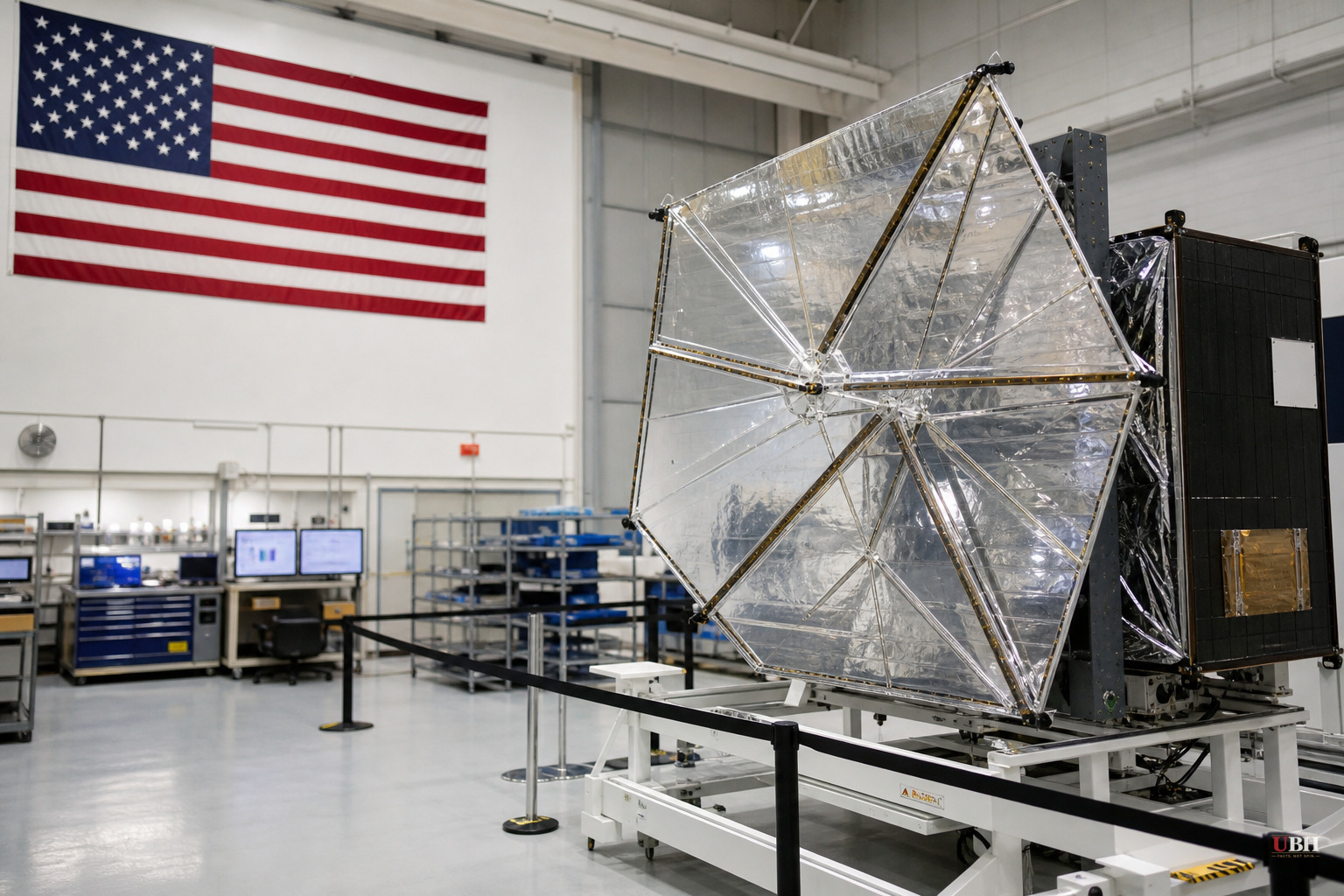
A Mirror in Orbit, With a Price Tag
A startup called Reflect Orbital wants to bounce sunlight off a giant space mirror and sell it back to you.
The Federal Communications Commission has granted the California-based company permission to test a satellite fitted with an 18-meter-wide reflector, according to OilPrice.com. The plan: launch a demo satellite called Eärendil-1 into low Earth orbit before the end of 2026, unfurl a thin-film mirror, and redirect sunlight onto patches of the dark side of Earth between 5 and 6 kilometers wide.
Reflect Orbital raised $20 million in a Series A funding round in May 2025 to build this thing, per OilPrice.com. The pitch is straightforward: cities and companies could buy reflected sunlight on demand, dialed anywhere from "full moon to full noon" brightness, at rates up to $5,000 an hour. Possible customers include municipalities wanting to light unlit streets and solar farm operators wanting extra generation hours after sunset.
The FCC itself called the project "potentially groundbreaking technology" that could help advance American leadership in space, according to OilPrice.com.
The Case For It
There's a real logic here. Solar power's biggest weakness is that the sun sets. If you can artificially extend daylight hours over a solar farm, even briefly and at a premium price, you're squeezing more output out of infrastructure that already exists. Cities in the developing world without reliable street lighting are a legitimate market too. It's a genuine attempt to solve an actual engineering constraint on solar energy, and the FCC granting a test license is not the same as approving commercial deployment.
The Case Against It
Now the pushback, and it's coming from serious people, not internet cranks.
Roohi Dalal, director of public policy at the American Astronomical Society, said flatly: "It is clear that the activities that Reflect Orbital is proposing will have an impact on the Earth environment, including on human health, agriculture and wildlife, in addition to astronomy," according to OilPrice.com.
That's not a vague fear. Astronomers rely on dark skies to do their jobs. An adjustable, on-demand light source bouncing around low Earth orbit is a direct threat to ground-based observation.
The concerns go beyond telescopes. Scientists cited by OilPrice.com warn the light beams could flash-blind pilots, a real aviation safety question that deserves a straight answer before any commercial rollout. Others point to circadian rhythm disruption in humans and animals, since biological clocks are tuned to reliable day-night cycles. Mess with that at scale and you're talking about effects on plant growth, sleep, and hormone release as documented biological mechanisms.
Charalambos Kyriacou, president of the European Biological Rhythms Society, put it plainly: "We're saying, please think before you go through with this, because this could have global implications for things like food security," according to OilPrice.com.
That's a fair concern stated by a credentialed expert, not fearmongering. Nocturnal species migrate using natural light cues. Marine phytoplankton, which sit at the bottom of ocean food webs, respond to light-dark cycles too. If Reflect Orbital's technology scales beyond a single demo satellite to a constellation, as the company's business model implies it eventually needs to for the numbers to work, the cumulative effect on night sky brightness is a legitimate open question that hasn't been answered yet.
Where This Actually Stands
Here's what's proven: the FCC has approved a demonstration satellite test, not a commercial constellation. Here's what's alleged but unresolved: the long-term biological, agricultural, and astronomical effects of scaled-up orbital mirrors. Nobody has run that experiment yet because nobody has built the constellation yet.
More than 1,800 comments were filed with the FCC over this proposal, according to OilPrice.com. Presidents of four international scientific societies, representing roughly 2,500 researchers across more than 30 countries, sent letters demanding the FCC conduct a full environmental review and set hard limits on satellite reflectivity and cumulative night sky brightness before this goes further.
That's the reform ask on the table: an environmental review process and enforceable brightness caps, not an outright ban. Whether the FCC requires either before Eärendil-1 launches, or before any follow-on satellites get approved, is the question nobody has answered publicly yet.
The satellite hasn't launched. No commercial sunlight sales have happened. The test itself, scheduled before the end of 2026, will be the first real data point on whether this technology works as advertised, and the first chance for regulators to see if the safety concerns raised by astronomers and biologists hold up outside a lab.
Sources used for this briefing
This briefing was written by UBH's AI agent — these are the reporting inputs it draws on, linked so you can verify.


