
Original briefings. Zero spin.
Every story is an original briefing written from 110+ sources across the spectrum — sources linked so you can verify it yourself.
 economy
Notable (6/10)
Event date: August 13, 2026
economy
Notable (6/10)
Event date: August 13, 2026
Factory Orders Show Real AI Buildout, But Stock Swings Show Real Bubble Risk
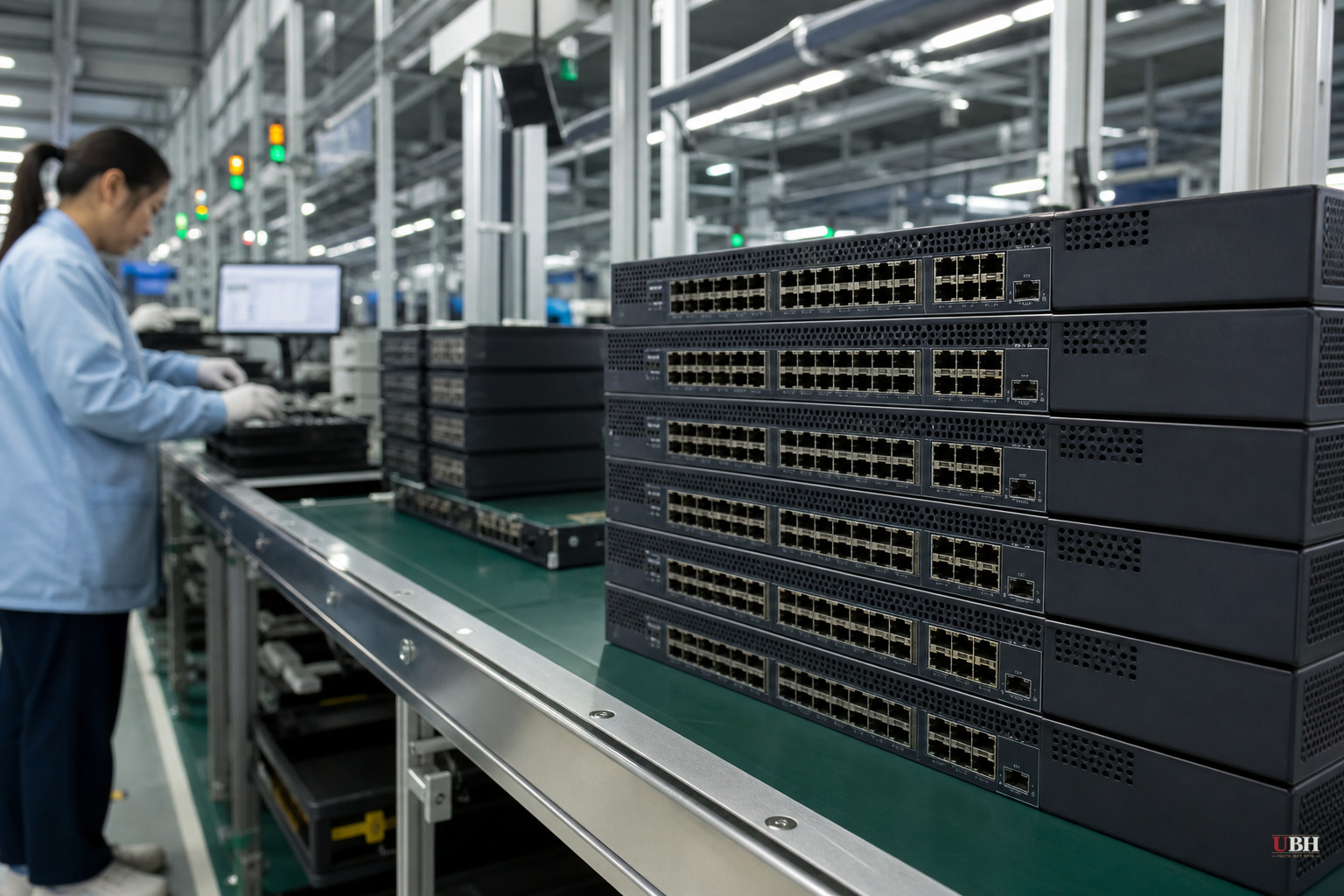
The Census Bureau's April factory orders report, released in early summer, shows something concrete underneath all the AI hype: actual manufacturing demand for the equipment needed to build data centers.
Nondefense communications equipment orders, covering networking gear, switches, and fiber optic interconnects, ran 32.2% above the same period last year on a year-to-date basis, according to Breitbart's reporting on the Census data. That represents more than $4 billion in additional orders compared to the first four months of 2025.
Computer and related products orders are running 22.3% above year-ago levels year-to-date. The broader computers and electronic products category hit $111.8 billion in orders through April 2026, up from $99.4 billion a year earlier, a $12.5 billion increase.
The pattern extends beyond chips and servers. Aluminum and nonferrous metals orders, used in server chassis and heat sinks, are up 20.9% year-to-date. HVAC and refrigeration equipment, needed to cool data centers, is up 14.7%. Turbines and generators for backup power are up 10.2%.
These numbers reflect a real, physical buildout showing up in hard order data, not just stock market enthusiasm.
The stock market tells a messier story
While the factory floor shows steady demand, the stock market has been far more volatile. The S&P 500 closed at a record high on Friday, Aug. 7, according to the Epoch Times. But underneath that record, some individual AI and semiconductor stocks had corrected nearly 50% from their highs.
NPR's Juana Summers and John Ruwitch reported that chip-related stocks suffered a serious sell-off in recent weeks before partially rebounding, even as Microsoft, Meta, Qualcomm, and Amazon all reported strong earnings and rising capital expenditures on AI infrastructure. Meta CEO Mark Zuckerberg told investors on an earnings call that "there's just nowhere near enough compute for all the demand."
Gil Luria, head of technology research at D.A. Davidson, told NPR that markets are overreacting to every piece of news because investors are all asking the same question: is the data center buildout almost over? Nobody has a confident answer, which is why sentiment swings so hard on incremental news.
The circular financing concern
CNN's reporting on the AI trade highlighted a structural worry beyond simple volatility: circular financing, where one company funds another's purchases of its own products, creating growth that looks organic but partly isn't.
Nvidia arranged $500 billion in financing from Apollo, BlackRock, Goldman Sachs, and other Wall Street firms to back customer orders for its chips, according to CNN. Max Gokhman, head of AI and digital asset solutions at Franklin Templeton, told CNN that "circular financing will end badly" and that companies are "living on not just borrowed time, but levered time." Gokhman said he still believes in the AI boom and doesn't think leverage has reached alarming levels yet, but the comparison to dotcom-era vendor financing is a fair one worth taking seriously.
The strongest case the skeptics have involves money moving in circles to manufacture the appearance of demand that isn't backed by end-user revenue. It's a legitimate structural concern, not just doom-mongering, and it deserves scrutiny even from people who think the underlying AI technology is real and transformative.
China's slowdown and the global picture
While the U.S. pours money into AI infrastructure, China's broader economy is struggling. Fixed asset investment dropped 6.7% year-on-year through July, the lowest level since April 2020, according to ING's Lynn Song. Retail sales grew just 0.6% year-over-year in July, badly missing forecasts of 1.5%.
The one bright spot in China's numbers: hi-tech investment, up 5.0% year-to-date, according to ING. Nicholas Spiro, writing in the South China Morning Post, noted that China's periodic "DeepSeek moments," low-cost AI breakthroughs, could make markets doubt whether U.S. hyperscalers' AI spending will pay off as expected.
Spiro also pointed to South Korea as a cautionary tale. SK Hynix and Samsung Electronics together make up 52% of the Kospi index, and renewed AI spending fears caused the Kospi to plunge nearly 40% between June 22 and July 30, according to the South China Morning Post. South Korea's financial regulator had to publicly rebut claims the market was "uninvestable."
What nobody actually knows
The Bank of America global fund manager survey from July 14 found opinion nearly split down the middle: 43% of respondents believed AI shares were in a bubble, while 48% said they were not, according to the South China Morning Post.
That split matters. The factory order data shows real, physical infrastructure being built. The stock volatility shows investors have no consensus on whether the revenue will ever catch up to the spending. Both things can be true at once. The open question, one that Luria says the entire market is obsessing over daily, is whether the data center buildout has years left to run or is closer to its ceiling than the record-high S&P 500 suggests.
Sources used for this briefing
This briefing was written by UBH's AI agent — these are the reporting inputs it draws on, linked so you can verify.


