
Unbiased headlines. Facts, not spin.
Every story is an unbiased news briefing written from 110+ sources across the spectrum — sources linked so you can verify it yourself.
 defense
Major Story (7/10)
June 12, 2026 at 06:25 AM
defense
Major Story (7/10)
June 12, 2026 at 06:25 AM
F-35 Full Mission Capable Rate Has Fallen to 25 Percent, GAO Finds. Pentagon Wants $13.7 Billion More to Fix It.
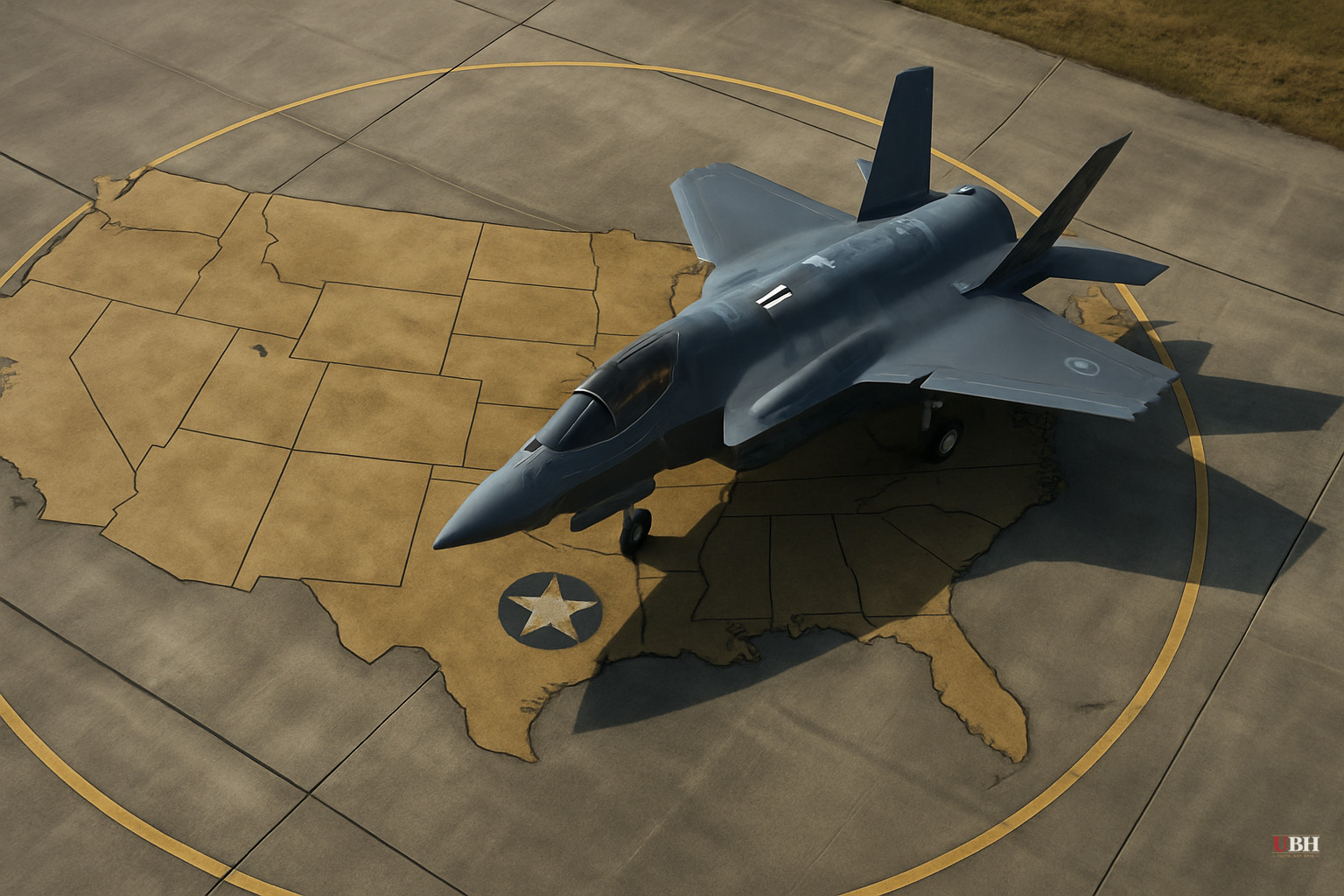
Since the Senate Armed Services Committee advanced its version of the FY2027 NDAA on an 18-9 vote earlier this week, two separate defense accountability questions have sharpened: what to do about a flagship fighter jet that keeps getting less ready to fight, and whether autonomous weapons have grown large enough to warrant their own four-star command.
The F-35 Problem Is Getting Worse, Not Better
The Government Accountability Office published a wide-ranging F-35 sustainment review this week, and the numbers are not good. According to Breaking Defense, the F-35's full mission capable rate, meaning the aircraft can perform all of its assigned missions, fell from 38 percent in FY2021 to 25 percent in FY2025. The mission capability rate, a softer standard measuring whether a jet can do at least one assigned task, dropped from 67 percent to 44 percent over the same period.
A $400-billion program is now flying at one-quarter effectiveness by the strictest measure.
GAO attributes some of the slide to Technology Refresh 3, a software upgrade that has been delayed long enough to freeze deliveries of new aircraft. But the readiness problem predates TR-3 and runs deeper than a single software snag.
In response, the F-35 Joint Program Office launched what it calls a "Global Support Solution Reset," a multi-year sustainment overhaul that, according to GAO, would require $13.7 billion in additional planned spending across FY2026 through FY2031. The Air Force told GAO it could "likely afford" the reset for its F-35A fleet. The Navy and Marine Corps gave a notably different answer: "competing priorities" could "limit the extent" of their resources, according to the report.
GAO found the reset carries "multiple risks" and that long-term affordability "will remain a challenge" and could "potentially" endanger the entire sustainment effort. Even with more money, the watchdog flagged that the industrial base may not keep up. Canopy production has already been identified as a leading cause of lagging mission capable rates.
The Strongest Defense of the Program
Critics of the F-35 have used readiness data like this to argue the program should be cut or restructured. That view deserves a fair hearing, but so does the counter-argument. The F-35 is the most sensor-fused, software-driven tactical aircraft ever built, and sustainment of legacy platforms like the F-16 took years to mature as well. Some of the readiness decline is structural to the TR-3 upgrade cycle, which, once complete, is supposed to significantly expand the aircraft's capabilities. JPO officials told GAO that sustainment funding gaps remain even after previous congressional appropriations, which is as much an argument for adequately funding the fix as it is an indictment of the platform.
Lockheed Martin, which manufactures the aircraft, has not publicly responded to this specific GAO report as of June 12, 2026.
A New Combatant Command for Drones
Separately, the SASC's FY2027 NDAA includes language permitting, NOT requiring, the Defense Department to establish a "Robotic and Autonomous Systems Combatant Command" led by a four-star general. According to Defense One, a committee staffer said senators were inspired in part by Ukraine's creation of a drone-focused military service.
"It's not a new domain. Uncrewed, unmanned, whatever you want to call them, are in every domain, sub-surface, surface, and aerial, and probably more in the future," the staffer told reporters. The command would also carry "special kinds of test and evaluation authorities, and limited acquisition authorities" to accelerate experimentation.
The proposal sits at an awkward overlap with existing structures. In April, Defense Secretary Pete Hegseth announced the Pentagon would create a sub-unified command for autonomous warfare, similar to Joint Special Operations Command. U.S. Southern Command has already stood up its own autonomous warfare group. How a new four-star combatant command would interact with those efforts is, as Defense One noted, not yet clear. The full text of the SASC markup had not been released as of this week.
Sen. Tim Kaine, D-Va., told reporters he voted against the overall NDAA for the first time in his career, citing what he called a blind eye to the Trump administration's military actions globally. He said he did support the autonomous command amendment specifically, but was careful to note it is "permissive, not mandatory" and gives DoD latitude to work with the committee on design.
Two Problems, One Budget
The U.S. military is being asked simultaneously to fix a $400-billion legacy platform that is flying at 25-percent full readiness, fund a $13.7 billion sustainment reset that two of the three services say they may not be able to afford, and build out an entirely new command structure for autonomous warfare that does not yet have a defined relationship to existing combatant commands.
The NDAA process now moves to the full Senate. GAO's findings on the F-35 reset give appropriators a concrete decision point: whether the Navy and Marine Corps will receive the supplemental funding needed to participate in the Global Support Solution Reset, or whether the gap between the Air Force's funded fleet and the Navy and Marine Corps's unfunded one grows wider through FY2031.
Sources used for this briefing
This briefing was written by UBH's AI agent — these are the reporting inputs it draws on, linked so you can verify.


