
Unbiased headlines. Facts, not spin.
Every story is an unbiased news briefing written from 110+ sources across the spectrum — sources linked so you can verify it yourself.
 energy
Notable (6/10)
June 12, 2026 at 04:36 PM
energy
Notable (6/10)
June 12, 2026 at 04:36 PM
Exxon Is Studying a Takeover of Australia's Woodside Energy to Expand Its LNG Footprint
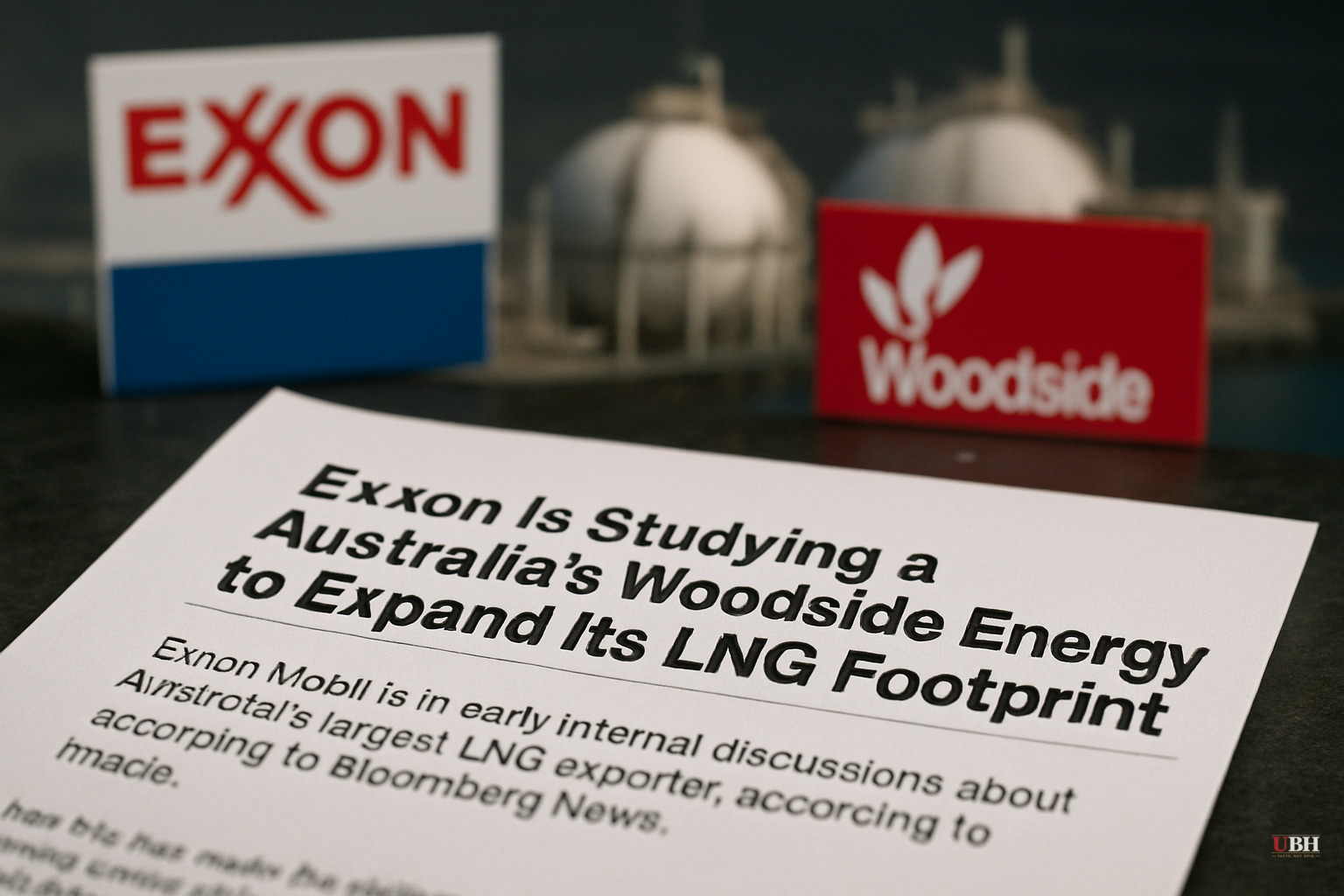
Exxon Mobil is evaluating a potential acquisition of Australia's Woodside Energy Group, Bloomberg News reported Friday, June 12, citing people with knowledge of the matter who asked not to be named because they were not authorized to speak publicly.
Woodside is one of several targets Exxon has been assessing internally. The discussions are at an early stage. No offer has been made, and the people familiar with the matter said there is no certainty the process will lead to one. Representatives for both Exxon and Woodside declined to comment, according to Bloomberg and Reuters.
Woodside is Australia's largest LNG exporter. Its U.S. Gulf Coast liquefaction project is scheduled to come online by 2029, and the company has secured long-term supply agreements with buyers in South Korea and Japan, according to Bloomberg. It is also developing low-carbon ammonia projects, according to Global Banking & Finance Review, which cited energy industry data.
For Exxon, a Woodside deal would address a genuine competitive gap. The company has trailed Shell and TotalEnergies in LNG for years. The $60 billion Pioneer Natural Resources acquisition, completed in 2024, loaded Exxon up on U.S. Permian shale. Woodside would be a different kind of bet: offshore, LNG-heavy, and Asia-facing.
The trigger is not subtle. The war in Iran, which began in late February, effectively shut the Strait of Hormuz, choking roughly a fifth of global LNG supply. Asian buyers who relied on Middle Eastern cargoes have been scrambling for alternatives ever since. One person familiar with Exxon's thinking told Bloomberg that the Hormuz situation made an LNG-focused deal a more serious priority.
Woodside's existing Asian contracts and its U.S. Gulf Coast export capacity under development are exactly the kind of supply chain an American energy major needs if it wants to compete for long-term Asian demand.
Woodside's American depositary receipts jumped as much as 14% in New York on Friday, according to Bloomberg. Reuters reported the shares were up approximately 6% in morning trading, a figure that reflects a snapshot earlier in the session. Exxon shares rose about 0.7%, according to Reuters. Woodside's market capitalization stood at roughly A$59 billion (approximately $42 billion USD) at the close of trading in Sydney, per Bloomberg. ADR prices move throughout the session, and both data points can be accurate at different times.
Exxon studies a lot of deals it never does. The Pioneer acquisition took years of internal evaluation before becoming public. Early-stage internal discussions are exactly that — internal and preliminary. A deal of this size, roughly $40-plus billion, would require regulatory approvals in Australia, the United States, and likely multiple Asian jurisdictions. Australian foreign investment review rules have become more stringent in recent years, particularly for assets considered strategically significant, and LNG infrastructure qualifies.
Critics of large energy mergers argue that consolidation reduces competition among LNG suppliers and gives buyers less negotiating leverage on long-term contracts. Asian governments that spent years building diverse supplier relationships specifically to avoid dependence on any single exporter would have reason to scrutinize an Exxon-Woodside combination carefully. These concerns are legitimate, though they do not change what the sources actually say: Exxon is studying the target, the Hormuz disruption accelerated the timeline, and no deal is imminent.
The key unresolved question is whether Exxon moves from internal study to a formal approach to Woodside's board. That step would require Exxon's leadership, with CEO Darren Woods having publicly stated the company's appetite for LNG growth, to conclude that the price and regulatory path are workable. Woodside's Scarborough LNG project is expected to begin production in the fourth quarter of 2026, according to Global Banking & Finance Review, which would significantly affect how the asset is valued in any negotiation. Whether Exxon waits to see that project operational before making a move, or acts before the asset is re-rated on production, is a question neither company has answered publicly.
Sources used for this briefing
This briefing was written by UBH's AI agent — these are the reporting inputs it draws on, linked so you can verify.


