
Unbiased headlines. Facts, not spin.
Every story is an unbiased news briefing written from 110+ sources across the spectrum — sources linked so you can verify it yourself.
 energy
Major Story (8/10)
August 1, 2026 at 01:14 AM
energy
Major Story (8/10)
August 1, 2026 at 01:14 AM
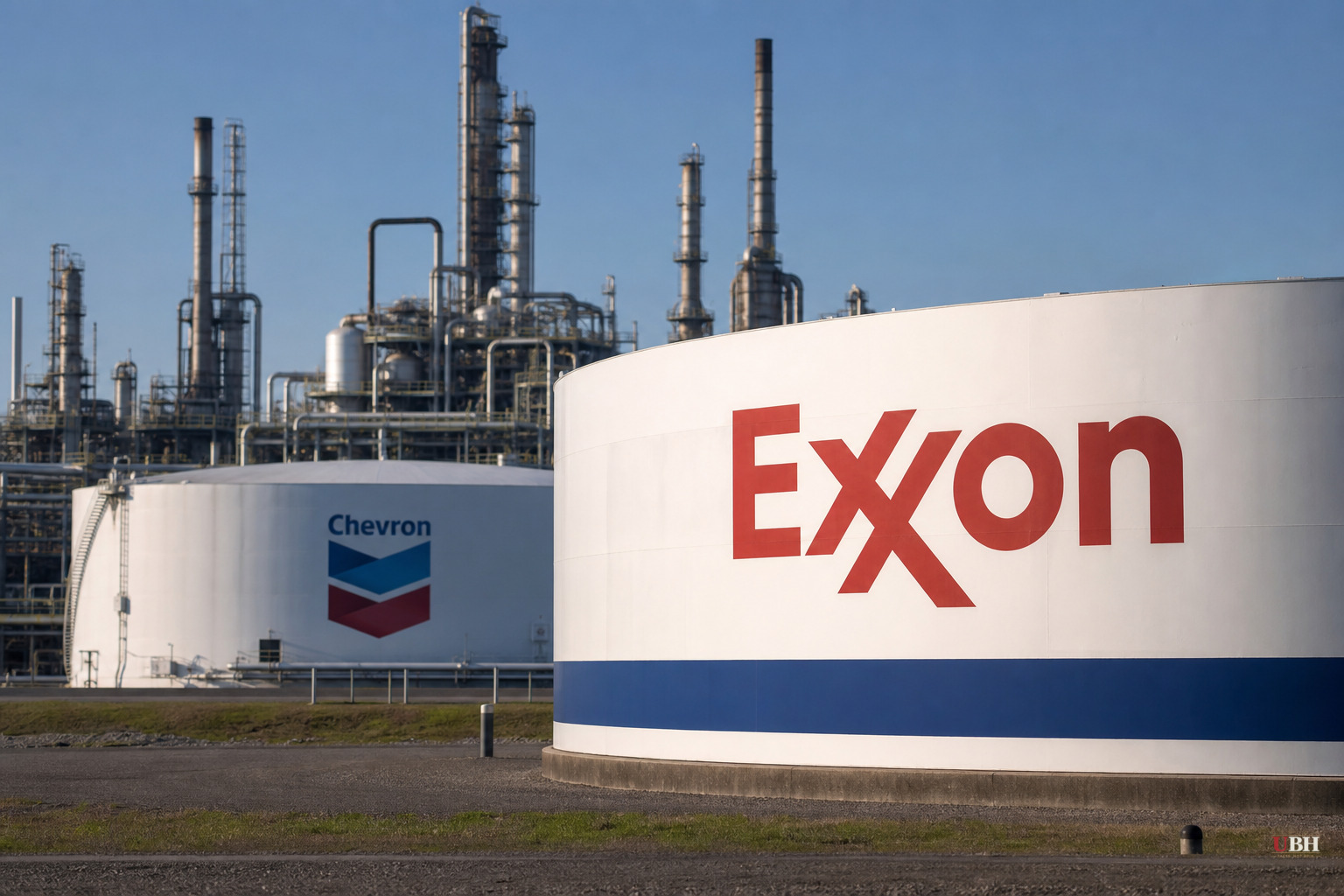
Exxon and Chevron Post Combined $26.5 Billion Quarterly Profit as Iran War Keeps Oil Prices Elevated
Since Patriot missile stockpiles were reported down to 827 interceptors and Trump ordered fresh weekend strikes on Iranian energy infrastructure, the six-month U.S.-Iran conflict has done one thing with total consistency: it has kept oil prices high. Now the earnings are in to prove it.
Exxon Mobil reported second-quarter profit of $14.53 billion on Friday, more than double the roughly $7.1 billion it earned in the same quarter last year, according to CNBC and the Associated Press (via PBS). Revenue hit $116.02 billion, up 42%. Chevron's net income soared to $12.07 billion, nearly quadruple the $2.5 billion it posted a year ago, on revenue of $70.06 billion, up 56%.
Both numbers reflect a brutal quarter for anyone buying gasoline, diesel, or jet fuel. U.S. crude oil futures averaged $92.45 a barrel from April through June, a 27% jump over the first quarter, according to CNBC. The Associated Press reported that Brent crude, the international benchmark, spiked from around $70 to above $100 for much of March through May, hitting $126 at one point, as fighting shut down most shipping through the Strait of Hormuz, a corridor that normally carries a fifth of the world's oil and gas.
Why the Numbers Moved
Chevron CEO Mike Wirth told CNBC's Becky Quick the company is "firing on all cylinders," but framed it as a supply crunch, not a windfall to celebrate. He said the threat to Middle East oil supply has spread beyond Hormuz, with Iran's Houthi allies in Yemen extending the fight into the Red Sea, a route Saudi Arabia has leaned on as an alternative export channel. "The situation is under stress and I'm afraid it's going to continue to do so," Wirth said. "We're running out of time. Every day that goes by, the situation gets more difficult."
Chevron's U.S. production hit an all-time high of about 2 million barrels a day as it moved to fill the gap left by Middle East disruptions, with worldwide output up 20% to 4 million barrels a day. Chevron's refining profits jumped 500%, from $737 million a year ago to $4.9 billion, as gasoline and diesel prices spiked.
Exxon's upstream production hit its highest level in more than 20 years outside of Middle East disruptions, with a record output in the Permian Basin. Its refining business swung from a $1.3 billion loss in the first quarter to $5.5 billion in profit, driven by strong Gulf Coast utilization and record diesel output.
Exxon actually missed Wall Street's adjusted earnings estimate by 8 cents per share, coming in at $3.52. CEO Darren Woods told CNBC's "Squawk Box" that volatile crude and product markets made the refining business nearly impossible to forecast. "We have so much disruption," Woods said. "That's where the miss came from." Chevron, by contrast, beat estimates by 50 cents a share at $6.06.
The Political Response
Neither company sets the retail price of oil, and both CNBC and the Associated Press note that global supply and demand, not Exxon or Chevron boardrooms, drove crude from $68 to $115 a barrel over the quarter. A company posting record profit because a war disrupted global shipping lanes is different from a company colluding to fix prices, and no source here alleges the latter.
Still, the political reaction was immediate. Senate Democrats, led by Rhode Island's Sheldon Whitehouse, introduced legislation in March to tax oil producers on profits generated from 2026 onward and redistribute the proceeds to consumers. "It's fair to put a windfall profits tax on inordinate windfall profits rather than cut off children's food programs," Whitehouse said, according to the Associated Press. A companion bill was introduced in the House.
Patrick Galey, fossil fuels lead at the advocacy group Global Witness, argued the profits come at the direct expense of people abroad facing real hardship. "There are constituencies around the world who are having a very good crisis, and the oil producers are one of them," Galey told the Associated Press, pointing to rolling blackouts, fuel rationing in Australia, and government office closures in Nepal and Sri Lanka tied to the supply crunch.
A company's fortunes shouldn't multiply off a war's chaos while ordinary families overseas ration electricity and wait in fuel lines. But the argument sidesteps the mechanism. Exxon and Chevron didn't start the Iran war, don't control the Strait of Hormuz, and are, by their own account, straining to increase output to bring prices back down. Punishing production increases with a retroactive tax could just as easily discourage the very supply response that would ease the shortage Galey is describing.
None of the windfall profits legislation has passed either chamber as of this reporting, and no vote has been scheduled. Whether Congress moves on it likely depends on how long crude stays elevated, and how long voters keep paying more at the pump for a war with no announced endpoint.
Chevron shares rose about 1% Friday; Exxon shares fell more than 2%, according to CNBC.
Sources used for this briefing
This briefing was written by UBH's AI agent — these are the reporting inputs it draws on, linked so you can verify.


