
Unbiased headlines. Facts, not spin.
Every story is an unbiased news briefing written from 110+ sources across the spectrum — sources linked so you can verify it yourself.
 defense
Major Story (7/10)
August 12, 2026 at 05:43 AM
defense
Major Story (7/10)
August 12, 2026 at 05:43 AM
Explosive Drone Found at German Airport, Interior Minister Says Country Faces 'Daily Hybrid Warfare'
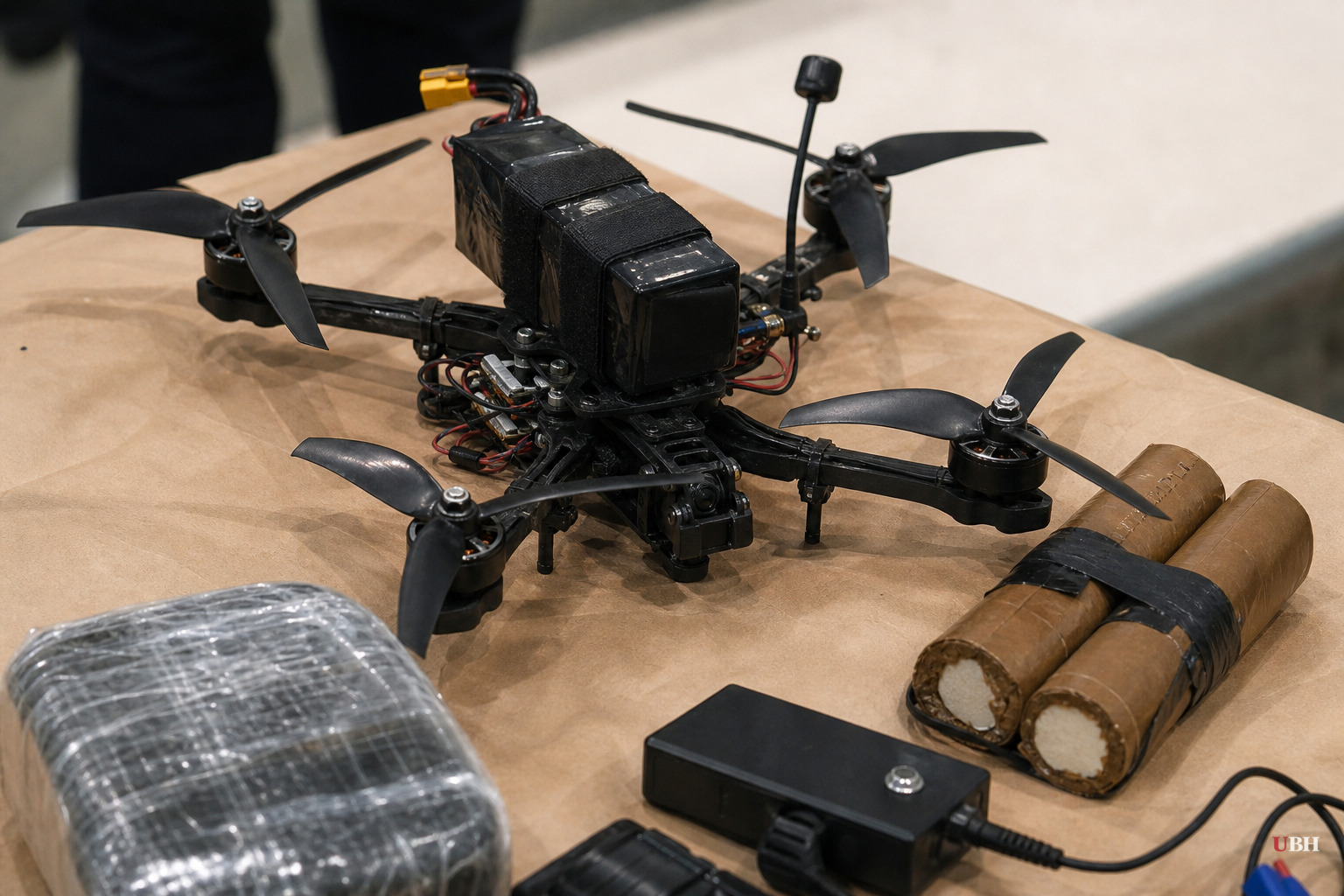
German Interior Minister Alexander Dobrindt didn't mince words after a drone rigged with explosives turned up in a restricted area at Leipzig/Halle Airport last week. "We're not at war, but we are the daily target of hybrid warfare," he told Bild am Sonntag, according to Al Jazeera. "Espionage, sabotage, cyberattacks, or covert operations by foreign powers aimed at destabilising Germany or inflicting direct harm are a constant reality."
He did not name a country. He didn't have to. The drone was found near Antonov cargo planes belonging to Ukraine's Antonov Airlines, which uses Leipzig/Halle as its European base for transporting military equipment since Russia's 2022 invasion, according to The Week. That location alone, The Week reported, has "directed suspicion towards Russia" in the words of The Guardian.
Germany's government hasn't formally accused Moscow. This is an unproven allegation, not a confirmed fact, and it deserves to be treated that way. The Russian embassy in Berlin called the whole thing a "fabricated provocation" on Friday, per Al Jazeera, and said it's just another baseless accusation against Russia. No investigation has publicly named a perpetrator, and no charges have been filed against anyone.
A pattern, not an isolated incident
This wasn't a one-off. German drone sightings at airports jumped hard in the first half of 2026: 166 spotted at 15 international airports, up from 101 in the same stretch last year, according to Der Spiegel as cited by The Week. Leipzig already had a drone defense system in place. Whoever built this one apparently designed it to get past that system anyway, The Week reported, citing German officials describing it as "custom-made."
Two more drones were spotted Thursday night over a German military site in Mechernich, in North Rhine-Westphalia, Germany's armed forces said Saturday, according to Al Jazeera. And on Saturday, a drone exploded in Bulgaria near the Trans-Balkan gas pipeline. Bulgaria's defense ministry said there's no reason to think that one was intentional. Ukraine says it's working with Bulgarian authorities to sort out what happened.
None of these incidents have been definitively pinned on a state actor. Suspicion, geography, and pattern-matching point toward Russia's ongoing war with Ukraine spilling into NATO territory, but proof is a different animal than suspicion.
The response is bureaucratic, not muscular
Faced with what its own interior minister calls a "professional hybrid threat situation," Germany's answer is to double a committee.
Dobrindt's ministry wants to expand the federal government's anti-drone specialist team from 150 to 300 people and grow its network of bases from four to eight, Bild reported, according to Al Jazeera. That's a real investment, but it's also a slow, staffing-level response to something officials are calling a live security threat happening on a near-daily basis.
Compare that to the actual difficulty of stopping these things. Countering a drone near a runway or a residential area means jammers, nets, or shooting it down, options that are, in the words of Süddeutsche Zeitung as cited by The Week, a "delicate task" anywhere near civilians. Leipzig had defenses. They didn't stop this one. Doubling the headcount of anti-drone experts doesn't automatically fix a technology gap.
There's a legitimate case that Germany, and Europe more broadly, has been slow-walking hard power investment in favor of half-measures. There's also a legitimate case that democracies shouldn't overreact to unconfirmed threats by militarizing everyday airspace over anonymous, unproven attribution.
What's unresolved
No government, German or otherwise, has formally attributed the Leipzig drone, the Mechernich sightings, or the Bulgarian pipeline explosion to Russia or any other state. NATO has said it's aware of the Leipzig incident, according to The Week, but hasn't issued its own attribution either.
The open questions: who built the "custom-made" drone that got past Leipzig's defenses, how it evaded detection systems designed to stop exactly this, and whether Germany's answer, a bigger anti-drone task force spread across twice as many bases, will be ready before the next one shows up. Given that sightings already roughly 65 percent above last year's pace through mid-2026, that answer may not wait long.
Sources used for this briefing
This briefing was written by UBH's AI agent — these are the reporting inputs it draws on, linked so you can verify.


