
Unbiased headlines. Facts, not spin.
Every story is an unbiased news briefing written from 110+ sources across the spectrum — sources linked so you can verify it yourself.
 defense
Major Story (8/10)
August 8, 2026 at 12:19 PM
defense
Major Story (8/10)
August 8, 2026 at 12:19 PM
Explosive Drone Crosses From Romania Into Bulgaria, Detonates 1,000 Meters From Gas Pipeline Station
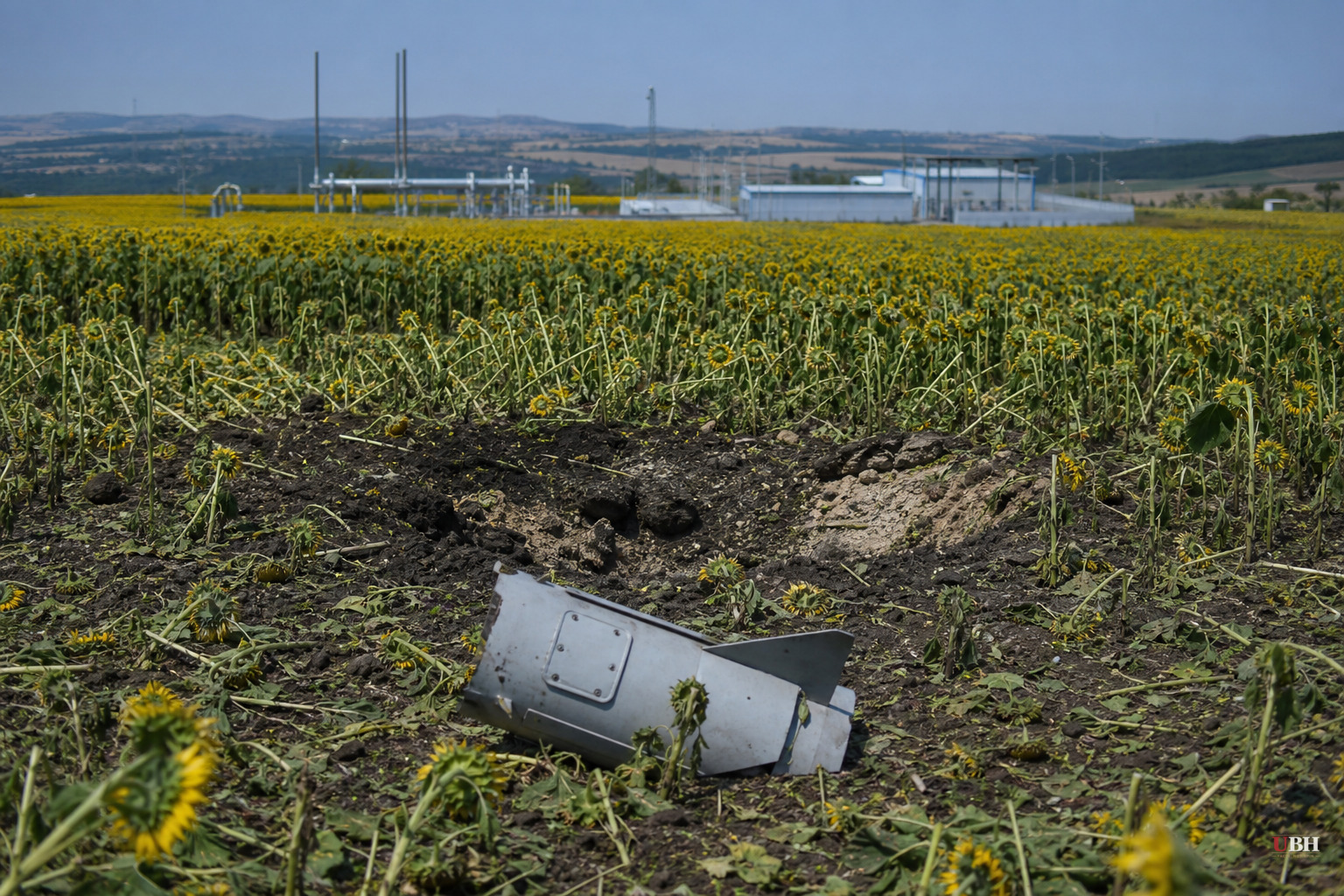
A drone loaded with explosives crossed the border from Romania into Bulgaria on Saturday morning and detonated in a sunflower field, roughly 1,000 meters from a compressor station on the Trans-Balkan gas pipeline. Nobody was hurt. Nothing important got hit. But nobody caught the drone coming, either.
Bulgarian President Rumen Radev said the explosion happened around 8:10 a.m. local time near the former Kardam border crossing, about 200 meters inside Bulgarian territory, according to Xinhua. Romanian border police heard the drone first. A Bulgarian patrol out of General Toshevo then heard a loud blast and saw thick black smoke, Radev said, according to the Kyiv Post.
"One thing is certain: the drone was carrying a significant amount of explosives, given that it could be heard from a distance and produced such black smoke," Radev said, according to The Straits Times. He said it was "not a hobby drone" but a larger one, and that authorities have recovered pictures of the wreckage but can't yet identify the make or origin because the explosion damaged it.
Radev called an emergency meeting of Bulgaria's Security Council after the incident. He announced afterward that border guard personnel and counter-drone equipment currently stationed on Bulgaria's border with Turkey will be redeployed to the Romanian border instead, a direct acknowledgment that the northeastern frontier is now the bigger worry.
Neither country's air defense saw this thing coming. Radev said flatly that the drone was not detected by Bulgarian or Romanian systems, and that Bulgaria got no warning from NATO's Combined Air Operations Center in Torrejón, Spain, which is supposed to be tracking airspace across southern Europe. His explanation was that the drone flew low and small enough to duck radar coverage. This describes a gap that any state or non-state actor with cheap drone technology could exploit again.
Nobody has claimed responsibility. Radev did not say where the drone came from before it entered Romanian airspace, and Bulgarian authorities say they don't yet know what type of drone it was. This is confirmed to be an unidentified explosive drone that crossed two NATO borders undetected, not a confirmed Russian attack. Anyone reporting it as a proven Russian strike is getting ahead of the facts Bulgaria itself has released.
That said, the context is not neutral. Romania has logged repeated drone incursions and crash landings on its territory since Russia's full-scale invasion of Ukraine began in 2022, according to Agence France-Presse, and Bucharest expelled a Russian embassy staffer in late July over a separate matter. Drone activity tied to the war has been climbing across NATO's eastern flank for months. A reasonable skeptic could point out that stray munitions, debris, and decoy drones from the broader Ukraine conflict have shown up in Poland, Romania, and now Bulgaria before, and that not every incident is a deliberate provocation. The drone still landed 1,000 meters from critical energy infrastructure that feeds gas from Turkey through Bulgaria and on toward Ukraine.
The Associated Press ran the news mostly as a short wire item without much elaboration on the pipeline's strategic role. The Straits Times gave the fullest account of the diplomatic backdrop, including the Romanian embassy expulsion. Xinhua's version leaned hardest on Radev's direct quotes about the size and force of the blast. None of the four disputed the core facts: a drone crossed from Romania, it carried real explosives, it detonated near a pipeline compressor station, and nobody was hurt.
What happens next is the open question. Bulgarian Border Police, National Police, and Defense Ministry teams are on site trying to identify the drone type. Whether that investigation produces a definitive origin, or whether this becomes another unresolved incident in the growing pile of eastern European drone sightings, will say a lot about whether NATO's radar and detection gaps along its eastern edge are getting fixed or just getting documented.
Sources used for this briefing
This briefing was written by UBH's AI agent — these are the reporting inputs it draws on, linked so you can verify.


