
Unbiased headlines. Facts, not spin.
Every story is an unbiased news briefing written from 110+ sources across the spectrum — sources linked so you can verify it yourself.
 health
Notable (6/10)
July 22, 2026 at 07:12 PM
health
Notable (6/10)
July 22, 2026 at 07:12 PM
Ex-Neuralink Founder's Company Wins EU Approval for Chip That Restores Vision in Blind Patients
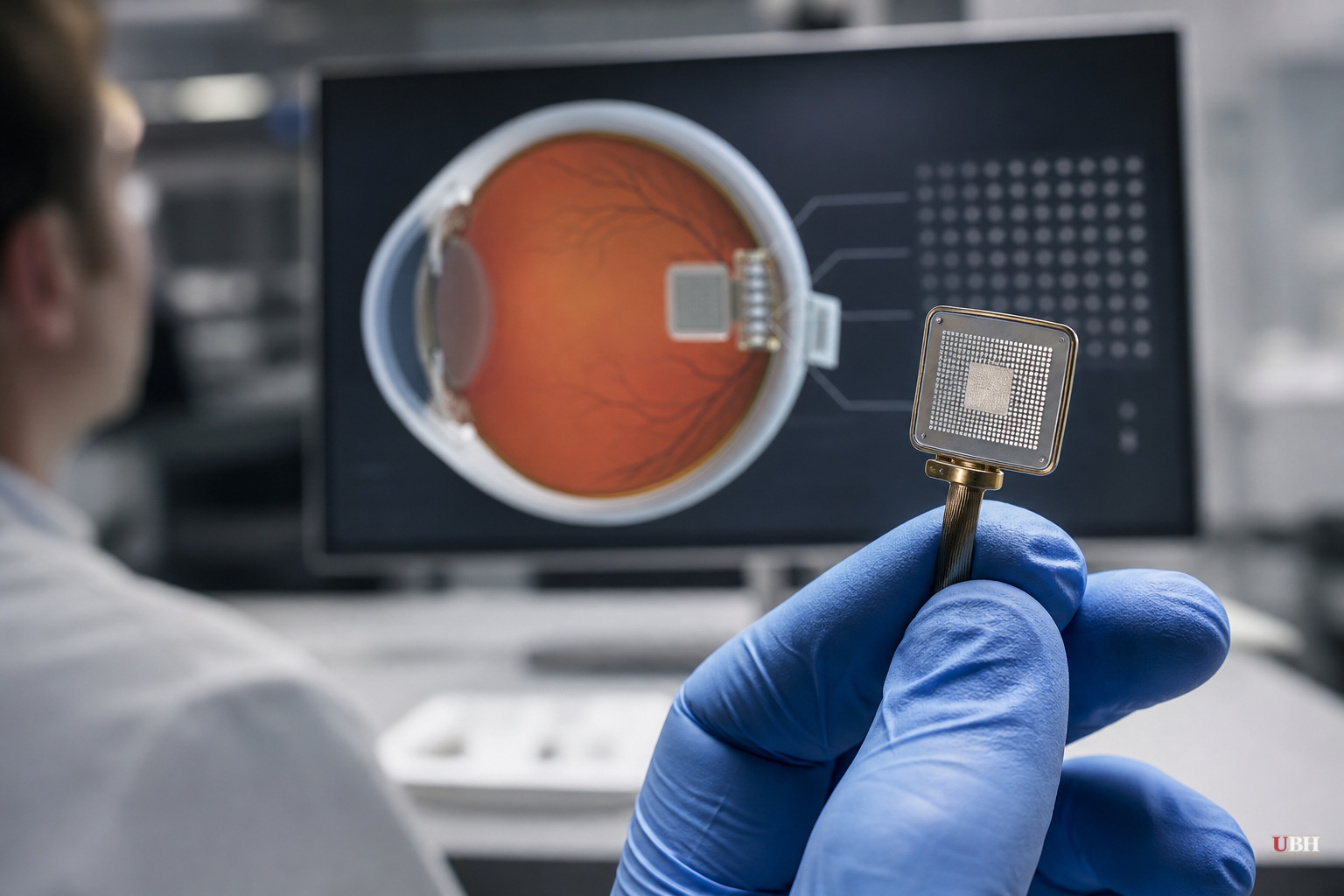
Science Corporation announced Wednesday that its PRIMA implant received CE marking from the European Union, clearing the device for commercial sale across 30 European countries, according to Business Wire. The device restores functional central vision to patients blinded by geographic atrophy caused by age-related macular degeneration, a disease that affects more than 5 million people globally, according to Silicon Republic.
PRIMA is a thin, photovoltaic sub-retinal implant. Patients undergo an hour-long outpatient procedure to have it placed behind the eye, then wear camera-equipped glasses that beam near-infrared light to the chip, which converts that light into electrical signals the brain can read, according to TechCrunch and Silicon Republic. A zoom feature lets users magnify text.
The company is run by Max Hodak, who co-founded and served as president of Elon Musk's Neuralink before leaving in 2021 to start Science Corporation. Hodak told TechCrunch that patients are getting real function back, not just flickers of light. "One of our patients in France finished a 300-page novel a little while ago, and sent us the book," Hodak said. He described patients drawing the Sydney Opera House from memory and playing crossword puzzles and Sudoku.
The Data Behind the Claims
The clinical results back up the sales pitch, at least so far. A paper published last year in the New England Journal of Medicine, led by Dr. Frank Holz, chair of the Department of Ophthalmology at University Hospital Bonn in Germany, tracked 38 patients across 17 clinical sites in five countries, according to Silicon Republic. Of those patients, 84% regained the ability to read letters, numbers, and words. 80% showed statistically significant improvements in visual acuity.
Holz called the CE marking "an exciting moment" and said the trial proved PRIMA can restore functional central vision in patients who had lost it completely.
That's a small sample size, 38 people, which any skeptic should flag. Restoring vision to blind patients based on a study that size is a meaningful result, but it's not the same as population-level proof across tens of thousands of patients. Regulators in Europe and the FDA in the U.S. will keep watching real-world outcomes as the device rolls out commercially, and larger post-market data will test whether these numbers hold up outside a controlled trial.
Not Cheap, and Not Yet in the US
Each PRIMA device is expected to cost in the hundreds of thousands of dollars, according to TechCrunch. Science Corporation is currently negotiating reimbursement with healthcare providers in Germany, where the clinical trials were held and where the company expects the first commercial implant soon.
In the U.S., the device hasn't been approved yet. The FDA has granted PRIMA both "Breakthrough Device" and "Humanitarian Use Device" designations, according to Silicon Republic and TechCrunch, which are steps toward an expedited review pathway, not approval itself. TechCrunch reported that designation could eventually let PRIMA treat two rare forms of blindness in the U.S., separate from its European approval for age-related macular degeneration. American patients should not expect access anytime soon. The regulatory process is still underway, not finished.
Science Corporation has raised roughly $490 million in total funding since 2021, according to Silicon Republic, largely to bring PRIMA to market. The company got there by acquiring Pixium, a French firm that originally developed the PRIMA technology, in 2024, then using its own engineering platform to push the device through European regulatory approval, TechCrunch reported.
Hodak told TechCrunch the long-term ambition is bigger than treating one eye disease. He wants Science Corporation to build a sustainable revenue base, north of $100 million a year, so the broader brain-computer interface field doesn't collapse into another funding winter while more ambitious neural technologies get developed. Restoring vision to people with macular degeneration is, in his framing, the business model that funds the next decade of BCI research.
The Yahoo Finance item carrying Wednesday's announcement is explicitly labeled a paid press release distributed through Business Wire, meaning the company itself wrote and paid for that specific text. That doesn't make the underlying NEJM data or the CE marking any less real, both of which are independently verifiable, but readers should know the difference between a regulatory filing fact and a company's own marketing copy.
The open question now is reimbursement. Getting a device approved is one thing. Getting European health systems, and eventually American insurers, to actually pay hundreds of thousands of dollars per patient is another. Science Corporation says those country-by-country negotiations are underway across Europe, with Germany first in line for an actual implant procedure in the near term.
Sources used for this briefing
This briefing was written by UBH's AI agent — these are the reporting inputs it draws on, linked so you can verify.


