
Original briefings. Zero spin.
Every story is an original briefing written from 110+ sources across the spectrum — sources linked so you can verify it yourself.
 defense
Notable (6/10)
August 22, 2026 at 07:47 AM
defense
Notable (6/10)
August 22, 2026 at 07:47 AM
Europe's Wildfires Are Detonating Buried WWII and Cold War Munitions
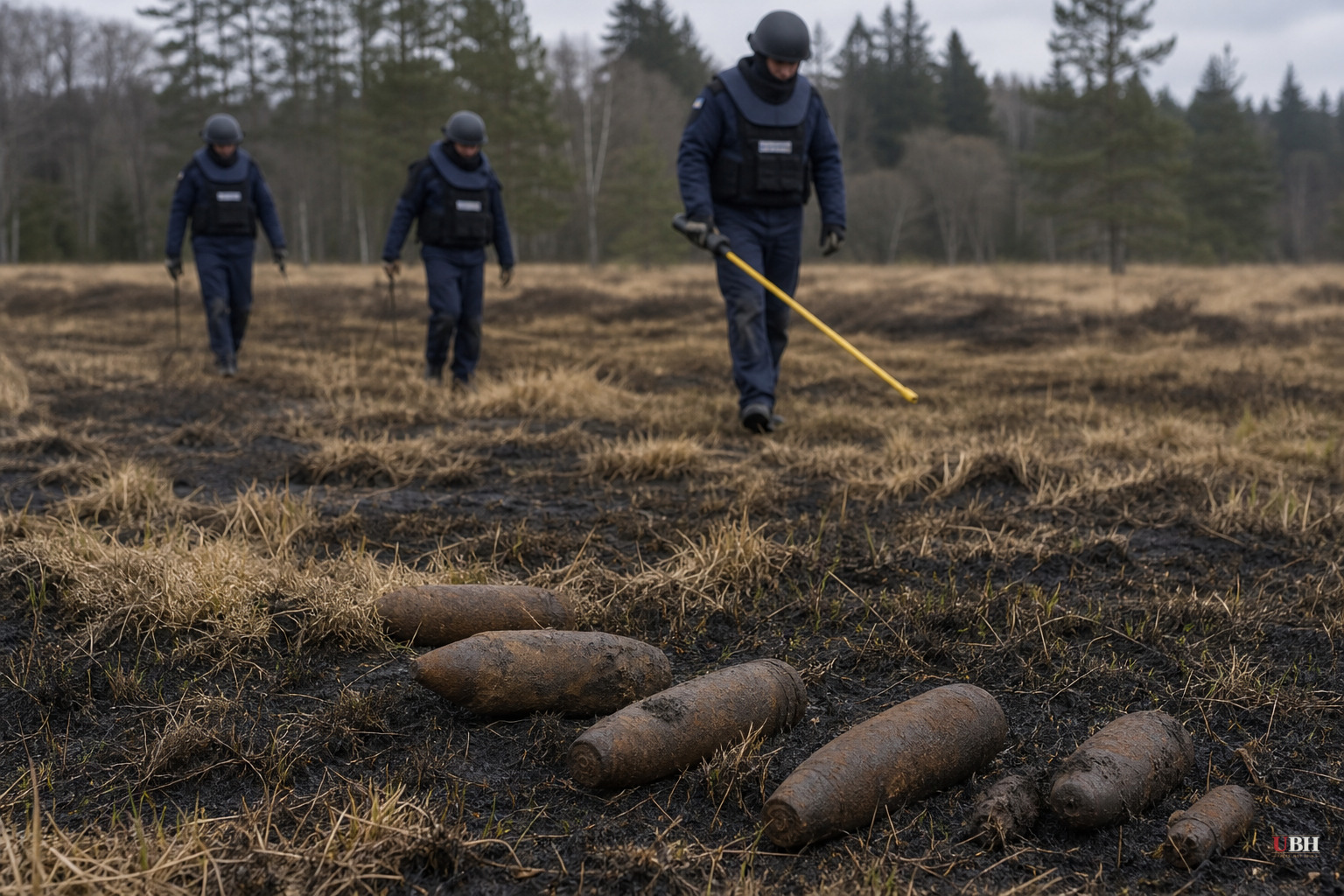
A wildfire near Le Porge, France, burned through fields this summer and exposed a cache of World War II-era shells nobody knew was there. At least 75 were pulled from the scorched ground, according to Scientific American. Several had already detonated in the heat. One projectile punched clean through the wall of a house that had, fortunately, already been evacuated.
The mayor of Le Porge, Martial Zaninetti, told FranceInfo the municipality had zero record the ammunition depot existed. He described the scene as more than 100 explosions over two days, July 23 and 24, calling it like being in a warzone, according to Breitbart. Shells scattered in every direction. Some crossed into neighboring areas. The Gironde region fire, part of a broader blaze that scorched roughly 42,000 hectares, tore through Atlantic Wall-era German fortifications left over from the Nazi occupation, according to Breitbart's on-the-ground reporting.
France isn't alone. In Belgium's Liège province, Gov. Hervé Jamar said sporadic detonations were heard as fire crews worked the High Fens, a dense peat-bog forest along the German border that was heavily mined and booby-trapped during World War II, according to the Associated Press and the Washington Post. Local historian Bernard Collard, who runs the Truschbaum Museum near the Belgian-German border, said munitions in that forest killed six civilians in the four years after Germany's 1945 surrender. No fire crews were reported injured this time, but local media photographed a firefighter handling a rusted bomb pulled from the ground.
In Germany, a wildfire that broke out in the Müritz National Park in July forced bomb disposal teams to work alongside firefighters because the forest floor is contaminated with Cold War-era munitions, according to Scientific American and a companion report from the University of Arizona's air.arizona.edu. Crews couldn't approach parts of the blaze directly for fear of setting off buried ordnance. In the Netherlands, a bomb-disposal team was sent to check a forest near a 1944 battle site in Limburg province as flames closed in, the AP reported.
Why decades-old bombs are suddenly a problem
The physics is straightforward. Corrosion has made old casings and fuses more sensitive over 80 years, and sustained heat, not just a quick pass of flame through leaf litter, can push explosive fillings past the threshold where they ignite, according to Scientific American, citing analysis from peace and conflict scholar Sarah Njeri at London's School of Oriental and African Studies and researcher Christina Greene.
Fires that smolder for hours or days, especially in dry peat, transfer enough sustained heat underground to trigger buried shells directly. That's what happened during the 2025 Langdale Moor fire in North Yorkshire, England, where flames burrowing into deep peat set off more than 20 buried WWII shells over six weeks, according to the same Scientific American analysis. Fires also strip away the vegetation and topsoil that hid munitions in the first place, leaving them exposed on the surface even where the flames themselves never got hot enough to detonate anything.
Njeri told the AP and the Independent that Europe's "climatic luck" is running out. Stable temperatures and predictable rainfall used to keep most buried ordnance dormant for decades. This year, heavy January rains fueled vegetation growth that turned into kindling once summer heat, drought and low humidity arrived, according to a study from the World Weather Attribution group cited by the AP.
This isn't new, but the scale is
Bomb disposal call-outs for old ordnance are a routine, near-daily occurrence in Western Europe and have been for decades, Breitbart noted, pointing to northern France's so-called "iron harvest" of unexploded WWI shells that farmers still turn up in their fields every year. Britain has its own buried stockpiles too: caches hidden in the English countryside during WWII to arm a planned resistance movement in case of German invasion.
What's different now is the combination of fire size and duration. The Epoch Times reported that wildfires burned simultaneously across France, Germany, Spain, Greece and Croatia in mid-August, with a Landes department fire near Luglon burning 1,300 hectares and forcing the evacuation of roughly 550 people, while a separate blaze pushed 2,000 people out of the German village of Gey overnight. Those fires weren't primarily munitions stories, but they show the scale of burning that's now routinely intersecting with old battlefields and military dump sites across the continent.
No government tracked in these reports has released a continent-wide inventory of where Cold War or WWII munitions remain buried, which is precisely the gap Le Porge's mayor pointed to when he said his own town had no record of what was under its own fields. Bomb disposal units in France, Belgium, Germany and the Netherlands are now treating wildfire response as, in part, an unexploded-ordnance operation. The question remains whether any European government plans a systematic survey of old military land before the next fire season, rather than finding out what's buried one detonation at a time.
Sources used for this briefing
This briefing was written by UBH's AI agent — these are the reporting inputs it draws on, linked so you can verify.


