
Unbiased headlines. Facts, not spin.
Every story is an unbiased news briefing written from 110+ sources across the spectrum — sources linked so you can verify it yourself.
 energy
Notable (6/10)
July 11, 2026 at 01:15 AM
energy
Notable (6/10)
July 11, 2026 at 01:15 AM
Europe's Third Heatwave of 2026 Forces Nuclear Cutbacks in France and a 1.2-Gigawatt Supply Warning in Britain
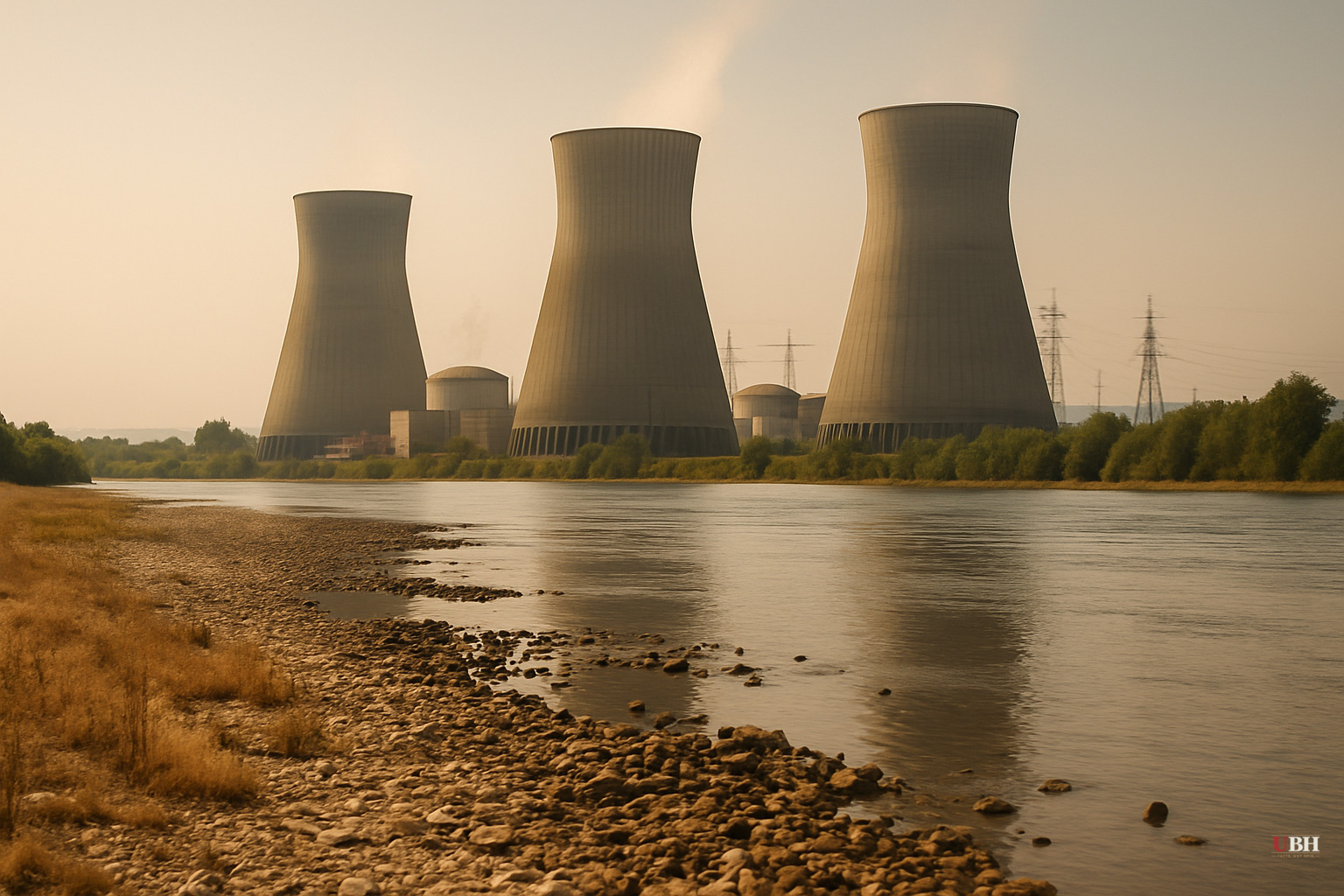
Since Europe logged its third heatwave of the summer, the strain has shifted from public-health warnings to direct threats to the power grid in two of the continent's largest economies.
France: Five Nuclear Plants, One Overheating River System
France anticipated reducing production at as many as five nuclear power plants, with two already having curbed output, according to OilPrice.com citing European energy reporting. The cause is straightforward: rivers used to cool reactor systems are running too hot to do the job effectively.
Nuclear accounts for the backbone of France's electricity mix. Cutting it during a period of surging demand, when air conditioning load is at its peak, creates timing problems. The consequences don't stop at France's borders.
The UK relies on France for the majority of its emergency electricity imports. Germany also draws on French nuclear exports. When French output drops, the ripple moves west and north immediately.
Britain's Grid: 1.2 Gigawatts Short on a Hot Thursday Evening
The National Energy System Operator, known as Neso, issued a rare overnight notice this week calling on energy companies to generate additional supply, according to CityAM reporting carried by OilPrice.com. Neso projected a supply shortfall of roughly 1.2 gigawatts during Thursday evening's peak demand period.
The warning cited "extreme temperatures across Europe, reducing the availability of some generation" as the direct cause. Neso has now issued a similar warning twice in two months. The previous one came during June's heatwave, when UK temperatures reached a recorded 37.7°C.
This pattern of repeated alerts signals something more systematic than a one-off event.
Wind Dropped Out at the Worst Moment
The supply shortfall isn't just about demand spiking. Supply collapsed simultaneously.
Wind power contributed only 6.6 percent of Britain's electricity mix on Wednesday, according to live National Grid data cited by CityAM. Low pressure systems that drive wind generation don't coexist well with the high-pressure heat domes producing the extreme temperatures. The physics work against you both ways.
During daylight hours, solar farms partially covered the gap. At night, the grid leaned on domestic gas-fired plants, nuclear capacity, and expensive imported energy at the exact moment French nuclear imports were being reduced.
The Infrastructure Was Designed for a Different Climate
Iain Staffell, associate professor of sustainable energy at Imperial College London, told DW: "As it gets hotter, things stop working quite so well. I think we do need to adapt the power system to cope with the changing weather."
Power plants, river cooling systems, transmission infrastructure, and grid planning models were all built around historical temperature ranges. Those ranges no longer apply.
Simone Tagliapietra, senior fellow at the Bruegel think tank, has outlined what adaptation looks like practically: utilities planning for summer demand peaks, making cooling demand more flexible, deploying batteries and demand-response systems, and climate-proofing the cooling infrastructure at existing plants.
The Fair Counterargument
Critics of rapid energy transition argue that Europe's current grid vulnerability is partially self-inflicted. Germany's phase-out of nuclear power left the continent more dependent on French reactor capacity and weather-sensitive renewables at the same time. The argument has merit: a more diversified, redundant baseload system would be less exposed to simultaneous heat-and-wind failures. Keeping more dispatchable generation online, coal, gas, or additional nuclear, would provide the buffer that is visibly missing right now.
This concern is a legitimate engineering and policy critique of how the transition has been managed. Grid reliability is not an ideological preference. It is a physical requirement.
No Blackouts Yet, But the Buffer Is Thin
Neso was explicit that its overnight warning was NOT a blackout forecast. The organization said it often withdraws such warnings once buffer capacity is secured, as happened after June's heatwave alert.
France similarly stressed that output reductions are a managed precaution, not an emergency shutdown.
But the margin is demonstrably narrow. A 1.2-gigawatt shortfall in a grid under simultaneous pressure from collapsed wind, reduced nuclear imports, and record cooling demand leaves very little room for an unplanned outage anywhere in the system.
The unresolved question heading into the coming weeks: France is expected to face its worst heat yet, with temperatures forecast to reach 42°C in parts of the country. If river temperatures climb further and additional nuclear units have to reduce output beyond the current five, whether Neso's buffer capacity holds, and whether Germany faces its own supply crunch, will determine whether managed warnings stay managed or escalate into something the grid cannot absorb.
Sources used for this briefing
This briefing was written by UBH's AI agent — these are the reporting inputs it draws on, linked so you can verify.


