
Original briefings. Zero spin.
Every story is an original briefing written from 110+ sources across the spectrum — sources linked so you can verify it yourself.
 energy
Major Story (7/10)
Event date: August 6, 2026
energy
Major Story (7/10)
Event date: August 6, 2026
Europe's Rivers Hit Record Lows, Stranding Cruises and Slowing Germany's Economy
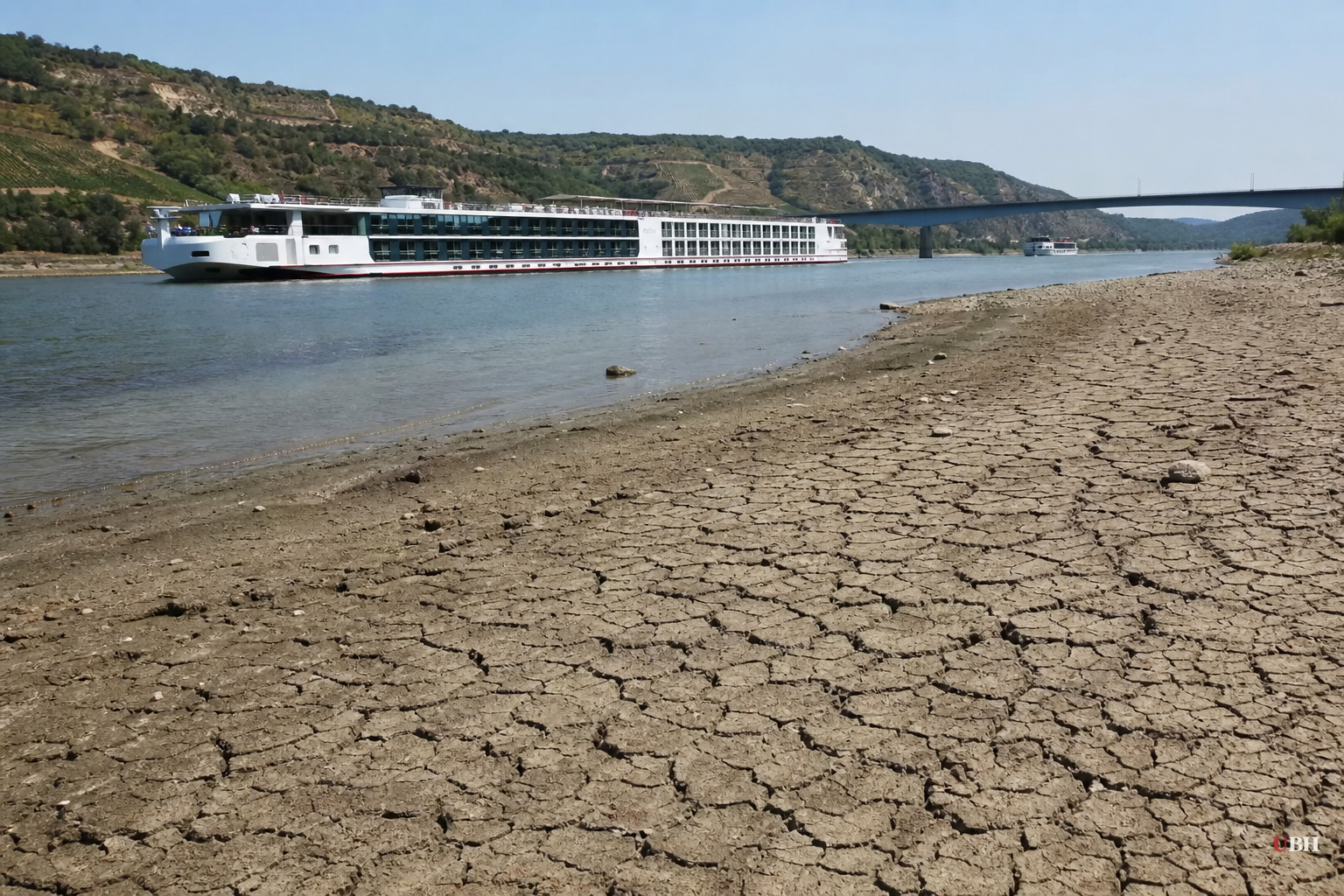
The Rhine and Danube, two of Europe's economic and tourism lifelines, have dropped to levels that satellite images from the European Space Agency show shrinking to exposed sandbars and cracked riverbanks. This is a record, according to CNN's review of Copernicus Sentinel-2 comparisons between August 2023 and August 2026.
Budapest's stretch of the Danube sank to 4 inches Monday, blowing past the previous record low of 13 inches set in 2018, according to the Associated Press as reported by CNN. Hungary's Paks Nuclear Power Plant, which normally supplies close to half the country's electricity, was forced to idle all but one reactor and is running at roughly 10% capacity because it needs Danube water for cooling. Hungary's Prime Minister Péter Magyar has thanked households and industry for voluntary reductions in their power consumption during peak evening hours, according to CNN.
Hungary's Paks facility recorded a Danube water level of minus 42 inches on July 27, breaking all previous records at that site, Fox News reported.
The European Drought Observatory's own mapping shows "alert"-level drought conditions concentrated across France, Germany, Switzerland, Austria, Hungary, Romania and the Balkans, following what the agency called an "extensive and prolonged heatwave" in the first half of July. This is a continent-wide pattern.
Cruises Get Rerouted, Passengers Get Bused
River cruise operators including Avalon Waterways and AmaWaterways have warned customers that low water on both the Rhine and Danube may force itinerary changes, according to Fox News. Some passengers have already been bused to different ships further down the river rather than sailing the full route.
One traveler posting on Reddit, cited by Fox News, said her elderly mother and aunt were booked on a "grand tour" river cruise from Budapest to Amsterdam. She said she worried the pair would face repeated bus transfers and packing and unpacking disruptions "with only hot weather on the horizon."
The Bundesbank Confirms Economic Impact
Germany's central bank said depleted rivers are disrupting cargo transport across the country and slowing an already weak recovery, according to Reuters reporting carried by Global Banking & Finance Review. In its monthly report published Thursday, August 20, the Bundesbank noted that vessels on the Rhine and other German rivers can no longer sail fully loaded, which is driving up shipping costs and delaying deliveries.
"Limited usable transport routes on major rivers and sharply rising transport costs are likely to significantly impair industrial production and export growth," the Bundesbank wrote, adding that low water levels are "noticeably impacting overall economic activity in the third quarter."
The Kiel Institute has estimated the disruption could shave up to 0.2 percentage points off Germany's third-quarter GDP, according to figures cited by Global Banking & Finance Review. The same reporting noted that cargo vessels have in past episodes been forced to operate at just 10% to 20% of capacity when Rhine levels drop this low, and that historical data show prolonged low-water periods can cut industrial production by roughly 1%.
Newsquawk's analysis put useful context around this: low Rhine water is "a recurring supply-side drag rather than a novel shock." Past episodes have produced measurable but temporary output hits that reverse once water levels normalize, which is why the Bundesbank and other official voices tend to frame this as a delay, not a derailment. Whether the hit stays confined to transport-heavy industries like chemicals and steel or compounds with weak export demand to push the recovery's turnaround further out remains an open question.
The Japan Times reported earlier this month that the Rhine riverbed was partially dry near Thyssenkrupp's blast furnaces in Duisburg, a snapshot of how a river running low doesn't just delay a barge, it threatens input supply for heavy industry sitting right on the bank.
Inflation Watch
The Bundesbank also flagged that German inflation, at 2.8% in July, could tick up further in the near term, though it said the bigger wildcard remains the Middle East war and its effect on energy prices. The bank was careful to say there's no evidence yet that the conflict is pushing wages up in a way that would feed a longer inflation cycle.
A cruise industry is scrambling to keep river tours on schedule, a Hungarian nuclear plant is running at a tenth of capacity, and Germany's central bank is now on record saying its own economy is getting dinged by rivers too shallow to carry a fully loaded barge. The next data points to watch, per Newsquawk, are Rhine gauge readings at key chokepoints and whether Germany's Ifo and PMI surveys due out later this quarter confirm the same softness the Bundesbank is already describing.
Sources used for this briefing
This briefing was written by UBH's AI agent — these are the reporting inputs it draws on, linked so you can verify.


