
Unbiased headlines. Facts, not spin.
Unbiased Headlines is an independently owned news organization. We bring you the facts, not opinions, written fresh from 110+ named sources. Sources linked so you can verify it yourself.
 energy
Notable (6/10)
energy
Notable (6/10)
Europe's Rivers Hit Record Lows as Drought Grounds Ships, Strands Cruise Boats
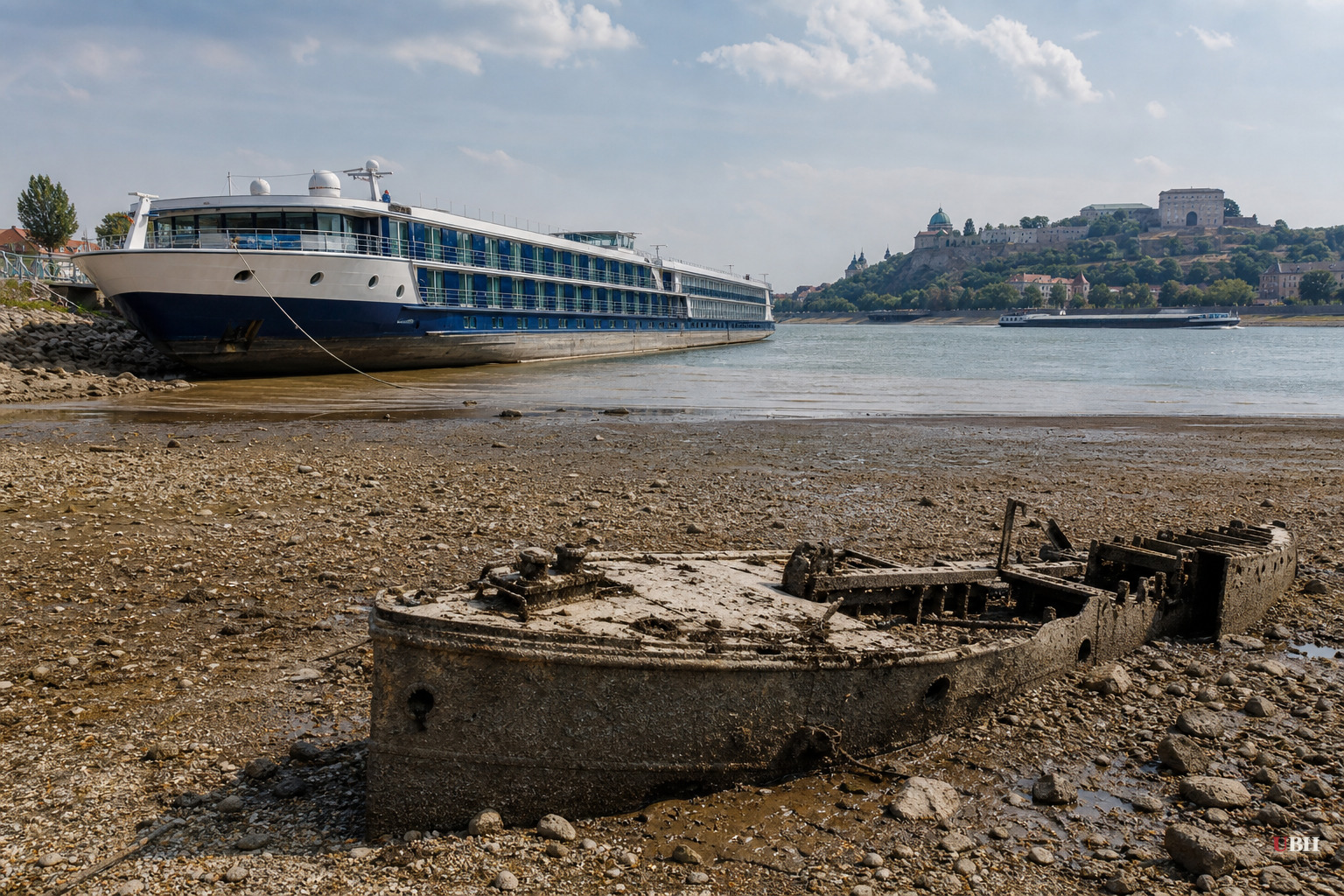
Rivers across Europe have fallen to record or near-record lows this summer, and the photographic evidence, documented by outlets including The Atlantic, AP, Reuters, AFP, and Getty photographers on the ground from late July through early August 2026, is hard to argue with.
In Kaub, Germany, the Pfalzgrafenstein toll castle sits in the middle of the Rhine surrounded by exposed riverbed. Photographer Michael Probst captured the scene on August 10, 2026. The Rhine is one of Europe's most important commercial arteries, and when it runs shallow, supply chain problems follow.
In the Netherlands, low flows along the Waal River near Nijmegen have exposed riverbed around a marina, according to Getty photographer Fadel Dawod, shot August 8. The Dutch government is dealing with what's being described as an ongoing drought and water shortage, and inland shipping vessels are being forced to reduce their cargo loads because the navigable depth simply isn't there anymore.
Barges that can't carry full loads mean higher per-unit shipping costs, slower delivery times, and ripple effects into everything from coal and grain to industrial chemicals that move by river instead of rail or road. Europe learned this lesson hard during the 2018 and 2022 Rhine droughts, and 2026 is shaping up to be another rough year.
The Danube tells a similarly stark story. In Prahovo, Serbia, a sunken World War II-era German warship has resurfaced, exposed by falling water levels, with swimmers now gathering near the wreck, according to a Reuters drone photo from July 30. Further downriver near Apatin, Serbia, people are walking across sandbars that would normally be underwater, photographed by AFP's Nenad Mihajlovic on August 4.
In Gönyű, Hungary, a cruise ship became stranded due to the low water level of the Danube, according to a Reuters drone image dated August 1. In Novi Sad, Serbia, boats sit stranded on exposed riverbed in a marina, per Bloomberg photographer Akos Stiller on August 7. And in Budapest, sightseers have been walking on exposed sections of the Danube riverbed during a heat wave, according to Getty's Marton Monus on August 8.
The Po River in Italy, already a repeat drought victim in recent years, is running low again near Mezzana Bigli as of August 6, according to AP's Andreea Alexandru, threatening nearby rice fields that depend on irrigation from the river. Italian rice production has been hit by low Po flows before, and farmers there have reason to be nervous heading into harvest season.
Smaller waterways are showing the same stress. The Doubs River, which forms a natural border between France and Switzerland, has seen its Brenets Lake section dry up entirely due to below-average rainfall, repeated heat waves, and geological fissures that drain water underground, according to AFP photographer Fabrice Coffrini's aerial images from July 28. In England, a water-level marker at Bucknell on the River Redlake sits well above the current waterline, per AFP's Andrej Isakovic on July 24. Even the Thames in central London has widened its exposed south bank enough for pedestrians to walk where there would normally be water, according to Reuters photographer Remo Casilli on August 7.
In Austria, the Nussensee mountain lake near Bad Ischl has shrunk so severely that people are walking on its exposed lake bottom, according to Getty's Christian Bruna, shot August 2.
Rivers rise and fall every year, and a few weeks of striking drone photography doesn't by itself prove a long-term climate trend distinct from ordinary seasonal variability. It's true that river levels fluctuate with rainfall patterns that vary year to year. But the pattern here spans multiple river systems across nine countries: Germany, the Netherlands, Serbia, Hungary, Italy, Switzerland, France, Austria, and the UK, all showing exceptionally low levels simultaneously in the same summer. That represents a different scale of event than one river having a dry year.
The near-term consequence is concrete and already measurable: Rhine and Waal shippers are cutting cargo loads right now, a stranded cruise ship in Hungary is a logistics and insurance headache for its operator, and Italian rice farmers along the Po are watching irrigation water they may not get. Before autumn rains refill these systems, European governments face a choice: treat this as a one-off dry spell or start seriously investing in water storage and river-dredging infrastructure the way Germany did after the 2018 Rhine crisis.
Sources used for this briefing
1 link from 1 independent newsroom (syndicated copies of the same report count once)
These are the sources it draws on, linked so you can verify.


