
Unbiased headlines. Facts, not spin.
Every story is an unbiased news briefing written from 110+ sources across the spectrum — sources linked so you can verify it yourself.
 energy
Notable (5/10)
July 20, 2026 at 02:30 AM
energy
Notable (5/10)
July 20, 2026 at 02:30 AM
Europe's Jet Fuel 'Crisis' Never Produced the Shortage Everyone Predicted
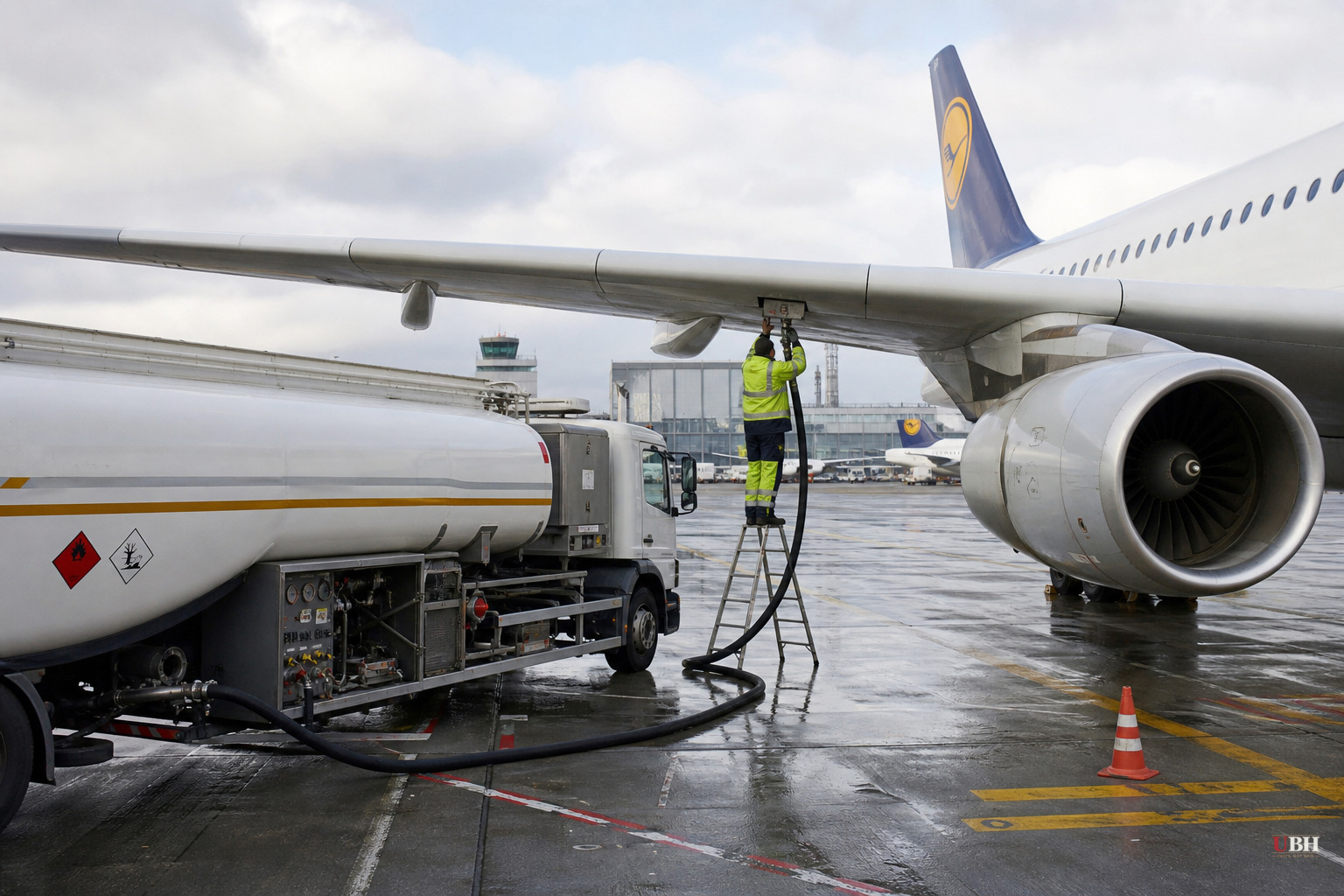
The forecast that didn't happen
European airports were supposed to be running dry by now. They aren't.
Back in February, fighting escalated around the Strait of Hormuz, the waterway that normally carries about a fifth of the world's seaborne oil and liquefied natural gas, according to PAX News. The disruption hit a route that had carried nearly 20 million barrels a day of crude and refined products, according to OilPrice.com. By April, the International Energy Agency was warning Europe could start running physically short of jet fuel by June if it only managed to replace half of what it normally imports from the Gulf.
Ryanair warned a 10% to 20% supply loss could force capacity cuts this summer. Airports considered contingency plans. European officials talked about coordinating releases of national fuel reserves.
None of the worst-case physical shortages materialized, according to OilPrice.com. Petrol stations didn't run dry. Diesel wasn't rationed. Airlines didn't ground fleets en masse. Prices spiked and inventories thinned, but the system absorbed what the IEA itself called the largest disruption in the history of the global oil market.
The reserves really did get thin
That doesn't mean the warnings were fabricated. Europe's cushion got genuinely tight.
Reuters reported, as cited by both Simple Flying and PAX News, that Europe began June with roughly 38 million barrels of jet fuel in storage, less than 30 days of cover and the thinnest margin of any major market. The U.S. was sitting on about 99 million barrels by comparison. Consultancy Energy Aspects pegged Europe's supply deficit at close to 600,000 barrels a day and projected that gap persisting into the third quarter.
Jet fuel prices more than doubled year-on-year, according to the International Air Transport Association, while crude oil climbed roughly 43%. Since fuel typically runs 20% to 25% of an airline's operating costs, per PAX News, that's a real financial hit even without a physical shortage. IATA and Ryanair's warnings were grounded in that cost math, not fantasy.
How the shortfall got covered instead of felt
The gap got filled by rerouting supply, not by rationing it. Europe imported a record 673,000 barrels per day of jet fuel in June, according to commodities tracker Kpler, cited by PAX News. The United States and Nigeria became Europe's biggest suppliers that month, with Canada, India, Kuwait and South Korea also stepping up exports. European refiners increased output too.
Air Canada went as far as publicly telling customers there was nothing to worry about. Mark Galardo, the airline's executive vice president and chief commercial officer, said in June: "There is no fuel shortage affecting our operations, including across Europe, and we do not anticipate any significant impact through the summer," according to Open Jaw.
EU Energy Commissioner Dan Jørgensen said Brussels was prepared to coordinate release of national reserves if it came to that, according to PAX News. It didn't come to that, at least not through June.
Where the coverage split
Simple Flying's piece states flatly that "carriers are expected to make mass cancellations in response" to the shortage, treating that as a coming certainty. OilPrice.com's later reporting shows that didn't happen at scale, at least not through the June deadline the IEA had originally flagged. Open Jaw's report goes further, noting the European Commission's own Energy Union Task Force said days earlier that EU jet fuel supply was "stable," directly contradicting the shortage narrative running in parallel coverage.
That's a real tension worth naming. Official reassurance and dire trade-press warnings were published almost simultaneously, and the reassurance turned out closer to correct, at least for the June timeframe.
The picture going into July
The underlying vulnerability hasn't gone away. Britain, France and Germany remain the most exposed markets after decades of refinery closures left them dependent on Middle Eastern shipments, according to Reuters reporting cited by PAX News. A short-lived ceasefire that reopened the strait collapsed, and Iran closed the shipping route to commercial traffic again in July, according to Open Jaw.
Energy Aspects still projects a roughly 600,000 barrel-a-day European deficit through the third quarter, even as the U.S. and Asia-Pacific stay in surplus. Whether Europe's improvised network of American, Nigerian, Canadian, Indian, Kuwaiti and South Korean imports can keep absorbing that gap through peak summer travel, or whether a fresh escalation at Hormuz finally produces the shortage the IEA warned about in April, is still an open question heading into the back half of the season.
Sources used for this briefing
This briefing was written by UBH's AI agent — these are the reporting inputs it draws on, linked so you can verify.


