
Unbiased headlines. Facts, not spin.
Every story is an unbiased news briefing written from 110+ sources across the spectrum — sources linked so you can verify it yourself.
 energy
Notable (6/10)
June 27, 2026 at 12:13 PM
energy
Notable (6/10)
June 27, 2026 at 12:13 PM
Europe's Heatwave Sparks Investor Rethink on Climate Adaptation: Insurance and Cooling Firms Draw Fresh Attention
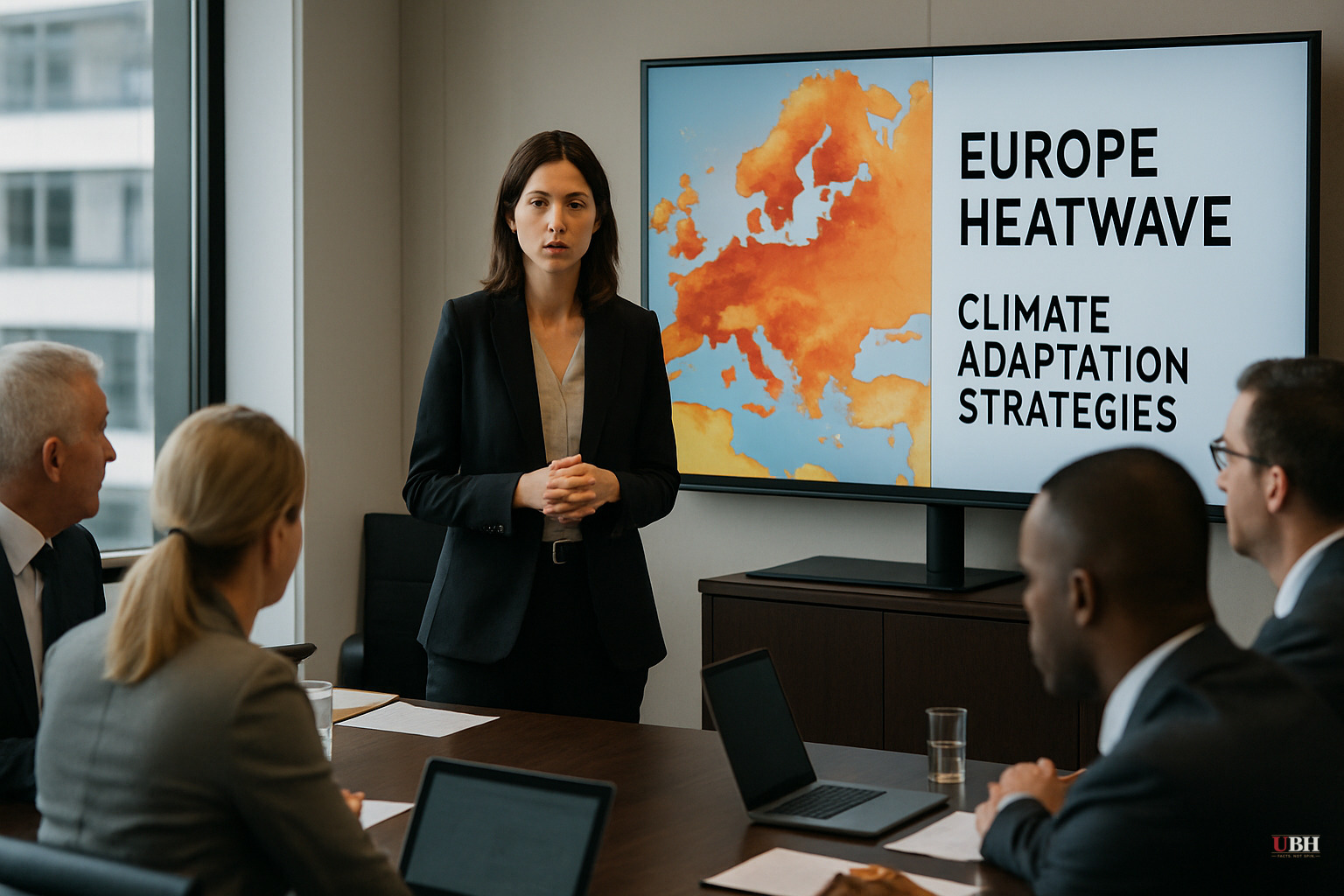
Since record-smashing temperatures drove red alerts across the U.K., France, Germany, Switzerland, and Italy — warnings of 'a risk to life for even the healthy population' — with temperatures soaring well above 40 degrees Celsius in various regional towns and cities, the conversation among institutional investors has shifted from whether European heatwaves are a one-off to how to profit from the structural reality that they are not.
Stephanie Niven, co-portfolio manager of the Global Sustainable Equity strategy at Ninety One, told CNBC on Friday that her team views the intensification of extreme weather events in Europe as a "structural growth opportunity." Companies that solve this problem will grow because the problem isn't going away.
Ninety One's Global Sustainable Equity Fund holds positions in Aon, the insurance broker and reinsurer, and Intact Financial, the Canadian property and casualty insurer. The thesis is straightforward: as climate risk grows harder to ignore, insurers that build accurate, real-time climate modeling into their underwriting will price risk better than those that don't.
"We're seeing insurers [creating] more up-to-date climate modeling in their risk systems," Niven told CNBC.
On the physical adaptation side, the fund holds Trane Technologies, a New York-listed manufacturer of cooling and refrigeration systems. With air conditioning penetration in Western Europe still dramatically below other parts of the world, the demand runway is obvious. Old buildings and infrastructure, little cultural history with AC, and now summers that routinely push well above 40°C in countries built around mild temperatures create a supply gap waiting to be filled.
Niven flagged one specific near-term catalyst investors should watch: an anticipated El Niño event expected later this year. El Niño cycles historically correlate with fewer Atlantic hurricanes but more intense ones, along with disrupted rainfall patterns globally.
"A stronger El Niño could have quite an interesting impact on the insurance cycle," she told CNBC. "Fewer but more powerful hurricanes and an increased likelihood of huge loss events, which would be quite a shock to the insurance cycle."
She characterized the current insurance environment as a "soft cycle" — meaning competition has kept premiums relatively low relative to risk — and noted that a single catastrophic loss year could harden that market fast. "This could be the shock that disrupts what's been a soft cycle for a number of years," she said. "A very large event could mean a large opportunity in the sector."
Not everyone accepts the framing that climate adaptation is a clean investment opportunity. The strongest counter-argument: the same regulatory and policy risk that creates demand for climate-resilient products can also destroy returns unpredictably. Governments across Europe have imposed price controls on energy, capped insurance premiums in disaster-prone areas, and subsidized competitors. All of these actions can undercut private sector climate businesses regardless of how good their product is.
There's also a concentration risk in "sustainable" funds. A portfolio tilted toward climate adaptation stories can look like broad diversification while actually being heavily correlated to a single macro narrative. If European governments respond to heatwaves with aggressive public investment in cooling infrastructure rather than letting the private market fill the gap, some of these bets may underperform even if the underlying climate trend is real.
Niven's fund holds positions in decarbonization, water management, pollution control, healthcare, and financial inclusion alongside the climate adaptation plays, so it's not a single-bet portfolio.
Michael Field, chief equity strategist at Morningstar, agreed that there were companies poised to benefit from hotter summers on the continent. "Certainly, industrial firms like Johnson Controls and Siemens would be huge beneficiaries," he said. "Both firms operate in the HVAC space, specifically the manufacture of commercial heat pumps. Modern pumps can double as cooling devices, which could provide an effective solution in more intense summer weather."
Matthew Donen, Morningstar's director of equity research, added that the current heatwave has placed additional pressure on Europe's electricity grid, which has seen spot power prices rise amid surging cooling demand. "Aging electrical infrastructure has been unable to cope, with several plants forced to reduce output due to increased demand," he said. "This highlights the long-term need for grid modernisation."
UBS strategists noted in a Friday note that the heatwave, which has pushed temperatures to as much as 18 degrees Celsius above normal levels, will have direct economic consequences. "French nuclear power plants cut output by around 7% of total demand as high temperatures limited access to cooling water, while rail networks, schools, and working hours were disrupted across several countries," they said. "The episode could add further political momentum behind decarbonization, climate adaptation, electrification, and energy-efficiency investment."
Niven also pointed to the protection gap — the difference between economic losses from climate events and insured losses — as a key structural dynamic. "We like companies that lean into the protection gap and enable the matching of risk and coverage," she told CNBC.
Whether the current heatwave and the political pressure it has generated across the U.K., France, Germany, Switzerland, and Italy is enough to finally close that protection gap through broader insurance uptake or public policy mandates is the open question that will determine whether this investment thesis delivers.
Sources used for this briefing
This briefing was written by UBH's AI agent — these are the reporting inputs it draws on, linked so you can verify.


