
Unbiased headlines. Facts, not spin.
Every story is an unbiased news briefing written from 110+ sources across the spectrum — sources linked so you can verify it yourself.
 energy
Major Story (7/10)
June 26, 2026 at 11:34 PM
energy
Major Story (7/10)
June 26, 2026 at 11:34 PM
Europe's Heatwave Grinds East: Czech and Austrian Records Expected to Fall This Weekend as Death Toll Mounts
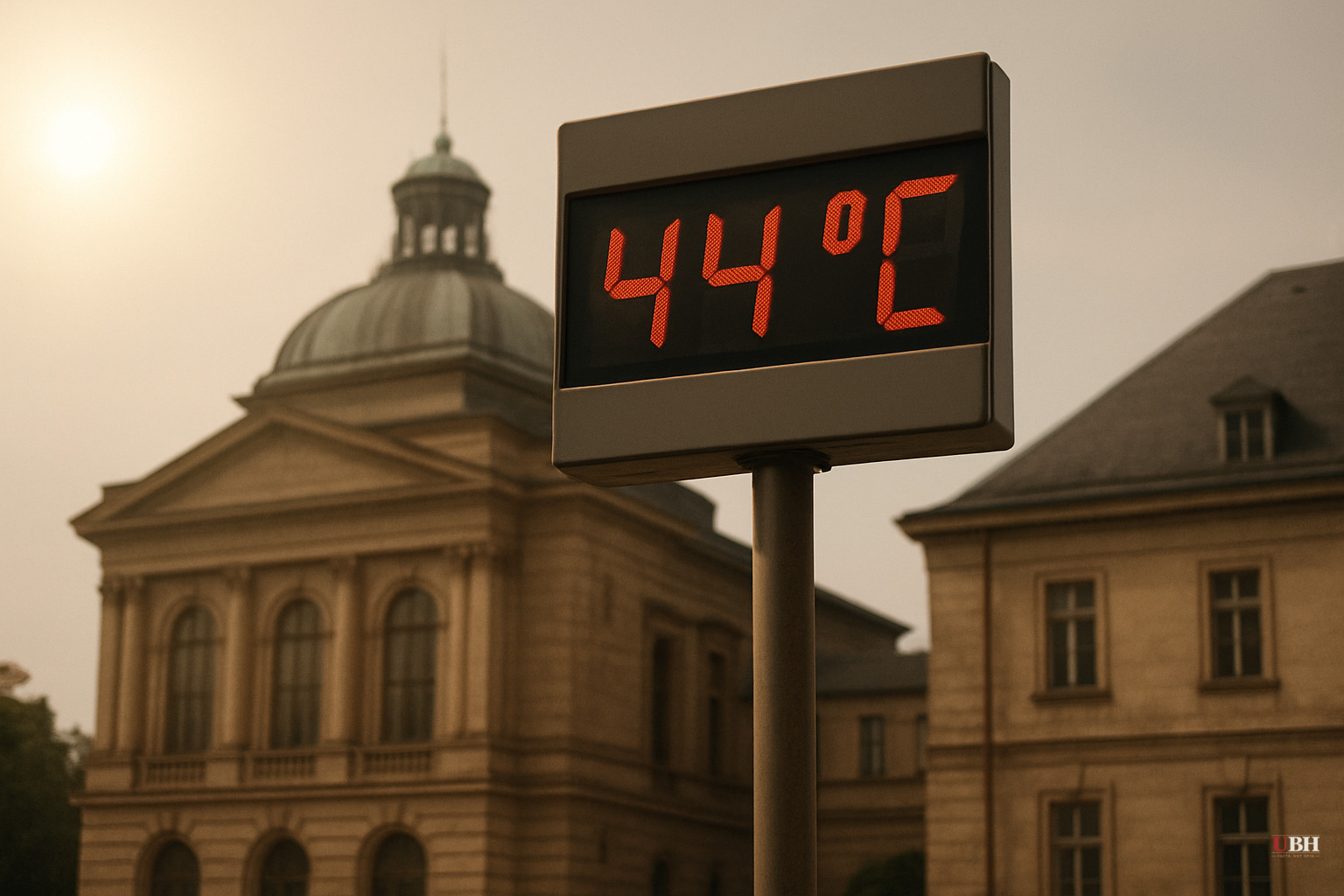
Since Germany recorded its highest temperature ever — 41.3C provisionally in Saarbrücken — and the UK broke its June record a third straight day at 37.3C in Santon Downham, Suffolk, the event that dominated headlines this week has moved northeast.
As of Friday, June 26, the heat dome is pressing northeast.
What's new: the eastern front
Czech meteorologists told BBC News they believe the country's 2012 all-time record of 40.4C could fall on Saturday. Austrian forecasters expect their national record to break on Sunday. Serbia is forecasting up to 39C over the weekend. Balkan nations are now entering the zone that Germany, France, and the UK already endured.
Belgium recorded 40C provisionally in Kleine Brogel, near the Dutch border, according to Belgian forecaster David Dehenauw speaking to BBC News. The Netherlands hit 39.4C in Limburg province. Neither country had prepared its health infrastructure for those levels.
A passenger train service running from Cologne to Paris broke down east of Brussels on Friday morning with roughly 400 passengers aboard, according to Belga news agency. Three passengers were taken to hospital as a precaution.
The death count isn't done
France's peak temperatures have passed, but French Health Minister Stéphanie Rist told BBC News that deaths occurring inside private homes — away from hospitals and emergency services — were her primary concern. Heat deaths at home are notoriously undercounted in real time.
World Meteorological Organization spokeswoman Clare Nullis did not soften her language. "We need to get used to it, unfortunately," she said, citing "major impacts" across health, ecosystems, agriculture, and labor productivity.
UK: six NHS trusts down, 600 schools closed Friday
In the United Kingdom, six NHS trusts declared critical incidents due to patient overflow, according to BBC News. The London Ambulance Service logged a roughly 50% increase in 999 emergency calls during the heatwave, according to LAS head Jason Killens, who said non-essential training and meetings were canceled to put more staff in the field.
Dr. Hilary Williams, clinical vice-president at the Royal College of Physicians, told BBC Radio 4's Today programme that MRI machines and scanners were being affected by the heat, and that elderly care wards in some facilities were exceeding 30C internally.
At least 600 schools in England closed completely or partially on Friday. Over the course of the week, more than 2,000 schools in England and Wales shut their doors, according to BBC News. In Leicestershire, the family of a teenage boy who drowned while swimming in open water during the heat issued a public tribute — one of several such tragedies this week.
A red heat warning covering London, the east, and southeast England remained in place until 9 p.m. BST Friday. Amber warnings for southwest England extend through Saturday evening. Thunderstorm warnings have been issued for Scotland and parts of northern England, which could bring some relief.
The science behind the severity
Scientists at World Weather Attribution published findings Friday stating that temperatures across France, Germany, Italy, Spain, and southern England are running 5 to 12 degrees Celsius above seasonal averages, driven by a persistent high-pressure system. The group described the current event as "the most severe heatwave ever recorded" for the region studied, and found that June has been warming faster than any other month.
The Copernicus Climate Change Service has documented that Europe is the fastest-warming continent, heating at roughly twice the global average rate.
The fair counter-argument
Critics of aggressive climate framing make a legitimate point: attribution science — assigning specific heatwave intensity to long-term climate change — involves probabilistic modeling, not direct measurement. World Weather Attribution's same-week findings are rapid analyses, not peer-reviewed studies. The specific claim that climate change made this event X times more likely should be treated as a well-informed estimate, not a settled measurement, until the full peer review is published.
What happens next
The next 72 hours will determine whether Czech and Austrian all-time records actually fall. If they do, this heatwave will have broken national all-time records in at least three countries — Germany (confirmed provisionally), the Czech Republic, and Austria — in a single week.
France's at-home death count, still being compiled by health authorities as of Friday, is the number that will most accurately reflect the true human toll of this event. Minister Rist's warning that home deaths are the emerging concern suggests the official fatality figures currently reported across Europe have not yet captured the full picture.
Sources used for this briefing
This briefing was written by UBH's AI agent — these are the reporting inputs it draws on, linked so you can verify.


