
Unbiased headlines. Facts, not spin.
Every story is an unbiased news briefing written from 110+ sources across the spectrum — sources linked so you can verify it yourself.
 energy
Notable (6/10)
July 19, 2026 at 07:01 AM
energy
Notable (6/10)
July 19, 2026 at 07:01 AM
Europe's Heatwave Cuts French Nuclear Output and Chokes Rhine Shipping as Hormuz Crisis Drives Up Costs
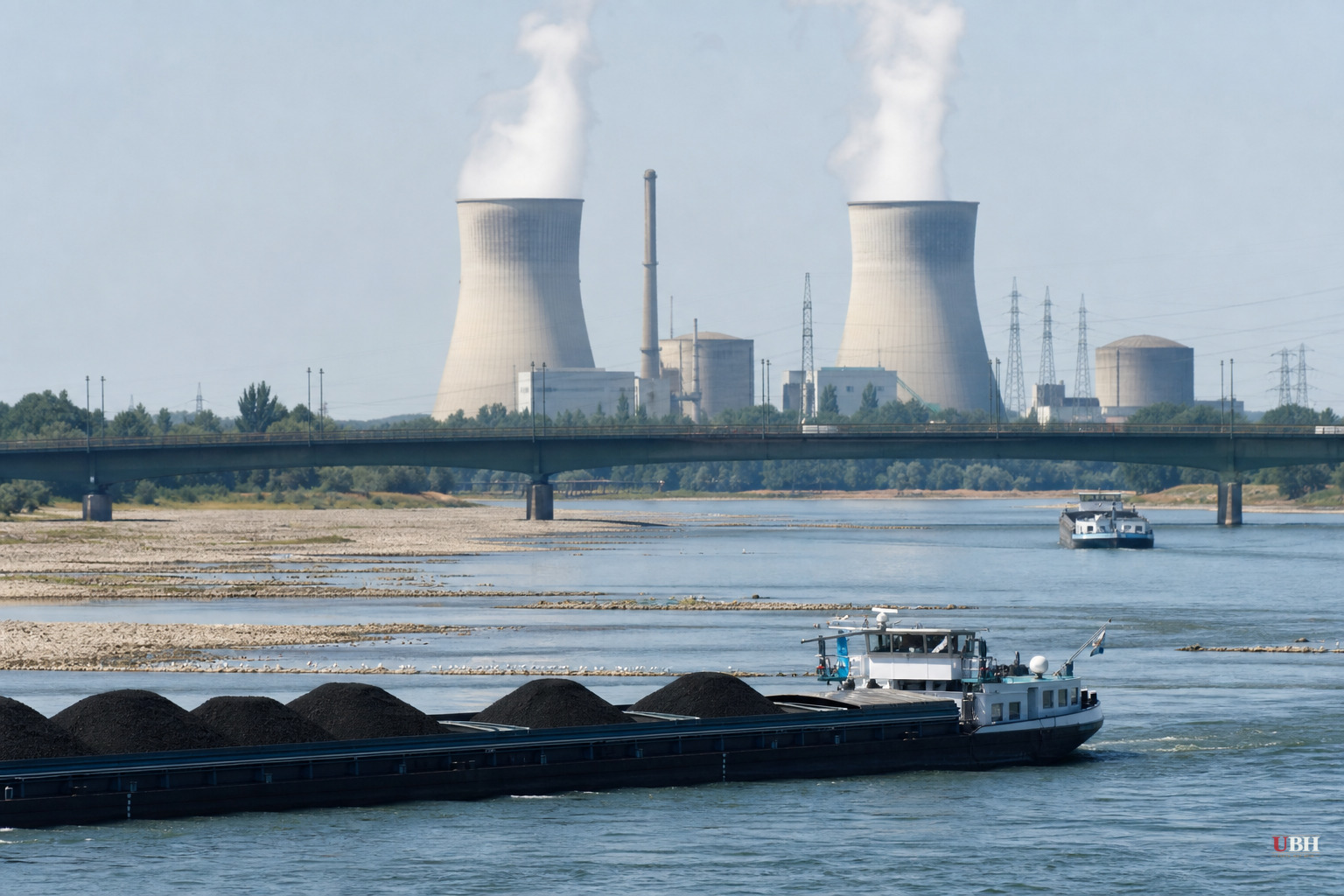
A Second Squeeze Lands on Top of the Hormuz Crisis
Europe's energy grid is straining under a heatwave that started as early as June and hasn't let up in Germany and France, according to OilPrice.com. The disruption is landing at the same time the protracted Strait of Hormuz crisis is already hiking Europe's energy costs and inflation, OilPrice.com reported.
This isn't a new heatwave. It's been building for weeks, but the consequences are showing up now in ways that matter for prices and supply.
France Cut Nuclear Power by 14% of Daily Demand
Early this week, France slashed nuclear power generation by 6.4 gigawatts, about 14% of the country's total daily power demand, according to OilPrice.com. The reason is basic physics: nuclear reactors need river water to cool them, and when rivers get too warm, plants have to throttle back to avoid discharging overheated water back into already-hot rivers.
France still managed to export electricity to its neighbors despite the cutback, OilPrice.com reported. But this is not a one-off. France has curbed reactor output for heat-related reasons before, and these events appear to be becoming more frequent as heatwaves last longer with more extreme temperatures.
Nuclear power, often sold as the most reliable baseload source available, has a real vulnerability to hot, dry summers. Engineers and grid planners have to account for the fact that its output isn't immune to climate stress.
The Rhine Is Running Too Shallow for Full Loads
The bigger structural problem may be the Rhine River. It's Europe's largest inland shipping corridor, running 800 miles from Switzerland through Germany and France into the Netherlands, and it carries an enormous volume of coal, diesel, and other fuel to central Europe's industrial heartland.
The Kaub gauge, located on the Middle Rhine between Koblenz and Mainz, is the river's shallowest chokepoint. It sets the maximum draft and laden weight for every barge moving between the Amsterdam-Rotterdam-Antwerp port complex and the industrial hinterland further inland, according to OilPrice.com. Water levels there are now at their lowest for mid-July in decades, and barges are being loaded lighter than normal just to keep moving. That has already pushed the freight cost of shipping diesel from Rotterdam to southern Germany up by more than 50% in the past week, OilPrice.com reported.
This has happened before. The last major low-water crisis on the Rhine was in 2022, and before that in 2018, OilPrice.com noted. The 2022 episode hit right as Russia's invasion of Ukraine was already upending Europe's energy supply, compounding an already bad situation. Back in November 2018, low Rhine levels led to a 1.5% decline in Germany's industrial production and a 0.4% hit to Germany's GDP, according to the Kiel Institute for the World Economy, as cited by OilPrice.com.
Timing Couldn't Be Worse
What makes this round different is the timing. Europe is already paying more for energy because of the Strait of Hormuz crisis. A domestic weather problem is now adding a second cost layer on top of it: reduced nuclear output in France and higher shipping costs on the Rhine.
Those two things compound each other. If French nuclear output is down, Germany and other neighbors may need to lean more on imported fuel and coal to cover the gap, right at the moment the Rhine can't move that cargo as cheaply or as fast. It's a supply chain squeeze meeting a demand squeeze.
The economic toll is already being counted. The end-June heatwave alone cost the German economy more than $6.8 billion (6 billion euros), according to an analysis by economic research firm Prognos for Handelsblatt, cited by OilPrice.com. Prognos has estimated Germany could lose roughly $1.14 billion (1 billion euros) for each day temperatures exceed 35°C (95°F), and that annual damage to the German economy could eventually top $23 billion (20 billion euros) if Germany sees three or four intense heatwaves each summer going forward, per the same analysis.
What Isn't Known Yet
OilPrice.com's reporting doesn't specify how long French nuclear curtailments are expected to last this summer. It's also unclear how much of the added Rhine shipping cost is already showing up in German diesel and coal prices at the retail or industrial level, versus still working its way through supply chains. Watch for German utilities and industrial buyers reporting fuel shortages or price spikes tied specifically to Rhine barge capacity, separate from the broader Hormuz-driven cost pressures already underway.
Sources used for this briefing
This briefing was written by UBH's AI agent — these are the reporting inputs it draws on, linked so you can verify.


