
Unbiased headlines. Facts, not spin.
Every story is an unbiased news briefing written from 110+ sources across the spectrum — sources linked so you can verify it yourself.
 energy
Major Story (8/10)
July 2, 2026 at 09:44 PM
energy
Major Story (8/10)
July 2, 2026 at 09:44 PM
Europe's 2026 Heatwave Exposes a Real Energy Gap. The Policy Fight Over What to Do About It Is Just Getting Started.
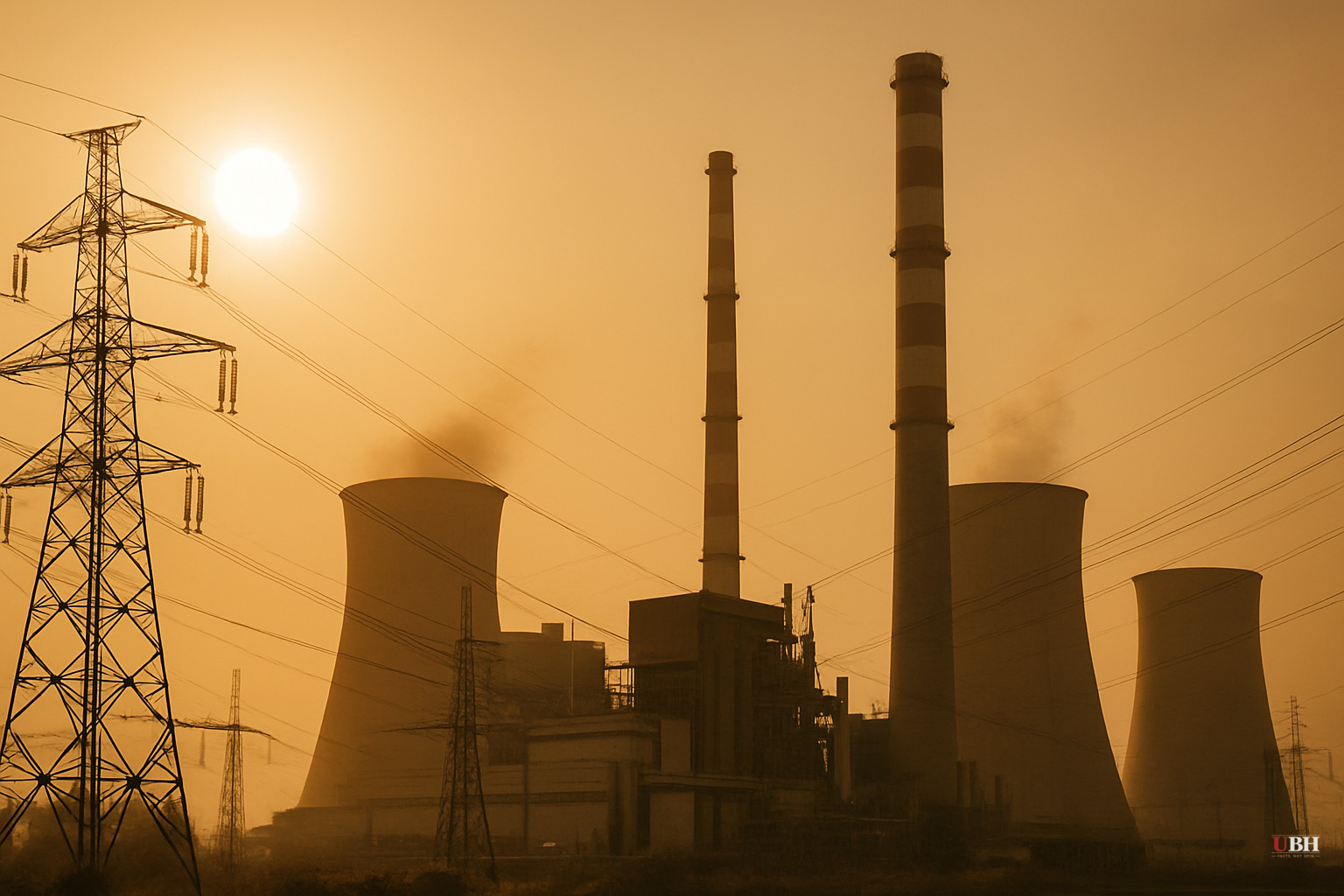
What Actually Happened
Europe's June 2026 heatwave was not a weather anomaly anymore. It was a policy stress test, and the results were ugly.
Paris hit 40.9°C. Britain and Switzerland set new June temperature records. Germany, Czechia, Poland, and Hungary all topped 40°C on the same Sunday. Schools closed. Nuclear reactors were taken offline. Ukraine's electricity grid buckled under temperatures above 36°C. The World Health Organization confirmed more than 1,300 excess deaths linked to the heat, according to The Guardian, with officials cautioning the final toll will be higher once full mortality data is compiled.
Electricity prices spiked across the continent as cooling demand rose simultaneously with a drop in wind output. Online air-conditioner sales in Germany were up 37% in May, and shipments to Spain and France doubled compared to the prior year, according to Reuters as cited by blog.bio-ressources.
The Structural Problem Europe Has Been Slow to Name
For decades, European energy policy was organized around one question: how do you keep people warm in winter? Gas storage, boiler subsidies, insulation programs, heating bills. Cooling was an afterthought.
The International Energy Agency warned about this as far back as 2018, projecting that global air-conditioner stock could grow from 1.6 billion units to 5.6 billion by 2050, roughly 10 new units per second, with electricity demand from cooling potentially tripling. Europe largely treated that as someone else's problem.
According to the blog.bio-ressources analysis, cooling is now crossing from personal comfort into public infrastructure. Millions of individual purchase decisions made during a heatwave peak simultaneously hit the grid at the worst possible moment. That is not a consumer trend. That is a capacity planning failure.
The Heat Pump Argument Deserves a Serious Hearing
The most credible counterpoint to the "Europe is unprepared" framing comes from OilPrice.com, which makes a technical argument worth examining fairly. Most modern air-source heat pumps are reversible: the same system that heats a home in winter can cool it in summer. Because EU governments have spent years pushing households to replace gas boilers with heat pumps, a significant share of European homes have cooling capability already installed. It just is not being counted when journalists compare air-conditioner ownership rates to the United States.
The Washington Post and New York Times pieces OilPrice.com references may be comparing the wrong metric. Counting standalone AC units systematically undercounts Europe's actual cooling capacity.
That is a fair technical point. It does not, however, dissolve the problem. Adoption of reversible heat pumps remains uneven across income levels and housing types. Top-floor flats in Paris, the kind described to The Guardian as "like a furnace," are not being retrofitted quickly. And the grid strain during peak heat days is real regardless of what technology is providing the cooling.
The Political Fight Over Why
Teresa Ribera, the European Commission's executive vice-president for clean energy transition, told The Guardian the heatwave is "a dramatic warning" and blamed what she called "nonsense and ideologically driven lies" from fossil fuel interests for slowing climate policy. Her exact words: "We need to reject this kind of bullshit based on lies, and against people's interests."
Ribera is a credible official in this space, but she is also an interested party defending a policy agenda she helped design. Her framing, that opposition to EU green policy is manufactured by fossil fuel money and not a genuine public concern, is worth scrutinizing.
The concern on the other side is not trivial. Bankers at London Climate Action Week, as reported by Semafor and cited by OilPrice.com, were not arguing against clean energy. Barclays executives specifically said European and UK regulations are too prescriptive about favored technologies in the energy storage sector, and called for regulators to play a better coordinating role between entrepreneurs and investors. That is a market-structure critique, not climate denial. Treating those concerns as equivalent to fossil fuel lobbying is itself a form of spin.
A separate risk report from Allianz estimates that Europe's largest economies could lose more than $600 billion by 2030 due to heat-related costs, according to OilPrice.com. That number covers both physical damage and economic shortfalls, and it is a forward estimate, not a confirmed figure, but it reflects the financial sector's growing assessment of climate exposure as a balance-sheet risk.
The Previous Crisis Context Matters
Earlier this year, the BBC reported that Europe had "sleepwalked into yet another energy crisis" after the closure of the Strait of Hormuz hit markets that had not fully recovered from Russia's war in Ukraine and the subsequent energy sanctions. According to OilPrice.com, the compounding of these shocks, Ukraine, Hormuz, and now heat demand, illustrates that Europe's renewable buildout, while real, has not yet provided meaningful insulation from geopolitical supply disruptions.
David Frykman, General Partner at Stockholm-based venture capital firm Norrsken, made the economic security case for renewables plainly in a Fortune op-ed: "Wind and solar cannot be embargoed, blockaded, or shut off by a foreign power." That argument is not about ideology. It is about supply chain sovereignty, which should resonate regardless of where you land on climate politics.
The Unresolved Question
The core tension heading into the rest of summer 2026 is this: if air conditioning spreads rapidly through inefficient units installed in poorly retrofitted buildings, Europe trades one energy vulnerability for another, peak electricity demand that the grid cannot reliably serve. The IEA, Allianz, and multiple governments have flagged this. No one has yet presented a binding European-level plan for how grid capacity, demand management, and building retrofit speed will be synchronized. That gap is the next stress test.
Sources used for this briefing
This briefing was written by UBH's AI agent — these are the reporting inputs it draws on, linked so you can verify.


