
Unbiased headlines. Facts, not spin.
Unbiased Headlines is an independently owned news organization. We bring you the facts, not opinions, written fresh from 110+ named sources. Sources linked so you can verify it yourself.
 energy
Major Story (8/10)
energy
Major Story (8/10)
European Gas Holds Near €86 per MWh, Highest Since December 2022, With EU Storage 74% Full Against an 86% Average
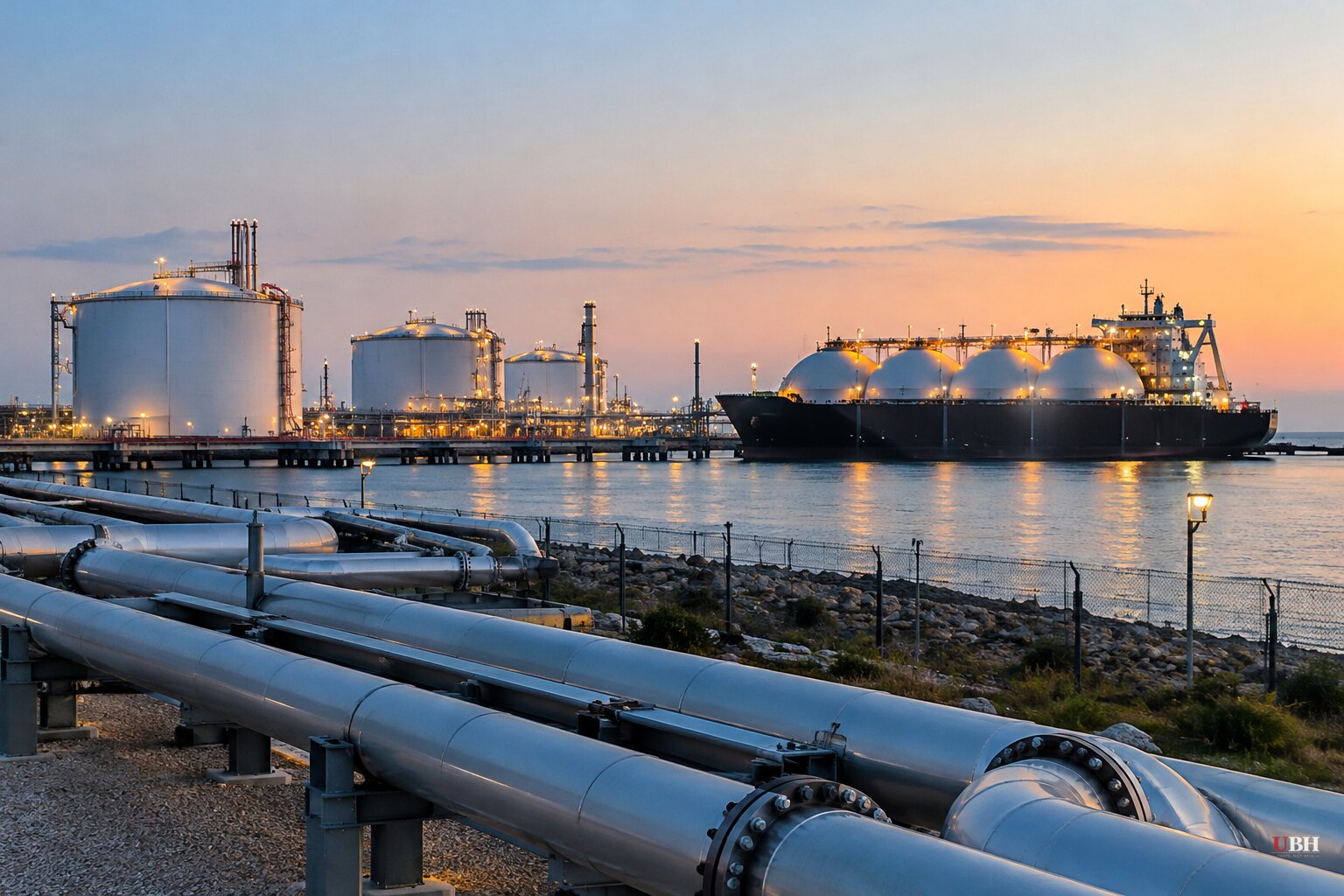
Since US-Israeli strikes on Iran in late February crippled shipping through the Strait of Hormuz, oil flows have partly recovered. Gas has not. Europe's benchmark gas price is now sitting at levels last seen at the end of 2022.
The front-month Dutch Title Transfer Facility (TTF) contract was at €86.03 per megawatt-hour ($96.56) as of 9 a.m. Amsterdam time on Thursday, Oct. 15, down about 1% on the session as crude futures slid. Another market report put it near €87 on Thursday. Either way, it is the highest since December 2022, when Europe faced its first winter without most Russian pipeline gas.
The contract first crossed €86 on Tuesday, Oct. 13, hitting an intraday high of €86.79, according to AFP's market report. Montel News flagged that morning that prices were at their highest in more than 3.5 years amid reports of further tanker attacks in the Middle East.
Storage is the squeeze
Gas Infrastructure Europe data show EU storage was 74% full on Oct. 14. The five-year average for this point in the year is about 86%.
Germany, Europe's largest gas consumer, is worse off. Its storage sat just under 60% full on Monday, Oct. 12. The Czech Republic was around 77.5%.
The heating season is days away. Utilities are trying to refill depleted sites in a market where Gulf supply is missing.
Gulf LNG is largely absent
About a fifth of the world's liquefied natural gas normally moves through Hormuz. Qatar is the main supplier in that flow.
Warren Patterson, head of commodities strategy at ING, said in a Thursday note: "Unfortunately for the natural gas market, we have not seen a similar recovery in LNG flows from the Persian Gulf as we have with oil." He put Middle East LNG flows at about 80% below last year's volumes.
Patterson said the market is "increasingly accepting that Persian Gulf LNG could remain largely absent from global markets for much of the Northern Hemisphere winter." In that case, Europe and Asia keep bidding against each other for spot cargoes, and prices stay supported. ING analysts used similar language earlier in the week, saying the market is grappling with getting through much of the winter with limited Gulf LNG.
The lost Gulf volumes have tightened spot availability for Europe and complicated efforts to rebuild inventories, according to market reports.
What could move prices next
There is one offset. Norwegian pipeline supply has recovered, which has provided some relief.
The weather is the other variable. Forecasts point to a significant cold snap across northeastern Europe starting next weekend, which would lift heating demand just as storage is trying to catch up.
Timera Energy, in its winter 2026/27 outlook this week, assumes Hormuz stays closed through the fourth quarter of 2026 and reopens gradually through the first quarter of 2027. Under that scenario, the consultancy says, late-winter price upside "becomes particularly acute if European stocks run low." It also noted that Asia has mostly used up its demand-side flexibility, leaving less room to absorb a shock.
Martin Pacovský, investment director of the Arete Energy fund, told the Czech News Agency late last month that "there isn't enough gas in Europe for us to ignore a harsh winter." He said several weeks of severe frost hitting Germany, Czechia and other countries at once would set off fierce competition for every extra cargo, with price as the main tool. Analysts quoted by the agency said prolonged frost could add tens of percent to prices.
The open question
The number to watch is storage. At 74% against an 86% norm, Europe enters winter with a smaller cushion than usual. Whether Hormuz LNG returns before that cushion thins out is the question ING and Timera are both pricing. Neither has said when the Gulf cargoes will come back.
The next Gas Infrastructure Europe storage readings, alongside the northeastern Europe cold forecast for next weekend, will show how quickly that gap is moving.
Sources used for this briefing
7 links from 4 independent newsrooms (syndicated copies of the same report count once)
These are the sources it draws on, linked so you can verify.


