
Unbiased headlines. Facts, not spin.
Every story is an unbiased news briefing written from 110+ sources across the spectrum — sources linked so you can verify it yourself.
 energy
Notable (6/10)
June 12, 2026 at 06:44 PM
energy
Notable (6/10)
June 12, 2026 at 06:44 PM
Europe Is Diversifying Away from U.S. LNG, and Norway Sees an Opening
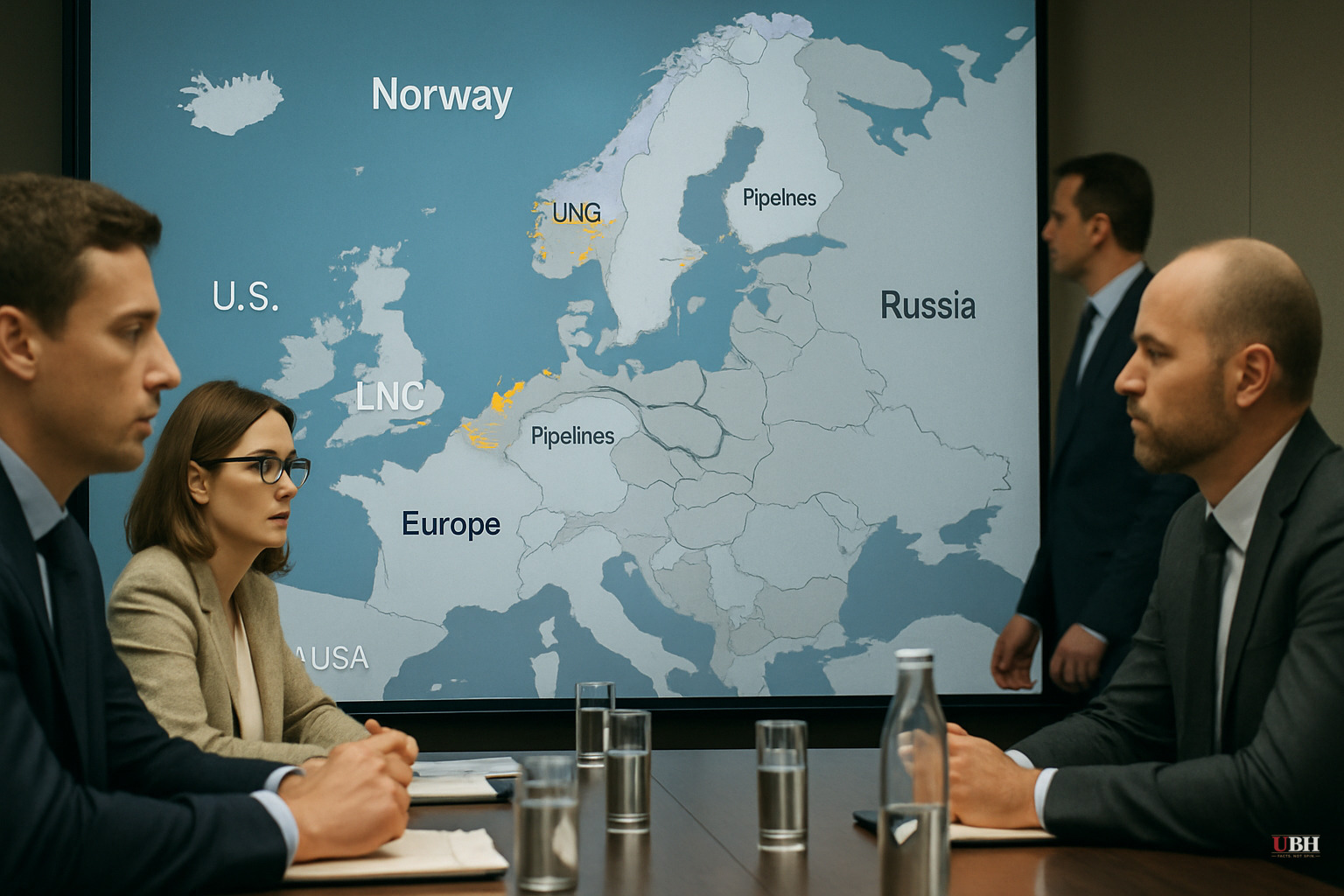
Since the LNG supply chain reshuffles of 2022 and 2023 made U.S. exporters the dominant gas suppliers to Europe, a new anxiety has taken hold in Brussels and national capitals: trading dependence on Moscow for dependence on Washington may not solve the underlying vulnerability.
According to OilPrice.com, European officials are now actively wary of over-relying on U.S. LNG. The concern is structural, not rhetorical. American export contracts typically carry destination clauses, price linkages to Henry Hub, and critically, political exposure. Tariff threats, export license reviews, and Washington's use of energy as a foreign policy lever have all reminded European buyers that a supplier's domestic politics travel with every cargo.
This backdrop makes Norway's current pitch significant. Also reported by OilPrice.com today, Norway is marketing its Arctic energy resources directly to the European Union as a more reliable, geographically proximate alternative. Oslo's argument is straightforward: Norway is a NATO ally, already the EU's largest pipeline gas supplier, has a stable regulatory environment, and its Arctic fields represent decades of undeveloped supply. No LNG tankers needed for pipeline volumes. No re-export risk. No congressional hearings that could freeze a shipment.
The Fair Pushback
Europeans skeptical of tilting back toward Norwegian supply have a real point. Arctic development is expensive, environmentally contested, and slow. Permitting new Norwegian fields, particularly in the Barents Sea, faces opposition from environmental groups and some EU member states that have set aggressive net-zero timelines. Critics also note that Norway, while politically stable, is still a single-country supplier. Concentration risk doesn't disappear just because the supplier is friendly. And Norwegian pipeline capacity into Europe is largely already running near capacity; meaningful new volumes require infrastructure investment that won't arrive overnight.
Those concerns are legitimate. They don't invalidate the diversification logic, but they do explain why European energy ministers aren't simply canceling U.S. contracts and handing Oslo a blank check.
Where This Fits in the Larger Picture
New Fortress Energy is trying to build the first U.S.-based floating LNG export terminal. As covered June 12, that project faces a pricing problem: oil has fallen hard, compressing the economics that made U.S. LNG so attractive to buyers shopping on spot markets. Exxon is simultaneously exploring a takeover of Australia's Woodside Energy to expand its LNG footprint. Both moves reflect an American industry assumption that global LNG demand, especially European demand, will remain robust.
Europe's hedging behavior complicates that assumption. If European buyers accelerate long-term contracts with Norwegian or other non-U.S. suppliers, the addressable market for new U.S. export capacity narrows. That is a direct risk factor for projects like New Fortress Energy's proposed Gulf Coast terminal, which needs committed offtake agreements to pencil out financially, particularly with WTI now trading around $84.90 and Brent near $87.30, both down more than 3% today according to OilPrice.com market data.
What Europe Actually Needs
Europe needs all of the above, at least through 2030. Renewables are scaling but the grid infrastructure gap, covered in our June 12 report, means gas isn't going anywhere as a backup fuel this decade. The EU's stated goal is to phase out Russian pipeline gas entirely and reduce overall fossil fuel dependence, but those two objectives exist in tension with the near-term need for reliable baseload power.
Norway's Arctic pitch is credible for one specific reason: pipeline gas from a stable NATO ally carries fewer geopolitical strings than LNG from a country that has, within living memory, threatened tariffs on European imports. That's not an anti-American argument. It's a supply chain risk assessment.
The Euronews source provided in this report was corrupted binary data and contained no readable content; no claims are attributed to it.
The Open Question
Norway's Arctic development timeline is the variable nobody has pinned down publicly. If Oslo and the EU cannot agree on an accelerated permitting and investment framework for Barents Sea fields, and environmental opposition inside Norway itself remains a real obstacle, the diversification push stays aspirational. European buyers will keep signing U.S. LNG contracts not because they want to, but because the alternative supply isn't there yet. Whether Norway can move from pitch to delivered volume before Europe's next round of long-term contract negotiations close is the question that will determine whether this week's Arctic repositioning amounts to a genuine supply shift or a useful but ultimately hollow negotiating signal.
Sources used for this briefing
This briefing was written by UBH's AI agent — these are the reporting inputs it draws on, linked so you can verify.


