
Unbiased headlines. Facts, not spin.
Unbiased Headlines is an independently owned news organization. We bring you the facts, not opinions, written fresh from 110+ named sources. Sources linked so you can verify it yourself.
 economy
Major Story (8/10)
economy
Major Story (8/10)
EU Unveils 'Buy European' Procurement Overhaul Aimed at Chinese Bidders
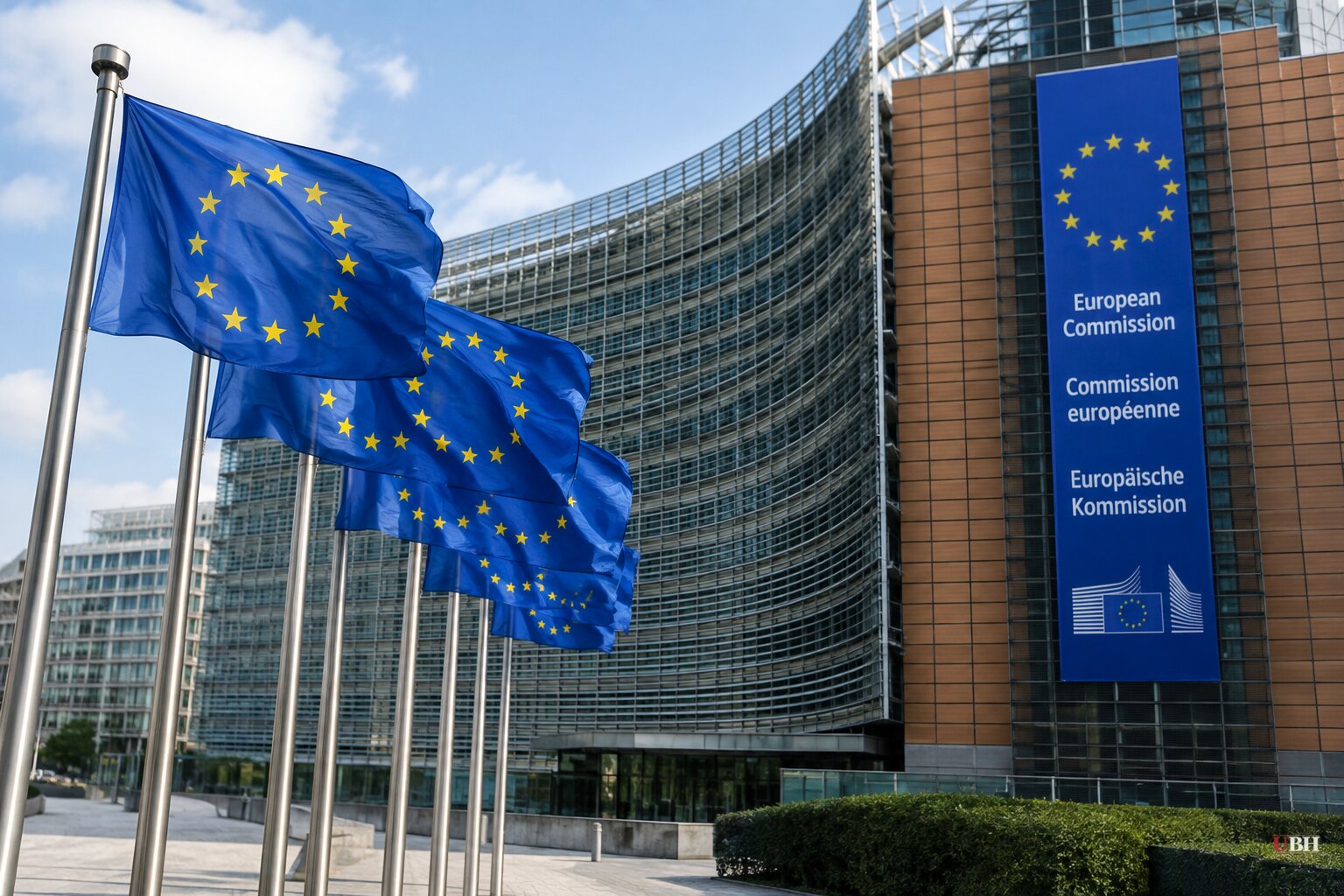
The European Commission rolled out a sweeping rewrite of EU public procurement law on Wednesday, September 9, 2026, designed to let governments, schools, hospitals and utilities give preference to European companies over Chinese competitors.
The proposal, called the Public Procurement Act, would fold the EU's three existing procurement directives into a single regulation that applies directly across all 27 member states, according to The Next Web. This skips the national transposition process, cutting into the discretion governments currently have over how they run tenders.
What Changes
Right now, plenty of public buyers default to the cheapest bid because they think EU rules require it. Under the new framework, price can no longer be the only thing that counts. Quality criteria, covering environmental impact, social factors, innovation, security and "European preference," would have to make up at least 30% of the evaluation score, rising to 50% for labor-intensive contracts, unless a buyer explains why it did otherwise, per The Guardian and Euronews.
Commission Executive Vice President Stéphane Séjourné was blunt about the target. "A municipality will be very clearly able to exclude a Chinese company or a European company that offers Chinese products," he told reporters, according to Euronews. "It will also be able to give more points and more visibility in his offer to European offers compared to competition offers."
Authorities could also reject bids on large contracts where European content falls below 50% of the contract value, and could restrict foreign bidders entirely from countries that don't grant European firms reciprocal access to their own procurement markets, according to ua.news and Brussels Signal. Bidders whose prices come in significantly below competitors could be required to explain why. Euractiv described this provision as a veiled reference to Chinese state subsidies, per Brussels Signal.
Unlike the Commission's March "Made in EU" plan for green tech, cars and energy-intensive industries, which set binding domestic-content quotas, this procurement overhaul does not impose a blanket buy-European mandate, The Guardian reported. It's a permission structure, not a requirement, though Brussels clearly wants buyers to use it.
The Numbers, and Where They Disagree
Public procurement is roughly 15% of EU GDP across every source reviewed, but the total annual value cited varies. Euronews and Brussels Signal put it at about €2 trillion. Euronext (via Reuters) and The Guardian put it at €2.5-2.6 trillion. Séjourné himself said the new rules would directly cover about €600 billion of contracts, according to ua.news. The Commission estimates the simplification will save €650 million a year, split between €80 million for public buyers and €570 million for companies bidding on tenders, per The Next Web.
The trade backdrop is stark. Eurostat data cited by Brussels Signal show the EU exported €199.6 billion in goods to China in 2025 and imported €559.4 billion, a deficit north of €359 billion for the year, roughly in line with the "€1 billion a day" figure cited by Euronews and IndexBox.
China Pushes Back
China's Chamber of Commerce to the EU responded quickly, warning the policy "could distort a level playing field" and arguing that "public procurement should not discriminate against suppliers or goods on the basis of the supplier's nationality or the country of origin of the goods," per Euronews. Chinese firms that comply with EU technical and safety standards are being penalized for where they're headquartered, not for anything they did wrong. The Commission's counter, made explicitly by Séjourné, is reciprocity: the EU wants to exclude firms from countries that don't let European companies bid on their own government contracts, treating this as a mirror of restrictions Beijing and Washington already run.
The policy isn't hypothetical. In April, the Commission blocked a Chinese rolling-stock company from a consortium bidding on a Lisbon metro line after finding it had benefited from state subsidies, according to The Guardian. Poland introduced its own "sovereignty test" for major government technology contracts in June, and the Commission has already split a sovereign cloud contract among four European providers, The Next Web reported.
What Happens Next
The legislation is a proposal, not law. It needs approval from both the European Parliament and the EU Council, and the draft could still change during negotiation, Brussels Signal noted. The process has already slipped once, originally targeted for adoption in the second quarter of 2026 before being pushed to September.
EU Trade Commissioner Maroš Šefčovič is scheduled to travel to China in early October seeking a political resolution to broader trade tensions, according to IndexBox. Whether this procurement fight complicates those talks, or whether Brussels treats it as leverage going in, is not yet clear from any source reviewed.
Sources used for this briefing
7 links from 7 independent newsrooms (syndicated copies of the same report count once)
These are the sources it draws on, linked so you can verify.


